The Tungnath – Chandrashila trek is one of the shorter and easier treks in Uttarakhand, India. A very manageable 4 km trek from Chopta takes you to Tungnath, the highest temple in the world dedicated to Lord Shiva. It is located at an altitude of 3680 m with a view of the Nanda Devi, Trishul, Chaukhamba, Kedarnath and other peaks of the Garhwal Himalayas.
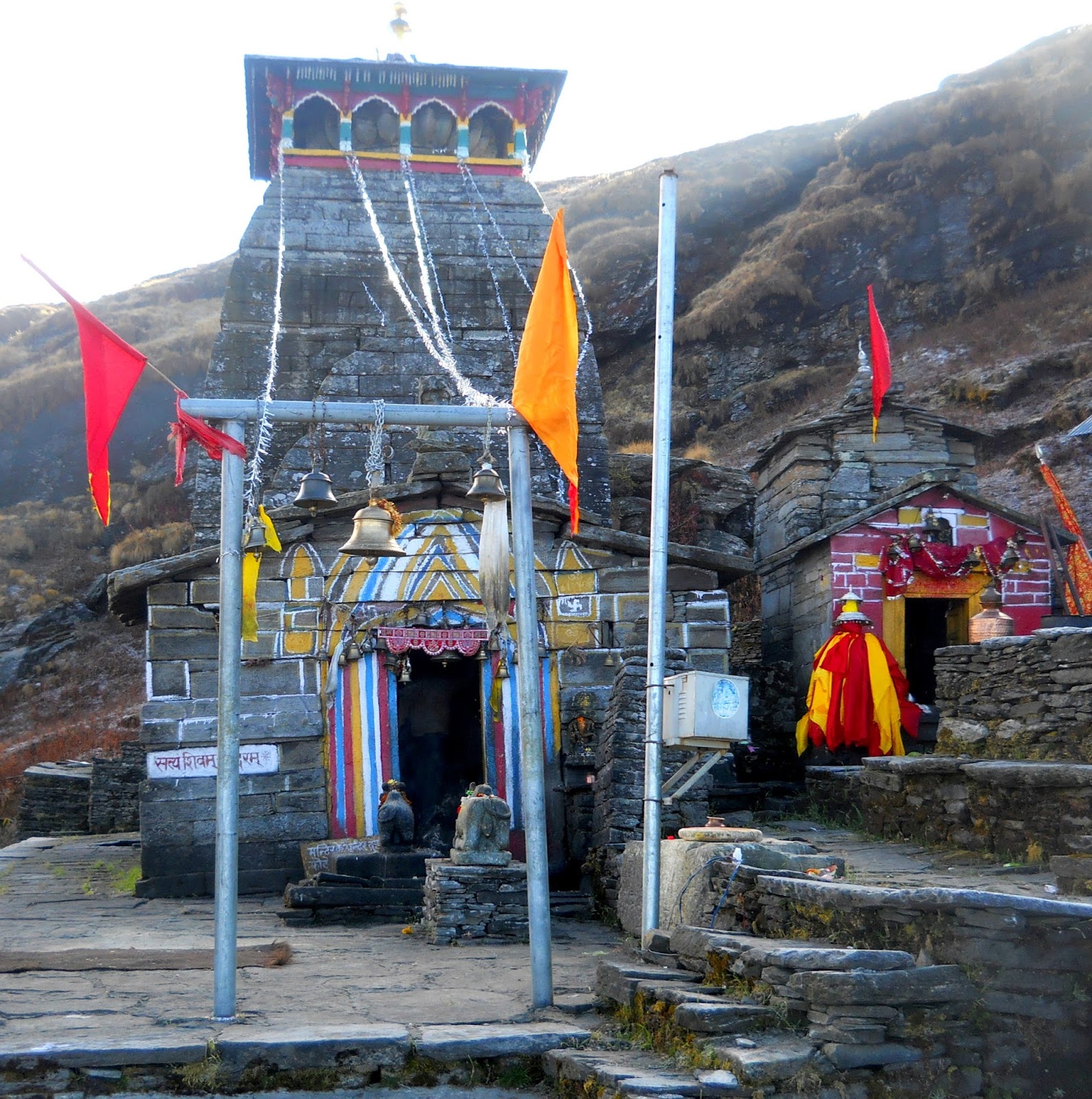
While Kedarnath is the more popular but difficult pilgrimage trail, the stunning beauty and easy grade of the Tungnath trek attracts a lot of enthusiastic trekkers. This was to be my first destination during a week long backpacking trip in Uttarakhand in November this year.
Public transport was my mode of travel. Taking an overnight bus from Delhi, I reached Rishikesh around 6 in the morning. After having tea, I boarded a bus to Rudraprayag at 7 am. A 5 – 1/2 hour journey in a small bus over a broken and rocky winding road followed which gave my lower back some serious suffering. A local passenger named Sanjiv and I chatted about life in the mountains and how the flood disaster of 2013 affected the region. Some 20 km upstream of Devprayag, we passed by a very fertile looking village named Maletha which Sanjiv told me used to be a barren land some 400 years ago as there was no source of water. Later a man named Madho Singh Bhandari together with some other villagers constructed a water channel from the Chandrabhaga river. Till today, this centuries old constructed irrigation channel provides water to this village. Another mythical tale about Madho Singh quite popular among locals is that he sacrificed his own son on the altar of some temple to bring good luck (water) to the village. Sanjiv got down at Srinagar while I reached Rudraprayag at 12.30 pm. I next boarded a bus to Ukhimath. The road from Rudraprayag to Ukhimath had been completely washed away in the 2013 floods and is still in various stages of repair. With a view of the emerald green Alaknanda river flowing on the side of the road, it took 2-1/2 hours and some more suffering for my back to reach Ukhimath.
Now there was a problem. My next stop Chopta is not well connected by public transport as it is only visited by tourists and there is no local population living there except those who run the tourist lodges and restaurants. The only bus going from Ukhimath to Chopta leaves at 7 in the morning. So either I had to spend the night at Ukhimath or the other option was to hire a jeep for 1000 rupees for a 1 hr (30 km) trip. The actual one way charge for the trip is 500 rupees but the taxi union rules say that you have to pay the full return fare as the driver wouldn’t get any passengers while returning. I took the latter option as coming this far already I wanted to go for the Tungnath trek the very next day. So bargaining at 800 rupees, I hired a jeep and after traveling through a mostly uninhabited and densely forested land, I arrived at Chopta at 4.30 pm.

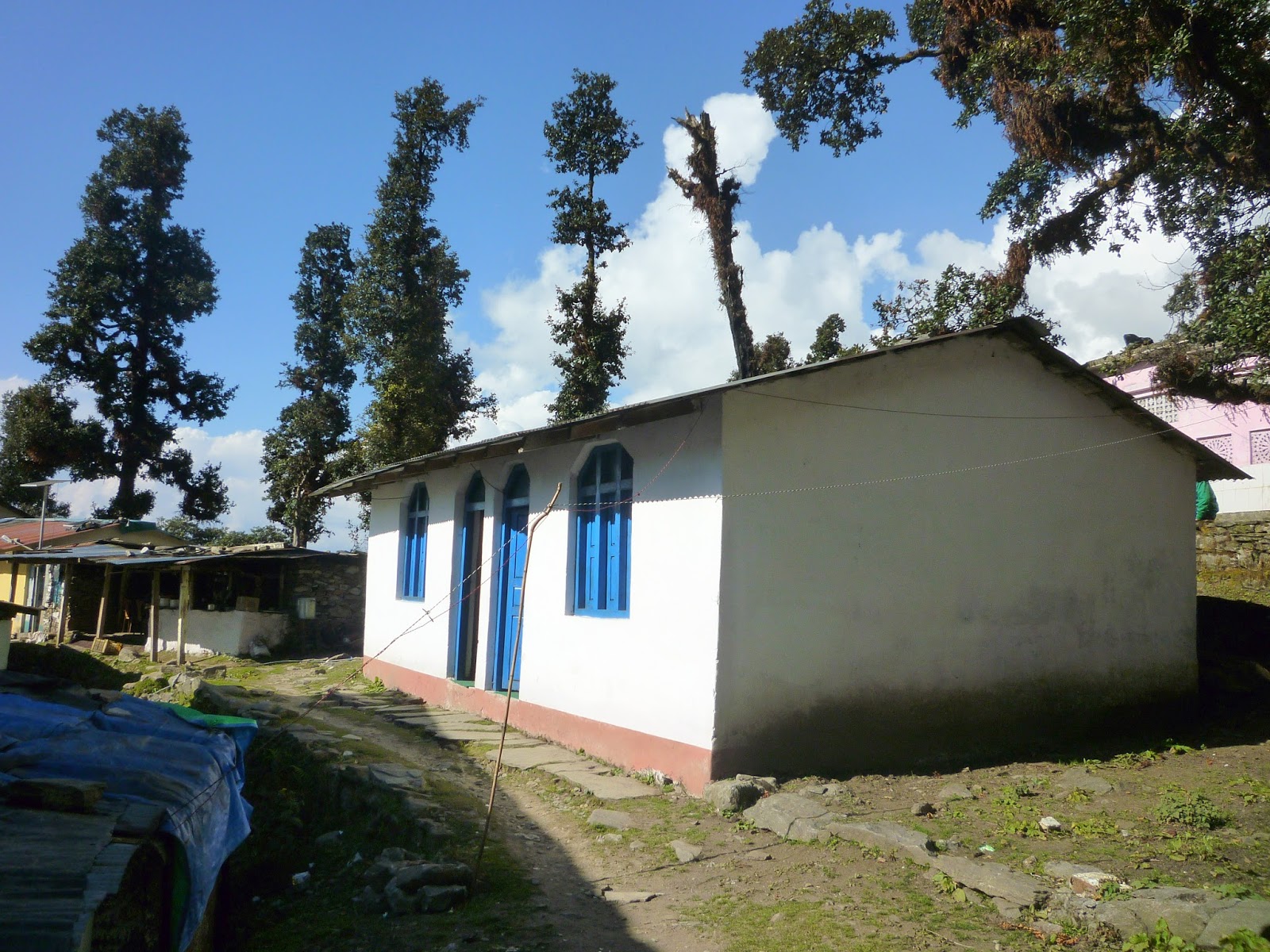
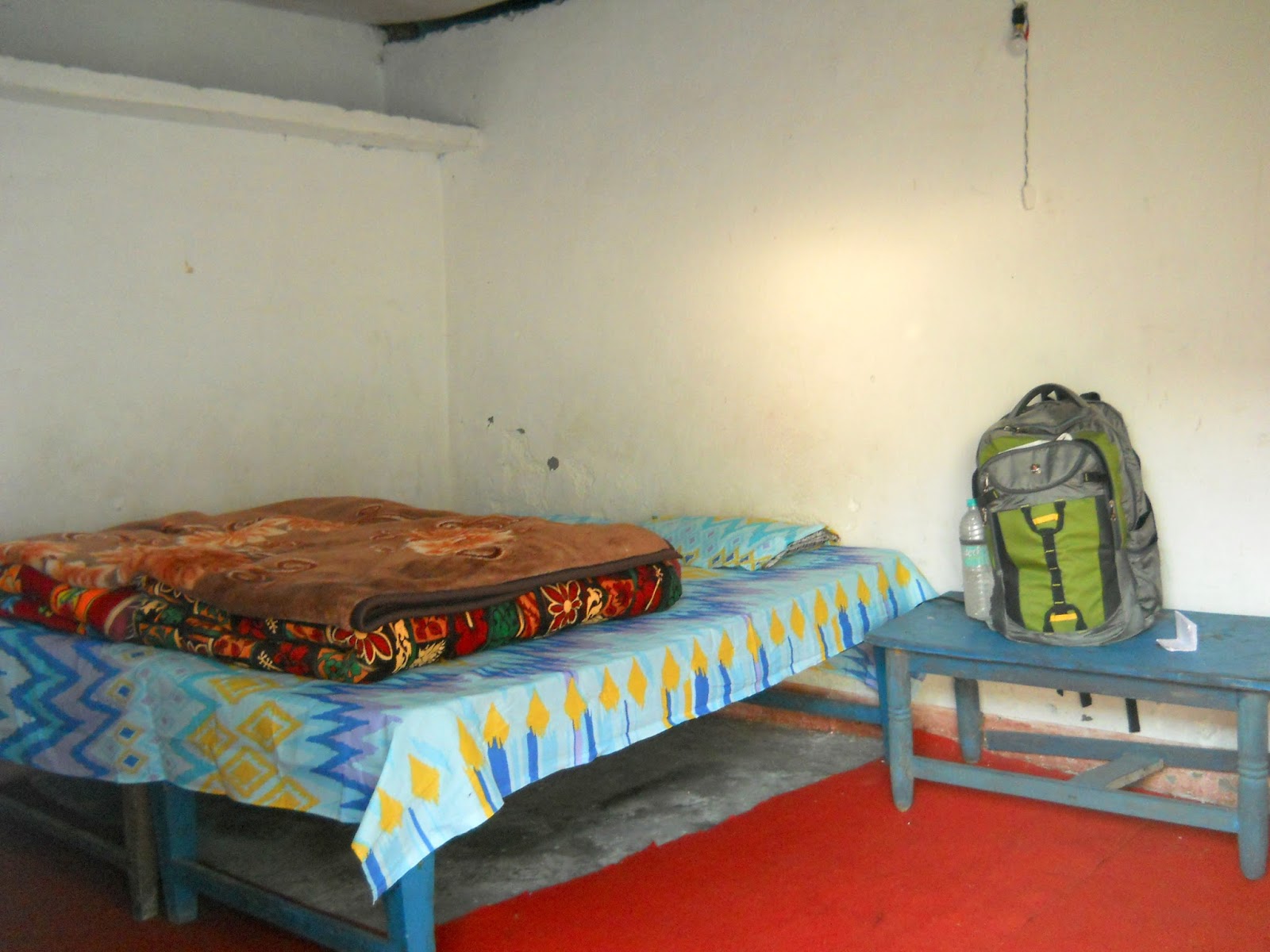
The driver suggested me a lodge run by a man named Umed Singh who showed me a room for 350 rupees. I had traveled more than 450 km and spent close to 18 hours on the road since last night so I was happy to dump my bag there. I then realized my good fortune when Umed told me that the next day was the last day for visiting Tungnath temple this season and the temple would close at noon. Glad that I didn’t stay at Ukhimath or Rudraprayag, I then went to look around a bit.
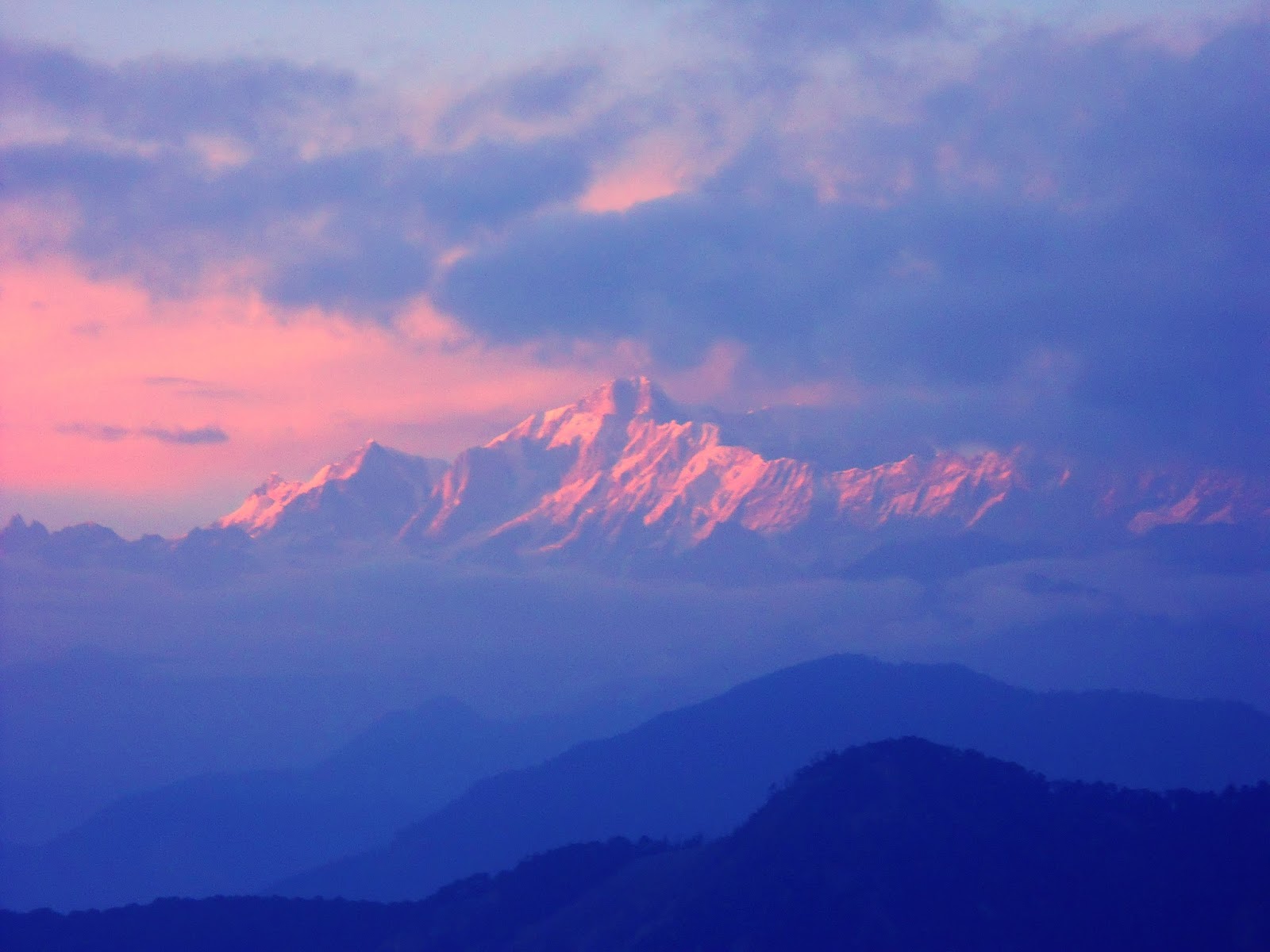
Chopta is a quiet little hamlet at 2700 m, nestled in the mountains and untouched by commercialization yet. There is no electricity, and available accommodation and eating options are basic, nothing fancy or luxurious. Just walk around to experience the pristine, verdant beauty of this place. Walking away from the main parking area, I stood at a point from where I had a mesmerizing view of the mountains disappearing in the clouds as the red hue of the setting sun kissed them goodnight.
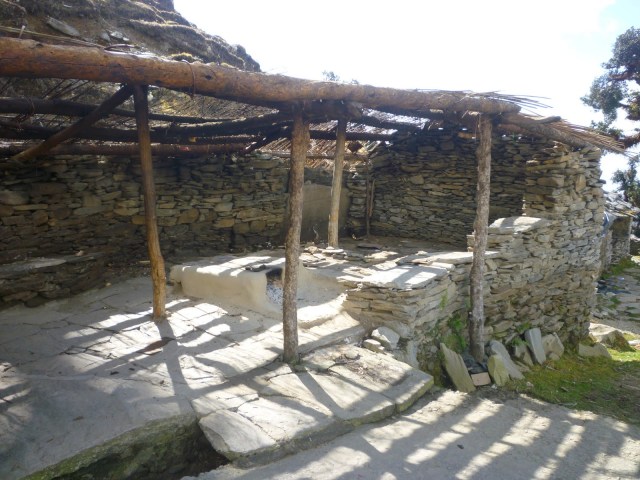
It was getting dark and cold and I was very tired so returned to my room. At 7.30 pm, there was a banging on the door calling me for dinner. Putting on my jacket I went outside. The caretaker was making rotis on a wood stoked fire in a shed. It was cold and dark with little light from a battery operated bulb, while smoke from the fire filled the shed. The meal was basic but delicious – aloo gobhi, dal, roti and rice. You can also order paneer or eggs but you have to tell the caretaker in advance. Since this was the end of the tourist season, there were hardly any other guests except a group of six people coming from Kolkata. After dinner we all warmed our hands at the fire and then retired for the night. It was only 8 pm. My body had got used to the cold now and after a long day, I quickly fell asleep.
Umed had told me that on an average it takes 2-1/2 to 3 hours for the trek but I should be able to do it in 2 hours… so that was the time I had to achieve. He had advised me to start by 6 am to get a clear view of the mountains as later it gets cloudy. In the morning however, the alarm failed to wake me up (as always) and I got to a late start at 6.50 am. Within a few minutes of walking I was exhausted. I wondered how would I complete it in two hours…what happened to all the miles I ran on the treadmill in the last two months? Going slowly, I started feeling better with time and the trek felt less strenuous. That is why acclimatization at higher altitudes is considered so important before attempting a climb or trek. The way is quite well defined and not very steep. Soon I got my first glimpse of the snow clad mountain range. I could see at least 7-8 distinct peaks.
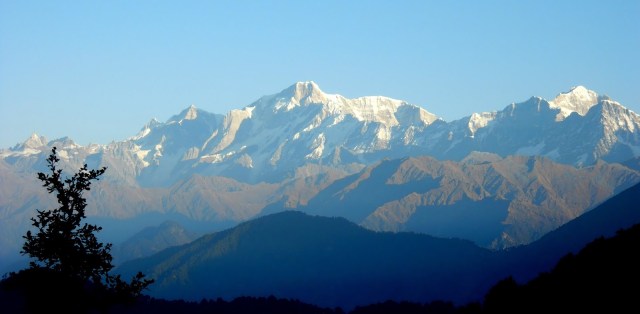
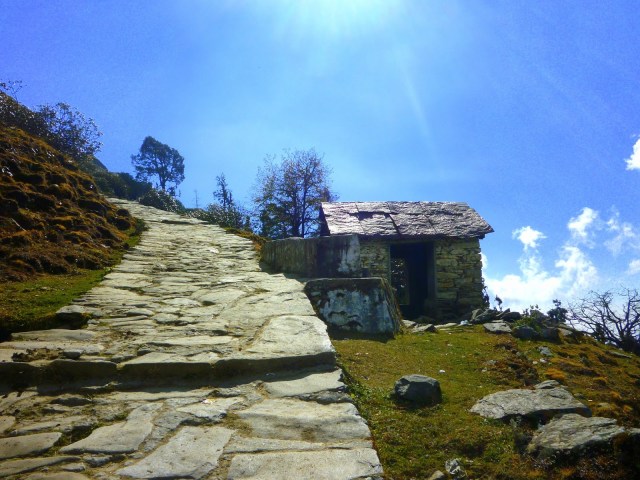
I stopped for tea at a shack with a panoramic view of these mountains. “Go up quickly…doors will close soon”, the shack owner said as he offered me the tea. Effectively I had one of the last cups of tea at his shack for the season.

I had put on 3-4 layers of clothes at the start but as I went on, I started sweating from inside (very common during treks in spite of cold weather) and gradually my sweater and jacket came off. The last one km of the trek is a bit steep but I was delighted to finally arrive at the steps to the temple at 8.50 am sharp. 2 hours. I made it!! 🙂
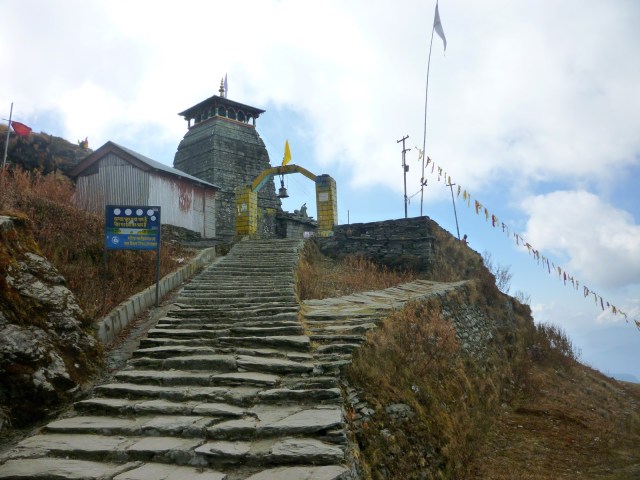
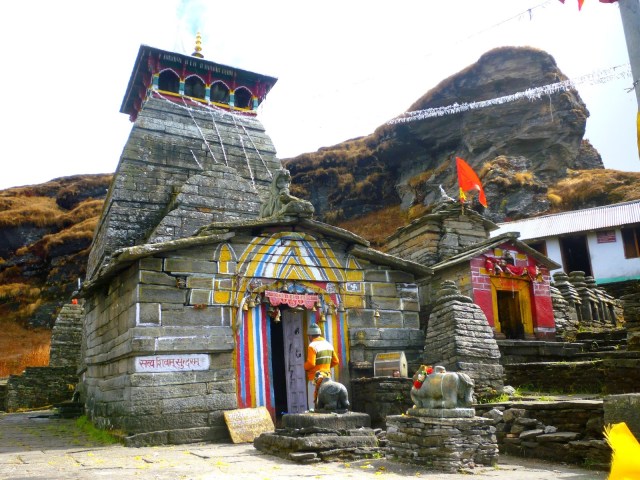
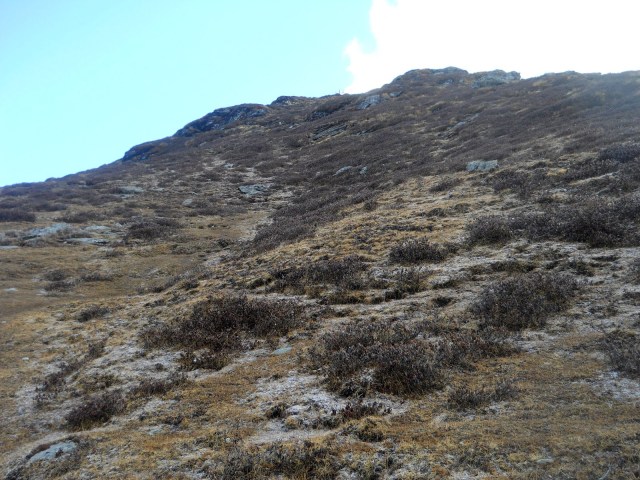
It was 9.15 am and I resumed my trek to reach the Chandrashila summit. It is a steep 1-1.5 km trek from Tungnath on a rocky terrain. One can follow the trail or even climb up the side of the hill. There was no one else on the trek at that time except me.
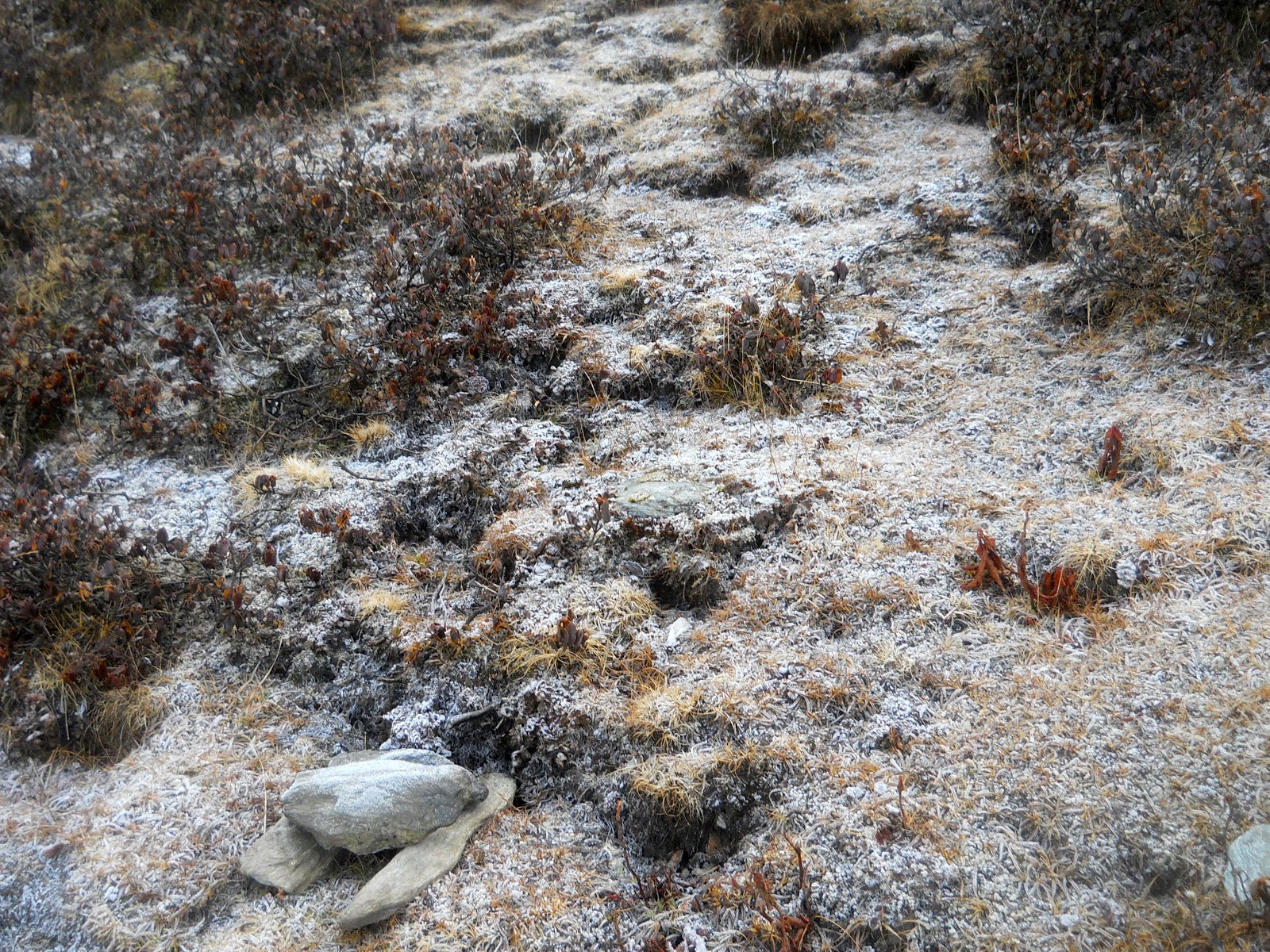
Traces of snow could be seen on the dry grass at many places. As I neared the top, the last traces of the Chaukhamba peak disappeared amidst the clouds and I regretted my late start once again. It took me 50 minutes from Tungnath to reach the small temple dedicated to goddess Ganga at the summit.
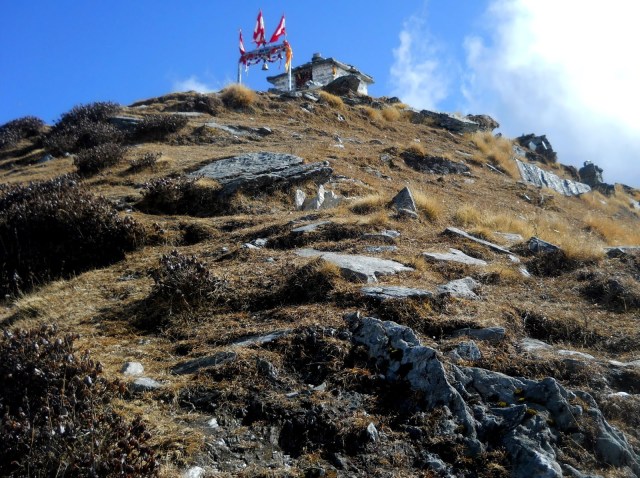
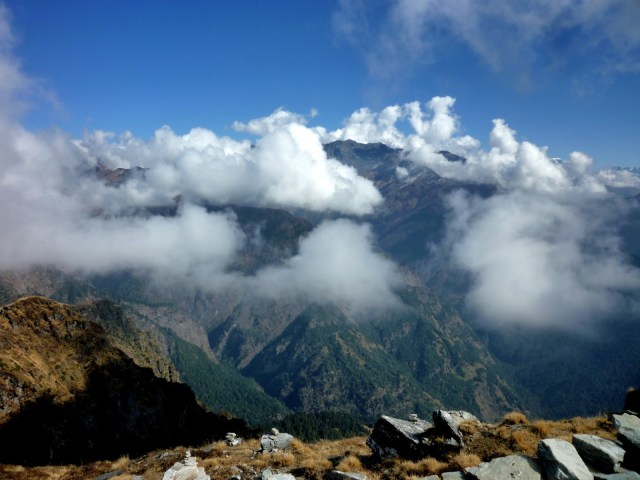
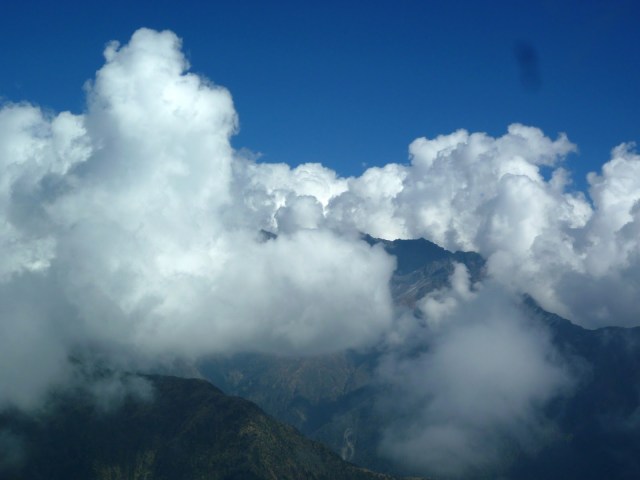
After a while it was time for the descent back. While going down, I skipped the main trail for most parts and just walked down the side of the hill. One has to be careful of the wet grass and muddy patches to avoid slipping. The return trip took only half an hour and I arrived at Tungnath while the temple closing ceremony was in progress. A procession of people carrying the doli, an image or figure symbolic of the Tungnath shrine, circumnavigated the temple complex amidst the resonant sounds of beating drums, ringing bells and prayer chants reverberating through the beautiful landscape. The procession then walked down to Chopta where the doli would be kept in a temple for the night. As the temple doors were locked for the season and people started packing up to go down, I looked around one last time. Soon this place would be covered with almost 15 feet of snow.

I had trekked all morning only on a packet of biscuits. So it was time for a proper meal of rice, dal and vegetables. The tired body and the serenity of my surroundings made it a delicious meal. I wanted to catch the only bus leaving out of Chopta at 2.30 pm so finished my meal quickly and started my descent.
While resting somewhere half way down, I hear the chant “Jai baba Tungnath…Har Har Mahadev!” A man was coming down carrying a Shiva idol wrapped in a cloth. I joined him on the descent during which he told me that after spending the night in Chopta, the Tungnath doli will be taken to Vantoli village where almost 5000 people from six gram sabhas (village communities) were going to gather for prayers and festivities. Two days later, the shrine will be carried to Makku Math, the Lord’s winter residence for the next six months before he is brought back to Tungnath temple in the summer. “Jai baba Tungnath!“, we chanted as we went along.

How to reach Tungnath:
You can reach Tungnath by car/bus taking the route Delhi – Rishikesh – Rudraprayag – Ukhimath – Chopta (base camp) – trek to Tungnath. Delhi to Chopta road distance is approximately 460 kms. If going by bus, several government and private buses ply on Delhi-Rishikesh route. From Rishikesh you have to take a bus to Rudraprayag from where you get buses or shared jeeps to Ukhimath; you might have to wait a while here for one to arrive. Ukhimath-Chopta distance is about 30 kms and as mentioned earlier, a bus at 7 am or jeeps during rest of the day are the only options to get to Chopta.
 nomadictourist.com