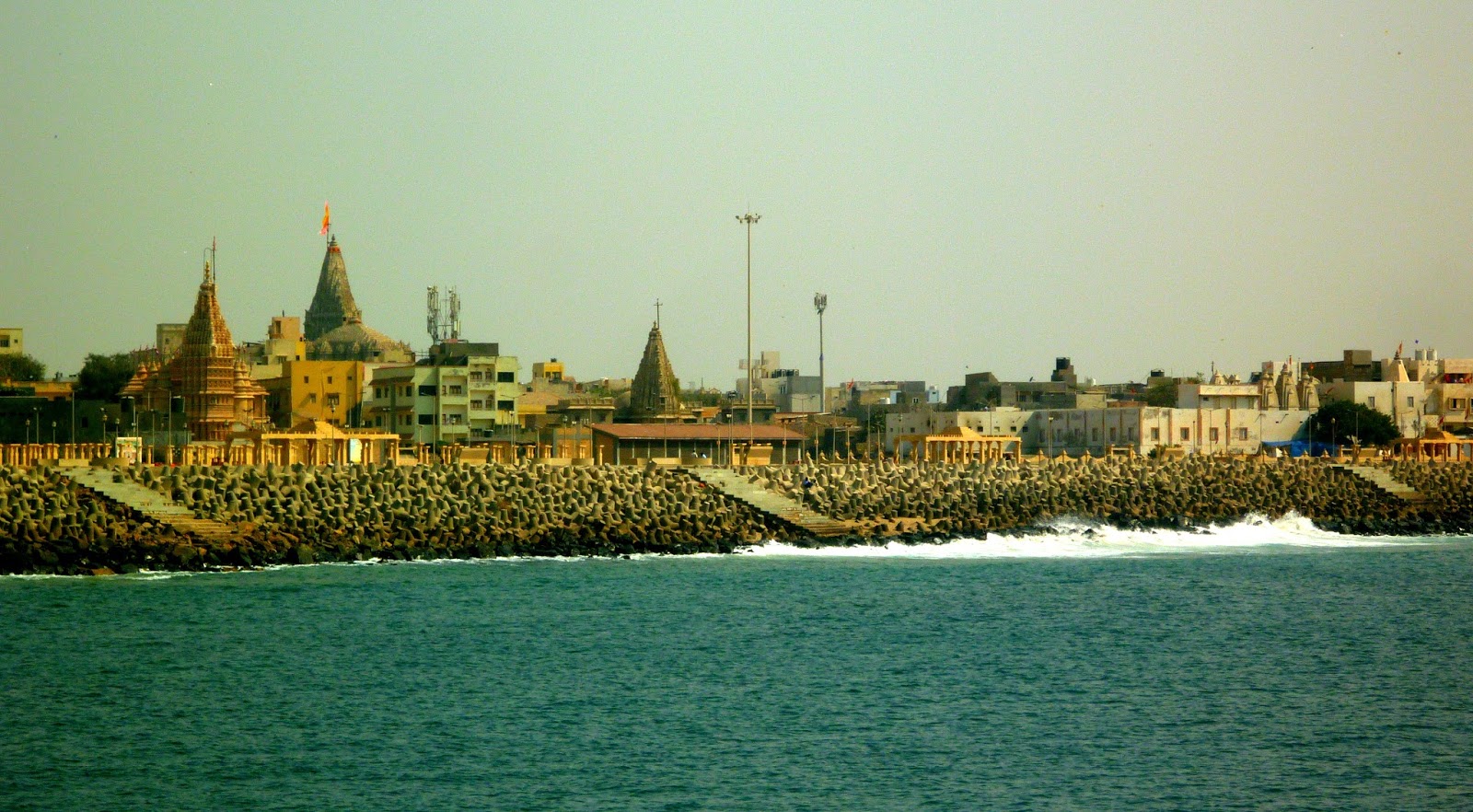
Dwarka, located in the state of Gujarat in western India, is one of the four sacred pilgrimage sites also known as ‘Char Dham’ (Char: Four; Dham: Divine Abode) located in the four corners of India. Besides Dwarka, the other three are Badrinath in the North, Puri in the East, and Rameshwaram in the South. Many Hindus in their lifetime try to visit at least one of these highly revered shrines, but only a few are able to visit all four because of the time and long distance travelling required. Thanks to my parents’ wanderlust, I have been lucky enough to visit all of them. We had been to Puri and Rameshwaram in the nineties, and visited Badrinath in 2004. A pilgrimage to Dwarka had been pending since but we finally managed to complete the quartet last year. Dwarka, one of India’s seven ancient cities known as Sapta Puri, is where Lord Krishna established his kingdom after he left Mathura. Also in the 8th century, the sage Adi Shankaracharya established one of his four peeth (monasteries) here. Together it all makes Dwarka as one of the most respected pilgrimage sites in India.
I had been working in Vadodara, Gujarat, from where during a weekend break, we travelled around 500 km to Dwarka by car. Located at the westernmost tip of the Saurashtra Peninsula, Dwarka is a very remote town so it is important to pack essentials for the journey as there is nothing much available on the way. The roads are excellent throughout the route as it is in most parts of Gujarat. The Saurashtra region is quite dry and has a very rural feel about it. There is very little development outside of the industrial towns and once we crossed Jamnagar, all we could see were long, unending stretches of barren lands with dry, thorny bushes as the only vegetation. There are only a handful of roadside dhabas after Jamnagar where you can get a Gujarati Thali as the safest meal and buy bottled water. Travelling for several hours through such desolate lands with no signs of civilization can get quite boring. Some 40-50 km before Dwarka, we passed several windmills with their blades rotating in the favorable winds of the coastal region.
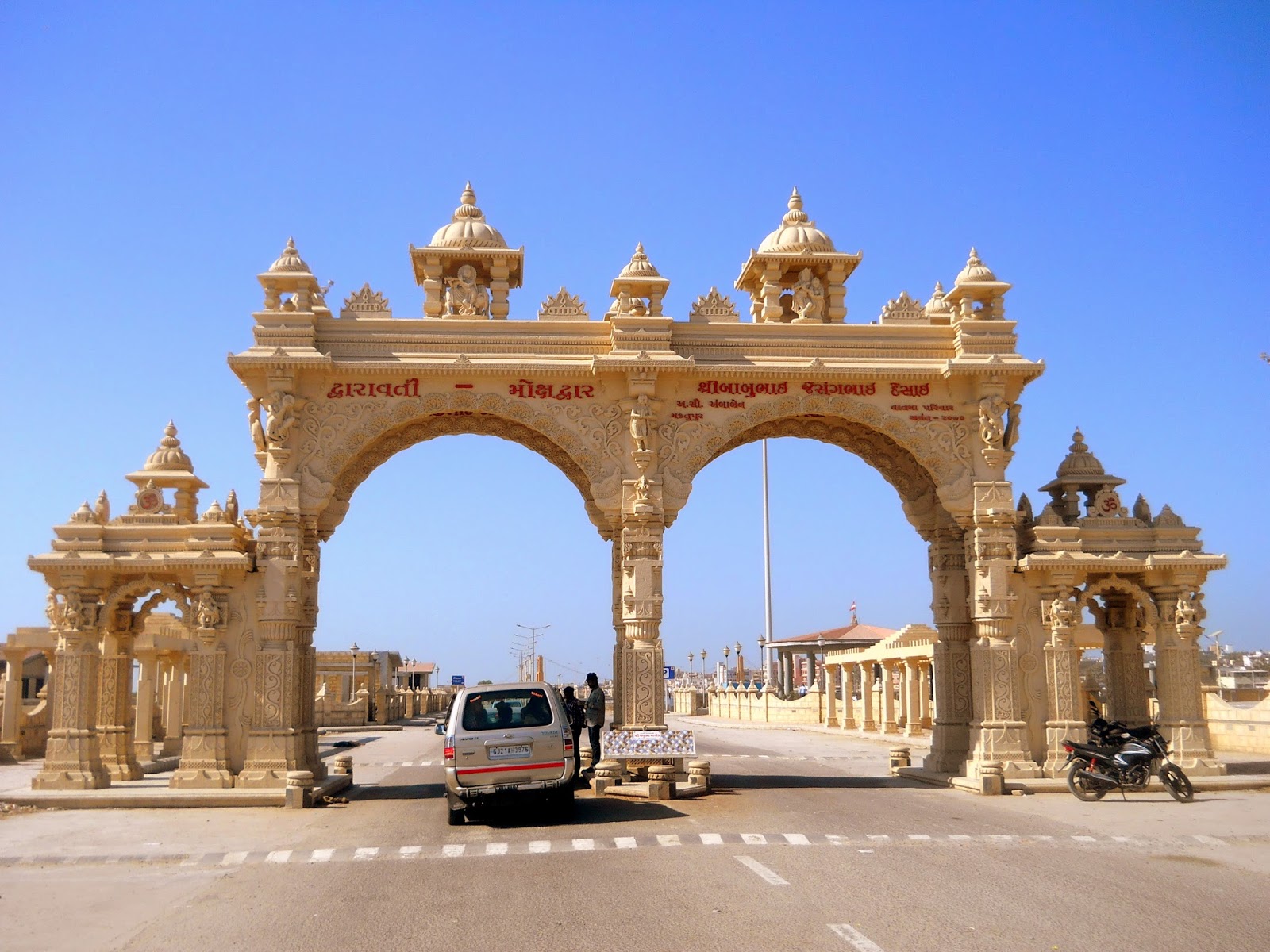 |
| Entry to Dwarka town |
After an eleven hour journey, we finally entered through the majestic gate to Dwarka township. Driving along a road lined by stone columns on either side with a view of the Arabian Sea gave a feeling of entering a royal kingdom. That feeling evaporated once we entered the narrow alleys of the town; the kingdom of Lord Krishna with all its riches was long gone and what existed now was a rural town with no paved roads but only broken lanes passing through old dilapidated tenements. There are a number of low budget lodges and dharamshalas and a few decent hotels here. We checked into Lord’s Inn located next to the sea shore and relaxed after the long journey.
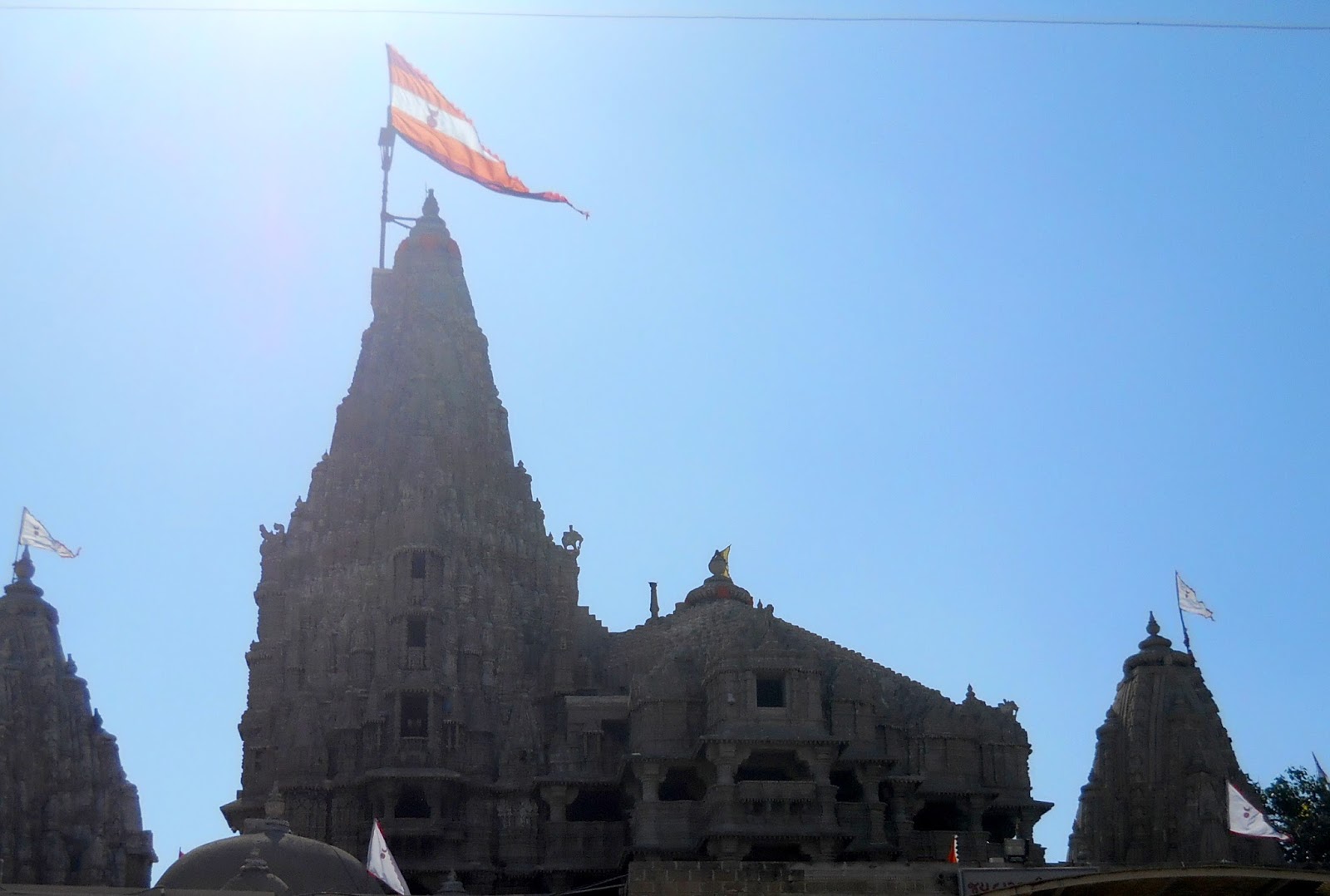 |
| Dwarkadhish Temple |
There are many temples to visit in Dwarka. Among them, the Dwarkadhish temple, Beyt Dwarka and Nageshwar Jyotirling are the more important ones. In the evening we visited the Dwarkadhish temple to watch the Sandhya Aarti (Evening Prayers) at 7.30 pm. This temple, also known as Jagat Mandir, is dedicated to Lord Krishna who is worshipped here as Dwarkadhish or King of Dwarka. Located near the Gomti Ghaat, it is a five storey limestone structure supported on 72 pillars, with an intricately carved steeple rising up the main part of the temple. It is believed that the original city of Dwarka was submerged in a massive flood; a belief which has found support in some archaeological surveys. The original temple built some 2500 years ago by Vajranabha, Lord Krishna’s grandson, is supposedly still at the bottom of the sea, while the present temple was built some 400 years ago.
Besides the main entry, there is another entry called Swarg Dwar (Gate to Heaven) on the rear side of the temple facing the Gomti River. After taking a dip in the river, the pilgrims climb 56 steps to enter the temple through the Swarg Dwar. We entered from the main gate where we deposited our footwear, camera and phones at the respective counters. We had arrived by 7 pm as the queue keeps getting longer with time. The door to the sanctum was closed and the aarti was supposed to start at 7.45 pm. Men and women stood in separate queues waiting to get that once in a lifetime glimpse of Dwarkadhish. Chanting prayers and songs of Lord Krishna, they all patiently waited. For the locals, it was like an everyday ritual. Soon the doors opened and the aarti began. The ringing bells and incense fills the environment with the chorus chanting reaching a higher note as devotees fall over each other to get a proper view of the shrine. The shrine of Dwarkadhish, decorated with exquisite ornaments and clothing, is very similar to that of Banke Bihari seen in the Krishna temples of Mathura and Vrindavan. The queue starts moving and each person gets a few seconds in front of the sanctum to pray and give his offerings. Once my mother was satisfied with her prayers to Dwarkadhish, we visited the other shrines in the temple complex. In the Shankracharya hall, there were kept some of the original manuscripts of the four Vedas (ancient scriptures of Hinduism). Later, we returned to the hotel and after dinner retired for the night.
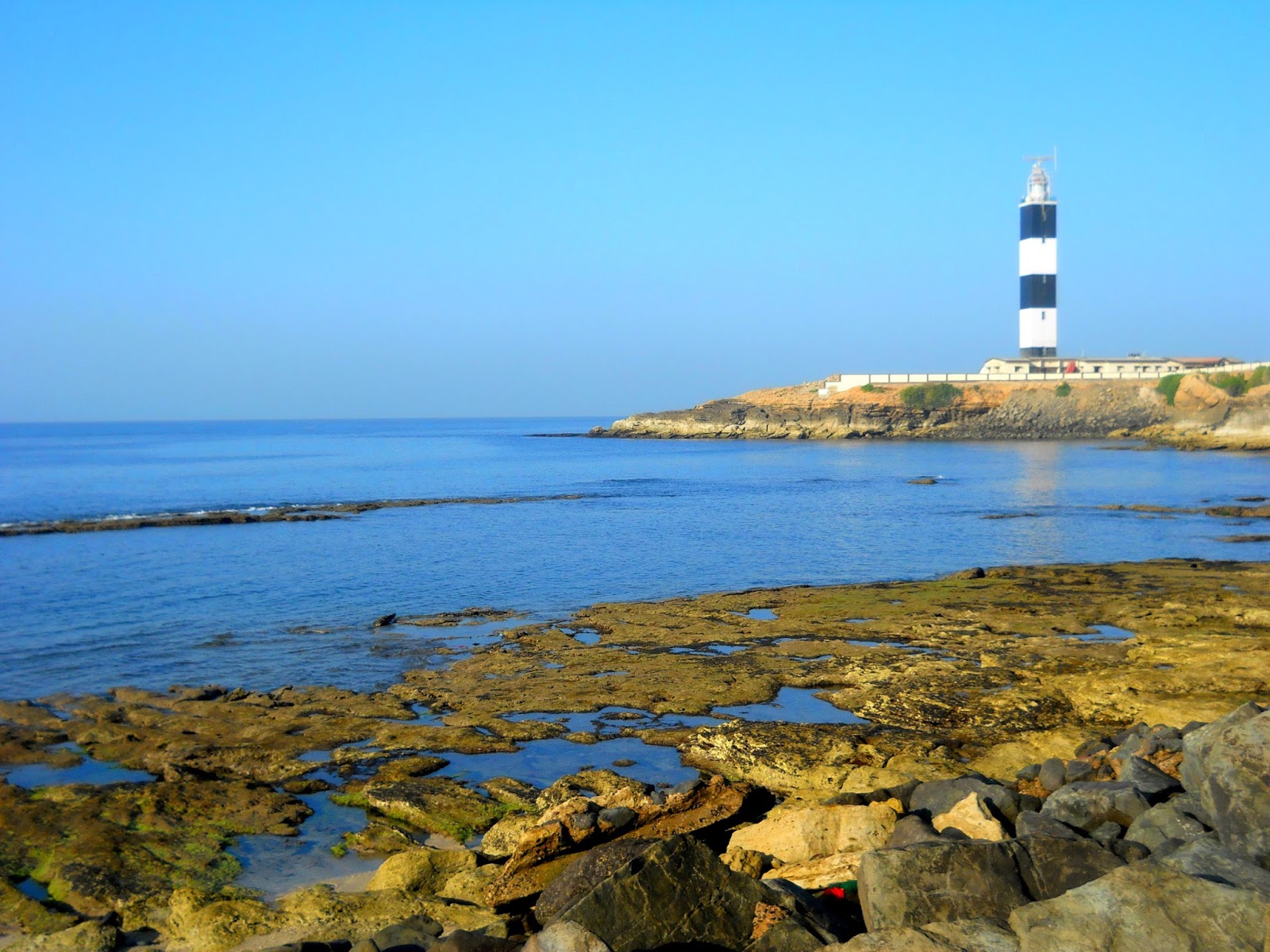
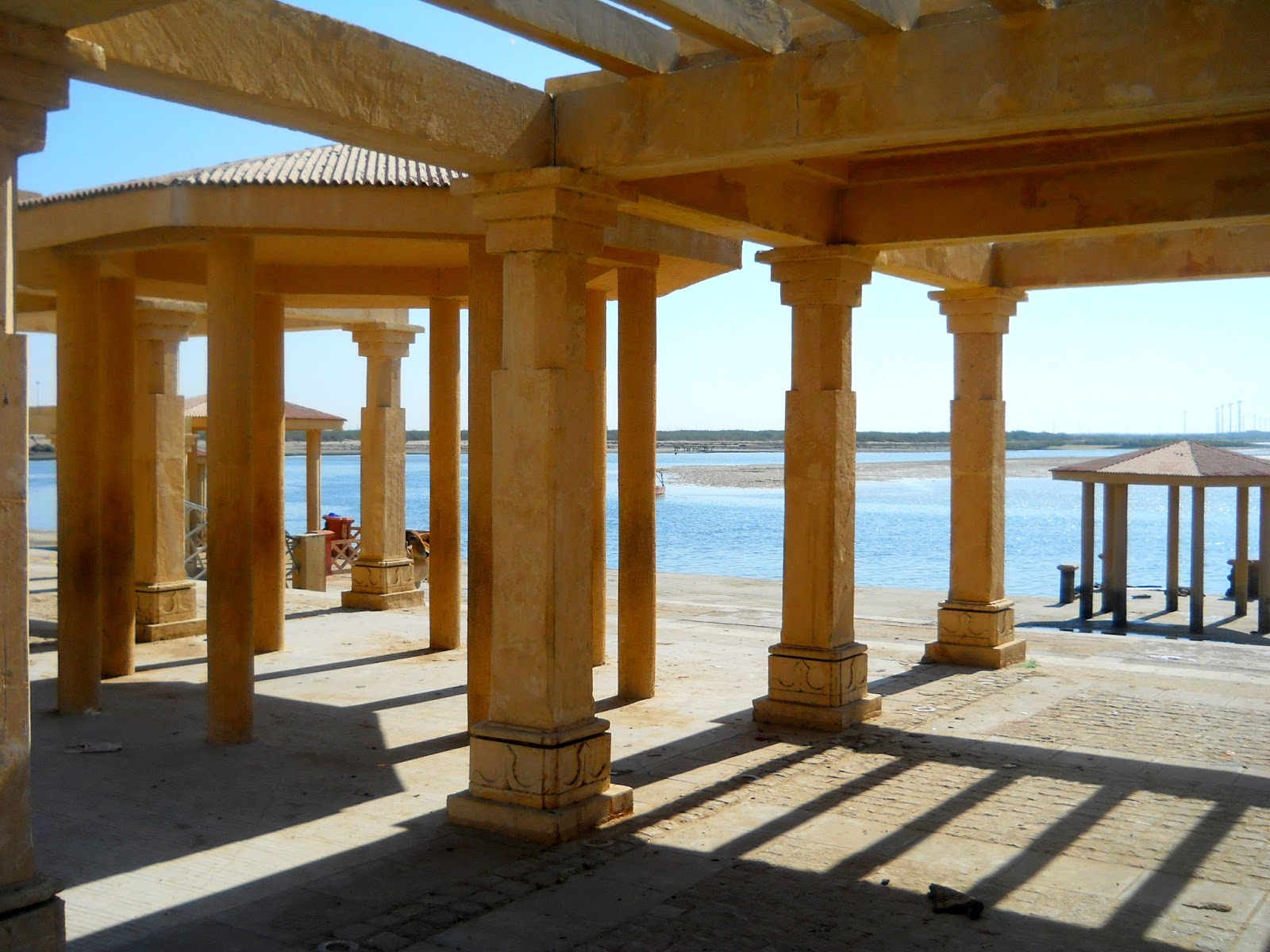
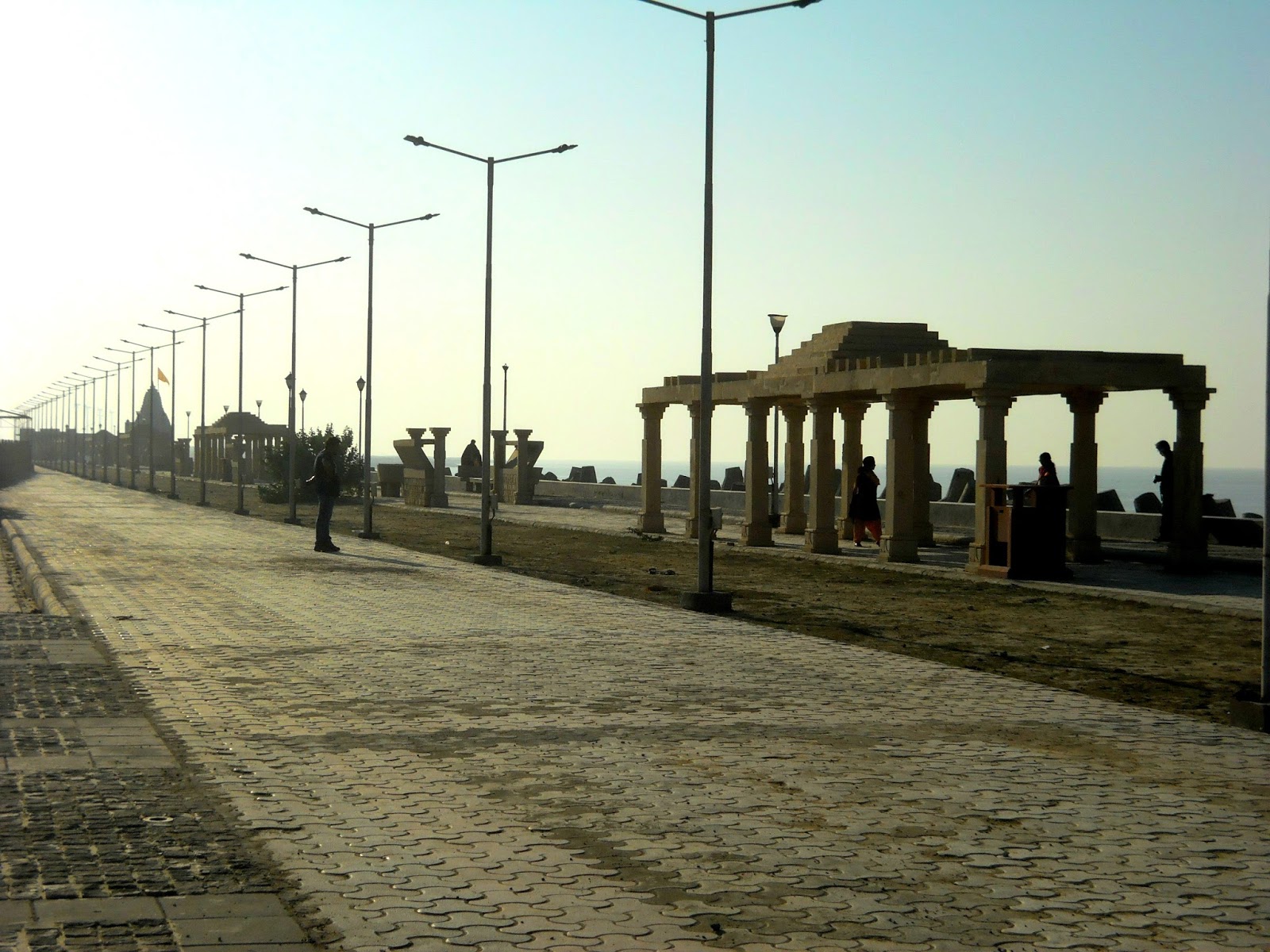
Next day I went for a walk around town. Located by the sea and the Gomti River, Dwarka has the location worthy of a major resort town. To evoke the imagery of its ancient royalty, several stone columns, gazebos and benches have been constructed near the entry, by the river and the sea shore. Unfortunately, they have layers of dust on them and the rest of the town is in a dire state. The Gujarat Tourism advertisement on Dwarka is a fine example of how excellent photo and videography skills can make even the dullest of places look charming and blissful. Religious places of historical significance are meant to evoke a feeling of reverence and piousness within us. Except for the temples in the South, I miss that feeling of sanctity in most religious towns in India, most of which are an unkempt and shabby mess due to poverty and lack of development. I remember growing up on stories of Krishna brought to life in comics and television serials where the young, lovable Krishna is running around the beautiful gardens of Mathura and Vrindavan, playing with his female friends. Charming villages nestled in the woods, clear streams flowing by with cows grazing on lush green grass; it all makes one believe in the ethereal leelas of Krishna. Those fantasies are shattered when one visits Vrindavan or Dwarka in reality in today’s times and walks through narrow alleys filled with vehicles, cattle, dust filled air, and piles of garbage lying around. There are no beautiful gardens, no fountains or streams, no charming village huts.

Dwarka neither has the freshness of an open village life nor the development of a small city. There is too much litter and animal feces everywhere – near the temples, on the streets, on Gomti ghat. An ancient city, with its splendor lost long ago, is now inhabited by people who have no real employment and have no understanding or desire to protect their ancestral heritage. As the security guard at our hotel said, the local municipal body takes no responsibility for the betterment of the town which receives thousands of tourists throughout the year and is completely packed during the festival of Janmashtami.
 |
| Gomti ghat during high tide |
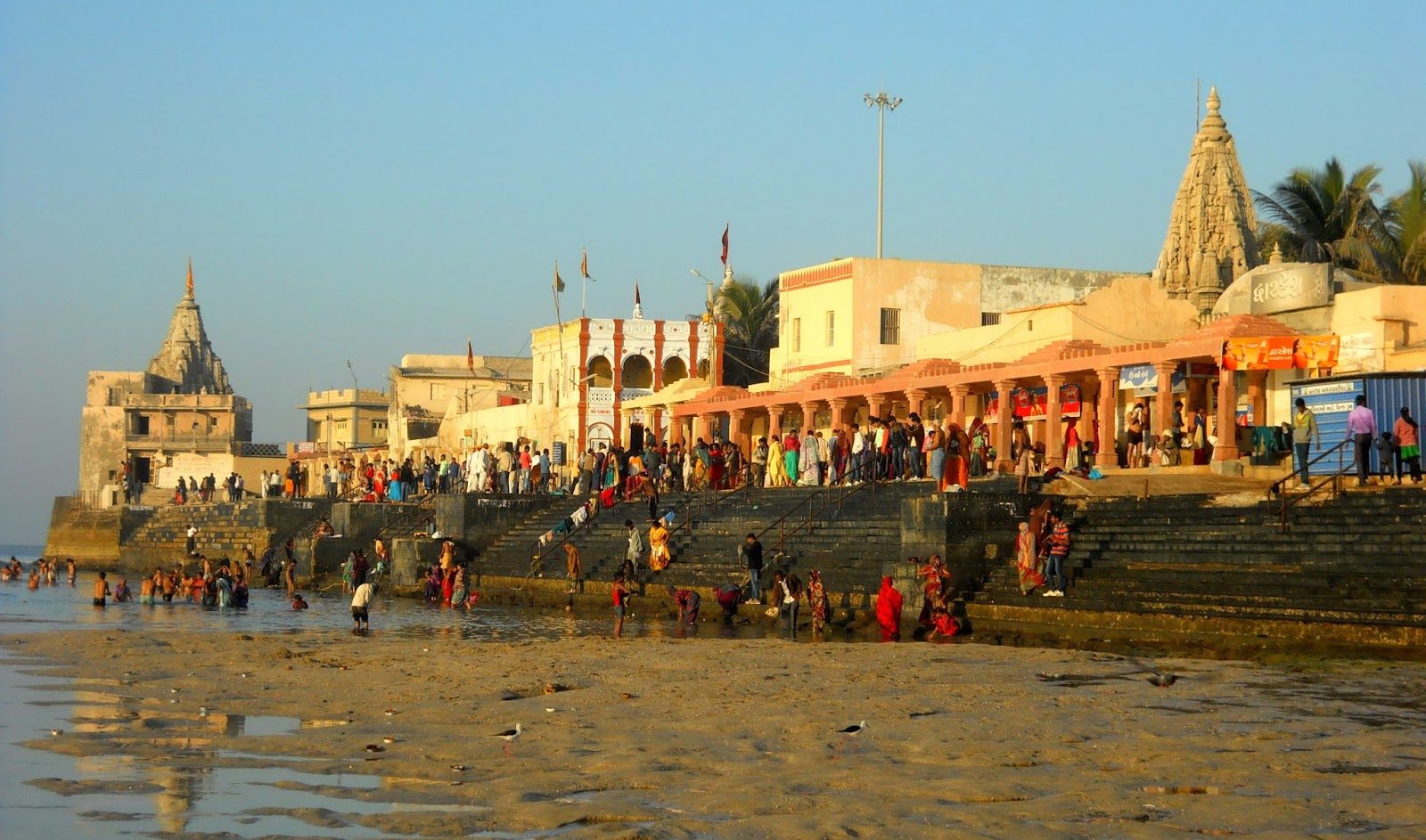 |
| Gomti ghat during low tide |
The Gomti ghat or quay is the confluence point of the Gomti River with the Arabian Sea. It is a sacred site for everyone to make their prayers, do a puja or perform the final rites before cremation. During the afternoon it is high tide when the sea water comes in and mixes with the river. Like all holy towns in India situated by a river, people were bathing in the river, and a group of curious westerners were busy taking photographs of half naked sadhus. During low tide, the sea water recedes back and with the water only knee deep, people can walk across the river.
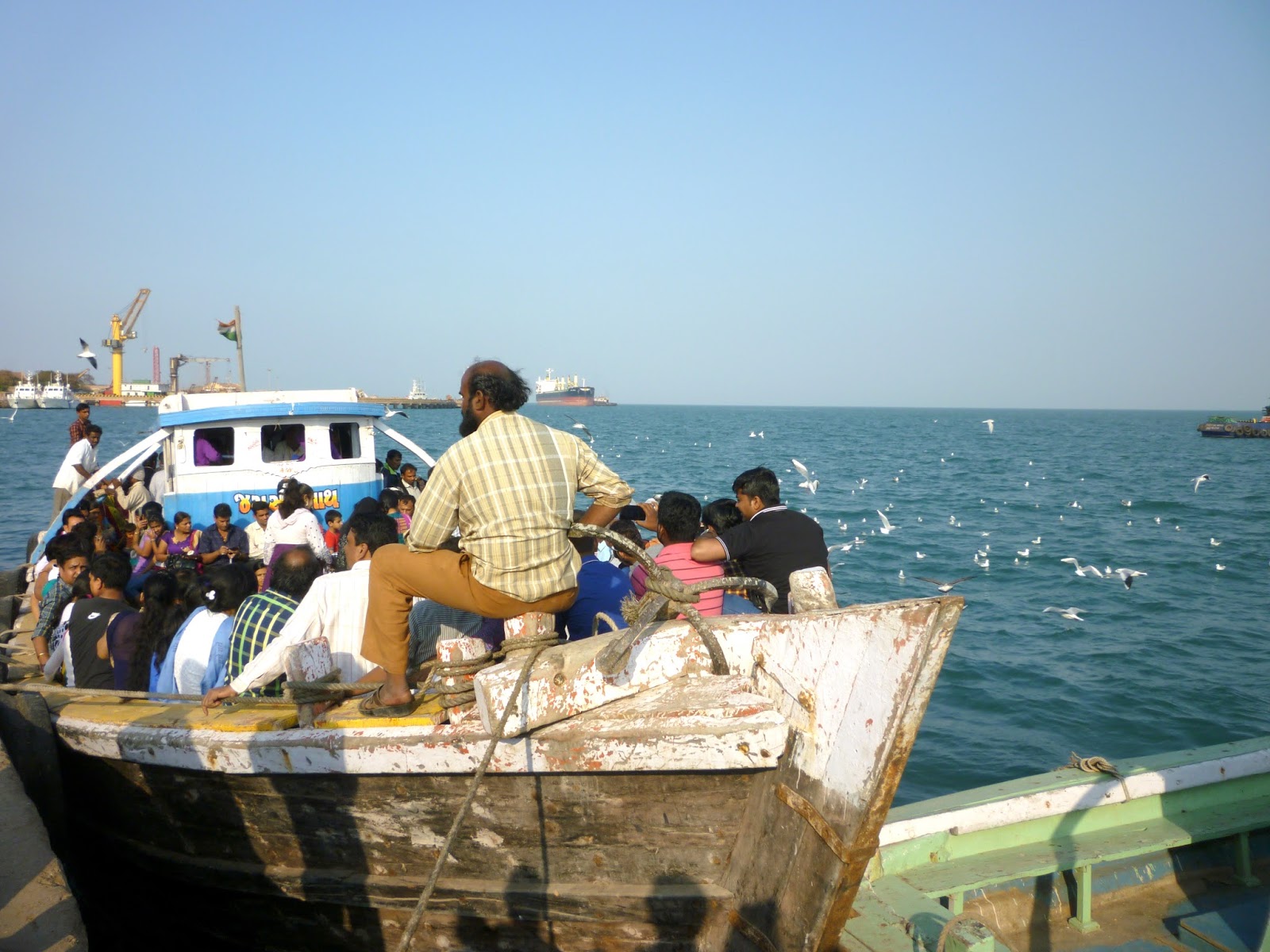
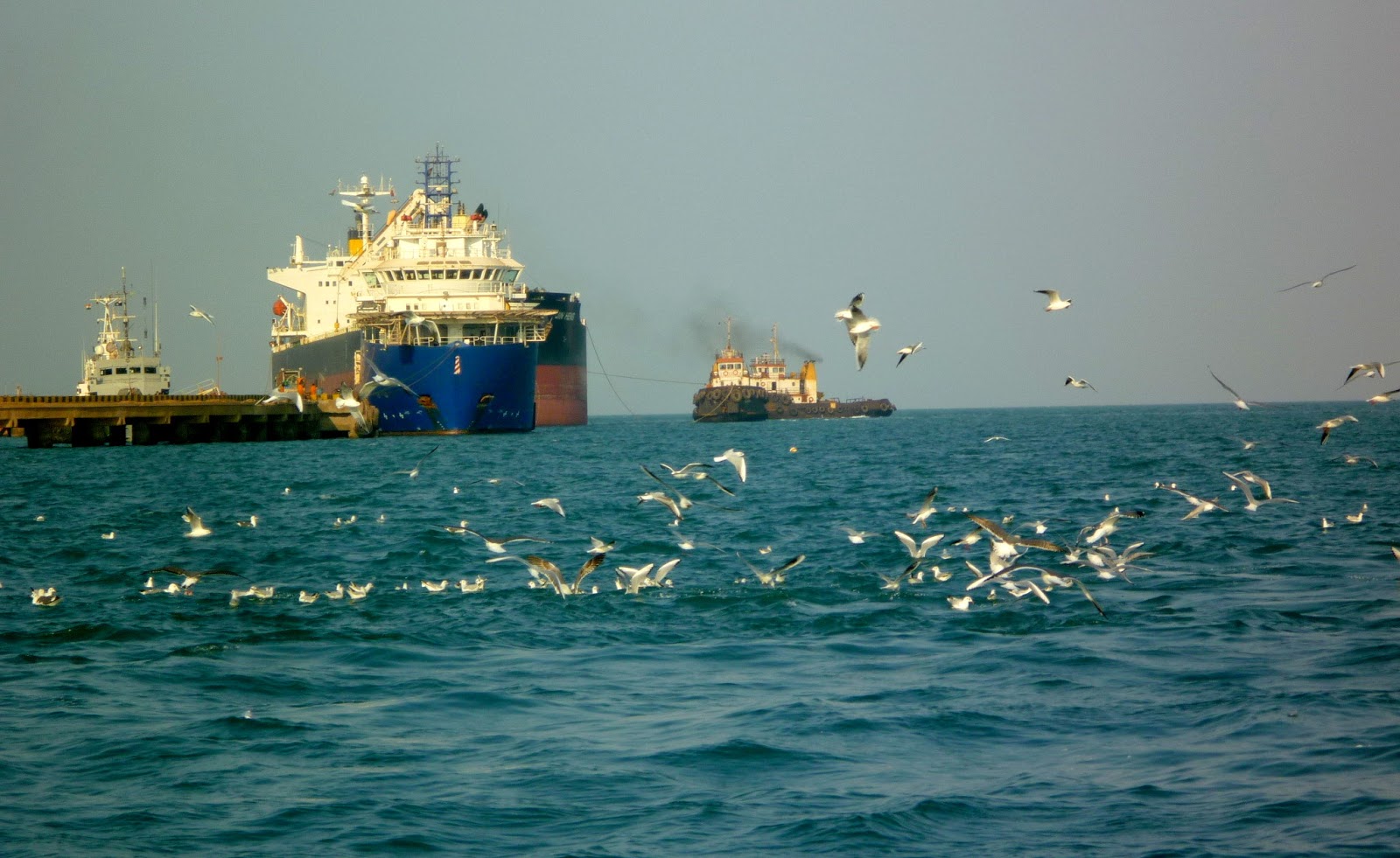
Later In the afternoon we visited Beyt Dwarka, a small island located off the coast of Okha in the Gulf of Kutch. This island is believed to be the residence of Lord Krishna and has a temple dedicated to him. From Dwarka town, we drove 32 km to Okha which is one of the busiest ports in Gujarat for trade. A large number of small boats and large ships were docked in the waters near the coast. From here we took a ferry for a 15 minute journey to Beyt Dwarka. These tourist boats are not well maintained and are not very comfortable with all the locals and tourists falling over each other to get a place to sit. However, the star attraction of this boat trip was the horde of seagulls who accompanied our boat throughout the journey expecting passengers to throw up some nuts or fruit for them.
Numerous fishing boats and nets sprawling over the sea greeted us at the Beyt Dwarka jetty. After having tea and pakoras at a stall, we made the ten minute walk to the temple. Inside, there was a guide who was willing to show the visitors around the temple with a narration of stories associated with Lord Krishna and Beyt Dwarka. As per tradition, one is expected to donate some rice for the Brahmins living in the temple. It was not very crowded at that time so we took our time in paying our respects to Dwarkadhish. On the parapet wall opposite the shrine, a large mirror has been placed for devotees who can’t see the idol during crowded times, and instead can look at the reflection in the mirror. Later, after buying some souvenirs from the street shops, we headed back to the pier to catch the last boat leaving out of Beyt Dwarka around 7 pm. The seagulls accompanied us again during the trip, constantly hovering above our boat.
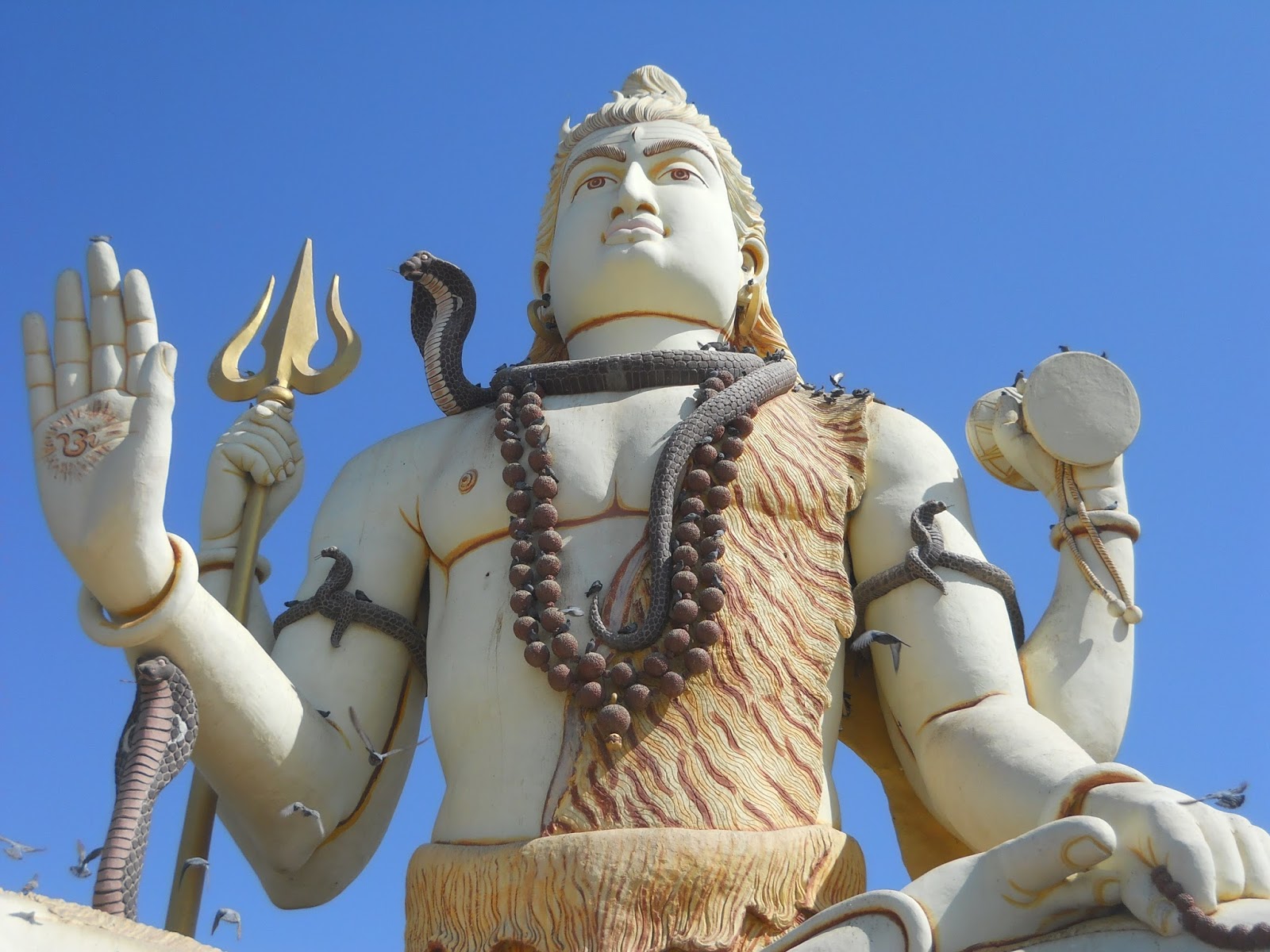

Next day we left Dwarka after breakfast but not before we made a detour to visit Nageshwar Jyotirling. Jyotirling, which means the Radiant Sign of Almighty, are ancient shrines of Lord Shiva where he is believed to have appeared in the form of light. There are twelve such shrines across India of which two are in Gujarat – Nageshwar Jyotirling, located 16 km from Dwarka town on the way to Beyt Dwarka, and Somnath being the other. The Nageshwar temple is located near a forest called Daruka Van where Lord Shiva had slain the demon Daruka. The construction of the temple complex with the adjacent sprawling garden was commissioned by Gulshan Kumar, the now deceased owner of T-Series Music Company. There is also an 85 feet high and 40 feet wide giant statue of Lord Shiva next to the temple. The complex is well maintained and thankfully there was not much crowd during our visit. Inside the sanctum, the Jyotirling was covered with a glass case and surrounded by symbols of Lord Shiva and Goddess Parvati. Only devotees dressed in traditional clothing are allowed to go inside the sanctum. A number of people were whispering their prayers into the ears of the idol of Nandi, the bull which serves as Lord Shiva’s ride.
Our pilgrimage to Dwarka was now complete and we headed home. I don’t know if I have earned any divine blessings, but feel fortunate to have completed the Char Dham visit so early in my life. Jai Dwarkadhish!
 nomadictourist.com