Today our lifestyle choices based on our increasing needs of comfort and convenience have led to creation of a mechanized life based around cars, elevators, air conditioners, microwaves, coffee machines, online shopping, and the all pervasive smart phones. Some of us have heard stories from our grandparents about the charm of a simple village life but few have any experience of it or have any desire to leave their online life and live permanently in the midst of nature. However to break ourselves away from the grey skies, toxic air and the cacophony of our urban life, is something we all seek once in a while. The Goat Village (TGV), an eco-tourism property perched amidst the hills of Garhwal Himalayas near Mussoorie in Uttarakhand, is one such place to experience the charm and peace of a basic lifestyle and living of the land. It is a tourism destination designed by a community known as Green People who are working toward economic and social development of farming and other local communities living in the Himalayas.
In May this year, I planned to do the Nag Tibba trek and decided to visit this village which falls halfway en route the trek. The 8 km Nag Tibba (Serpent’s Peak) trek starts from a village called Pantwari situated around 100 kms from Dehradun. The trek takes one through thick forests and verdant meadows to an altitude of 3022 metres. From the summit one gets magnificent views of snow capped Bandarpoonch, Swargarohini and Gangotri peaks. An overnight bus from Delhi took me to Dehradun from where I took another bus going towards Uttarkashi and got down at Nainbagh. A shared jeep from Nainbagh then took me to Pantwari. It was 12.30 in the afternoon when the driver dropped me at the starting point of the Nagtibba (and TGV) trek in Pantwari. There are no hotels or homestays in Pantwari so trekking to TGV was the only thing to do now. There is a Bakri Chhaap store and collection centre (a brand of the Green People) where I had the good fortune of meeting Pradeep and Chandru, part of the Green People community.


Both Pradeep and Chandru were also going to TGV and were arranging a car to go to Laser Gaon, 8 kms from Pantwari, from where the trek to TGV and subsequently Nagtibba is reduced by approximately 2 km. While waiting for the car, I took a stroll around Pantwari which like most mountain villages was quiet and laidback. Beautiful terraced farms were spread as far as I could see. I bought a packet of biscuits which caught a little dog’s attention and who ultimately ate the whole pack and I had to buy another one for myself. Chandru showed me around the Bakri Chaap store; local women were sifting through small lots of pulses to remove stones and other loose foreign matter. There were two other rooms where sacks filled with different grains and flour such as rajma, bajra, chana, gahat, soya, mandua, maida, brown rice etc. were kept along with weighing and packaging machines. All these grains are grown organically in the hills and sold under the Bakri Chaap brand. So far the brand has five star hotels and malls in Dehradun and Mussoorie as its big customers.
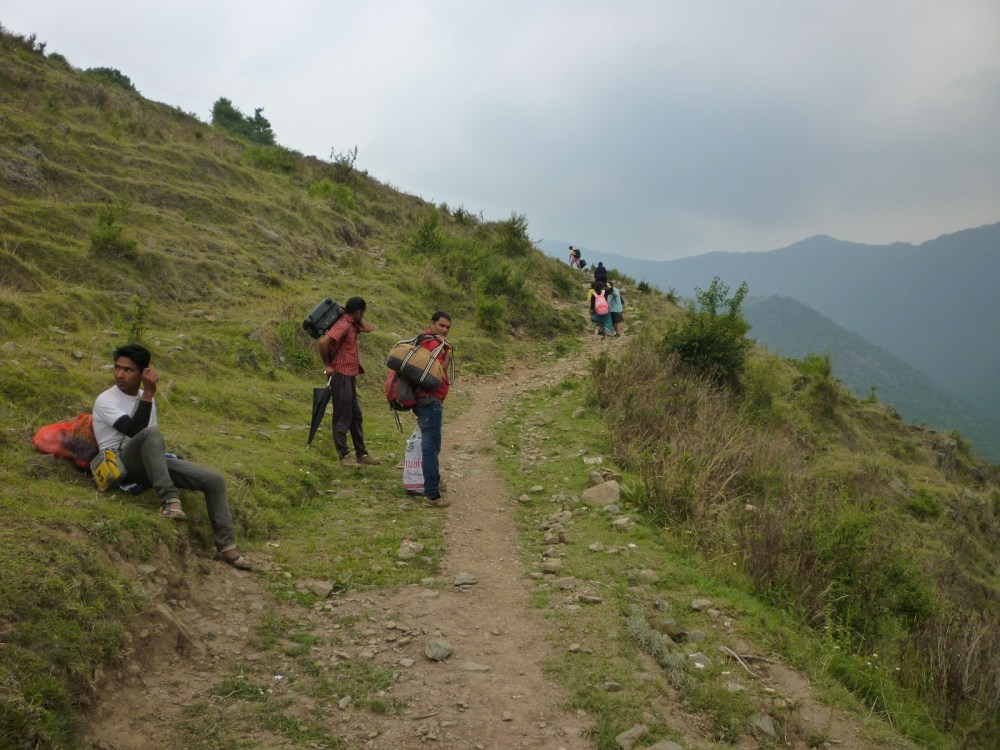
The car arrived, I hopped on and we went till Laser Gaon beyond which vehicles can’t go. Pradeep left the car there and we started walking the 2.3 km distance to TGV. On the trail there was another family of five from Delhi and two locals; one was carrying a tin of cooking oil and the other a huge sack of vegetables weighing about 14 – 15 kilos for the TGV kitchen. The trek is on a rocky and uneven path which is a bit steep and strenuous especially when you have arrived after a long journey and carrying a heavy backpack. Along side the path is a beautiful mountain range and valley covered with dense green forests. Clouds were gathering above us sending strong messages of impending downpour. We all stopped once in a while to catch our breath. The guy carrying vegetables told me that he has to do the return trek thrice a week to maintain the kitchen supplies at TGV. It took close to two hours to reach TGV.
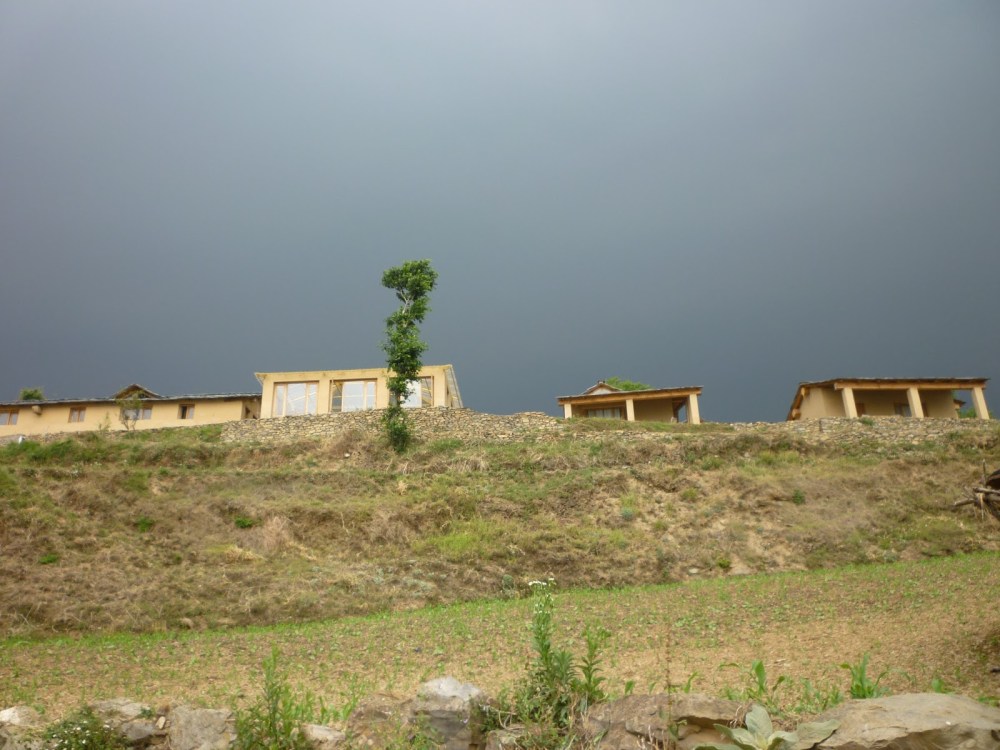
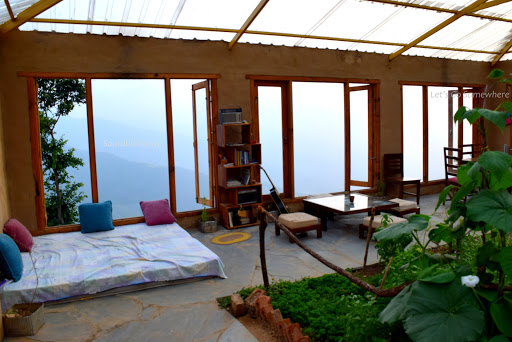
As we reached the terraced slopes of the property, gasping for breath, the skies opened up welcoming us with a thunderous rain crashing down the mountains. We all quickly took shelter in the glasshouse which serves as the common as well as dining room of TGV. The other family and I were served mint juice followed by tea. Lounging on a cushion, I soaked in the views of the wide open mountainous vista and the music of the hailstones battering the roof in sync with the earth shattering thunder. Sipping a hot cup of tea, Pradeep who is a contractor tells me more about the Goat Village and the Green People community with obvious pride. The community has been formed by a retired colonel and former director of NIM, Uttarkashi. They promote organic farming, source the produce directly from farmers all over Uttarakhand without any middlemen and sell them under the Bakri Chaap brand. Without any middlemen, the farmers get a better price for their crops. These crops grown organically in the unpolluted environment of the hills are high in nutrition. The initiative has now extended in the form of The Goat Village to promote sustainable tourism in the Himalayas. It provides employment to the locals and aims to create awareness among urban visitors the beauty of simple living in the mountains. All meals served here are full of local ingredients and flavors, prepared with cereals and vegetables grown in the farmlands surrounding the property.
The resort has beautifully designed furnished cottages as well as a dormitory made of wood, mud and stone in traditional koti banal architectural style of Garhwal. The cottages have all basic amenities and a clean bathroom with running water. The resort has no electricity which is again to provide you the village like atmosphere in the mountains where it is all dark in the evening. The kitchen is the only place having a solar powered electrical connection for lights to enable cooking and charging cell phones.
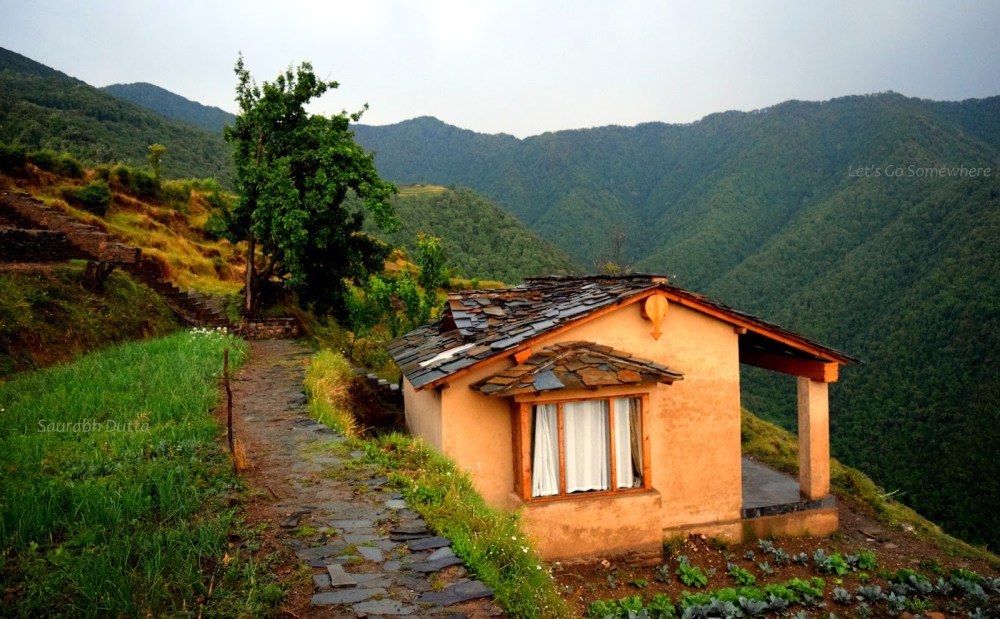

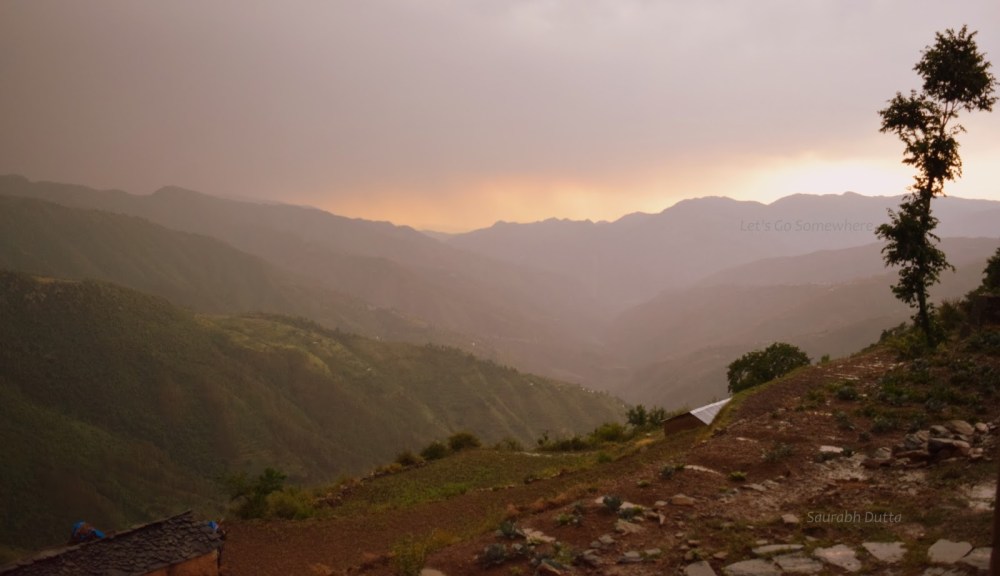
Pradeep arranged a cottage for me and by the time I washed myself and had a change of clothes, it was completely dark and cold. It was only 6.30 pm. I stood in the darkness and felt the fragrance of the wet mountain soil, the chill in the air, the mysterious darkness of the endless dense forests perched on the hills dotted by shimmers from the homes hidden in them. Soon dinner was served which comprised of a simple but delicious meal of rice, chapatti, lentils, two vegetable dishes and salad. It was topped up with a semolina halwa. The staff is very friendly and makes you feel at home instead of a hotel. Menus are generally fixed but you can make special requests as well. During dinner I joined the family from Delhi and chatted about our respective trips. With the surroundings enveloped in darkness, having candle light dinners and sharing travel stories with fellow travelers in pristine natural settings are experiences worth travelling for. There are also three dogs on the property; Jhilmil and Rimjhim are young, highly energetic and excitable; and Sheru who is older, quiet and reserved.
After dinner, I sat down in the porch of my cottage marveling at the magical view of the stars in the night sky. Only in the unpolluted air of the hills, in such complete darkness, one can feel the shimmering blanket above embracing you from all directions.


I woke up next morning to the soft sounds of chirping birds and a gentle pleasing sunlight channeling through my senses. I opened the door of my cottage and instead of another multi storied building, the view of the wide expanse of the mountains welcomed me. I lingered for a few minutes taking in the fragrance of the beautiful morning. Soon I freshened up and spent the rest of the day trekking to the Nagtibba (I have written about the trek in a separate post).
I returned from the trek to TGV by five in the evening, utterly exhausted and couldn’t hide my delight on being offered tea and poha by the kitchen staff. After devouring two portions of the poha, I took a shower and later relaxed myself in the glasshouse chatting with the other guests who had just arrived. The dinner was again a simple but delicious meal not unlike the previous evening. The dessert served was called as dadi maa ki mithai (grandmother’s sweet), and was basically a chappati stuffed with jaggery and fried in ghee. Later, in spite of the cold, I sat in the porch for a couple of hours watching the stars and relishing the silence.
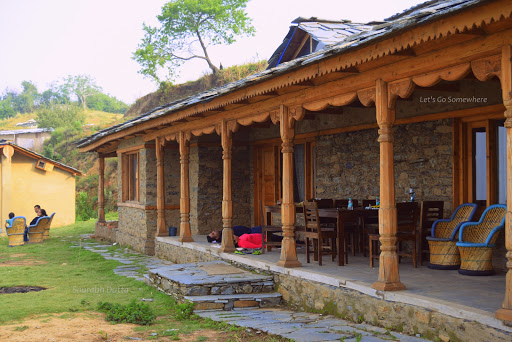
Next morning I woke up early and went for a long walk in the farms surrounding the village. Village men and women were going about their daily chores of cutting wood, feeding the cattle, shepherding the goats, digging the farms, harvesting ready vegetables. Watching the forested mountains, sunlight squinting on their edges and the simple, unhurried lifestyle in the fresh mountain air made me wish that we hadn’t moved away from the agrarian society of our ancestors.
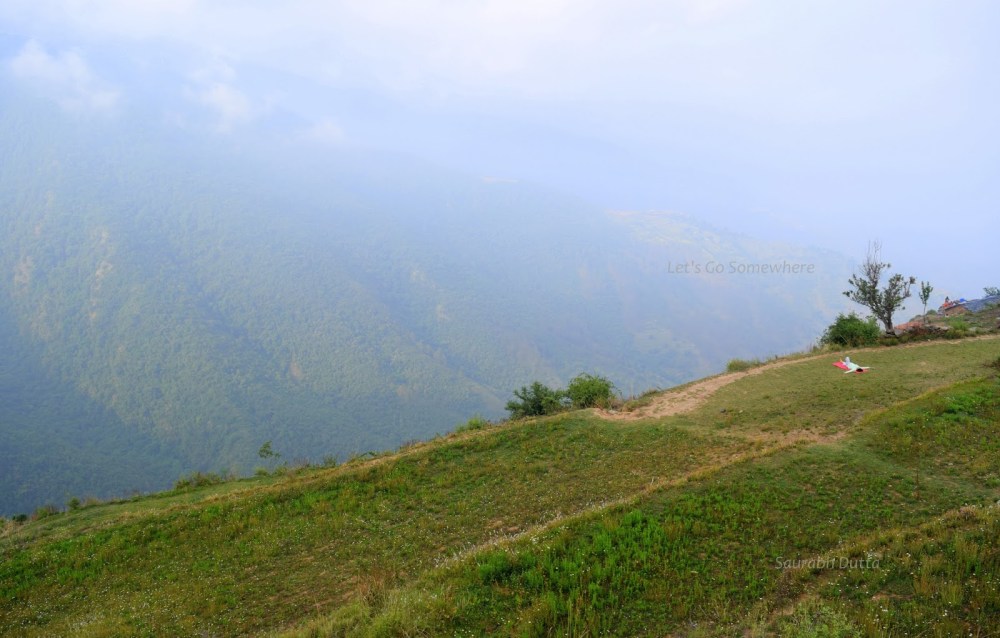
It was time to leave this beautiful place. After breakfast I bade goodbye to the staff at TGV and trekked down to Pantwari. That evening on board the bus from Dehradun to Delhi, I felt sad to have to return to the toxic air and chaos of my everyday life but promised myself to return to those salubrious surroundings just to sleep under a starry blanket if not for anything else.
 nomadictourist.com