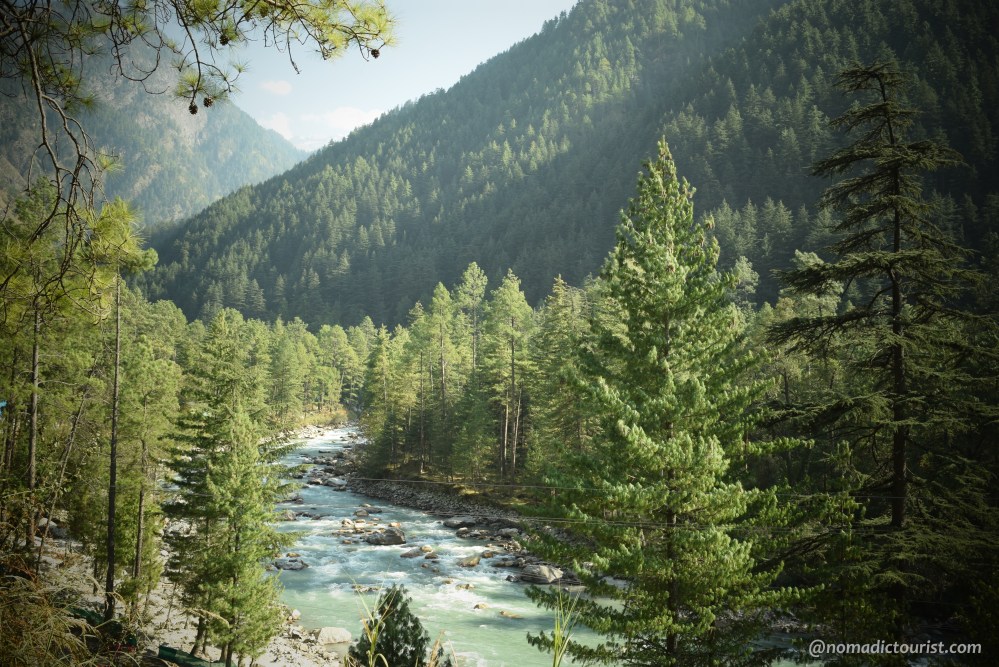
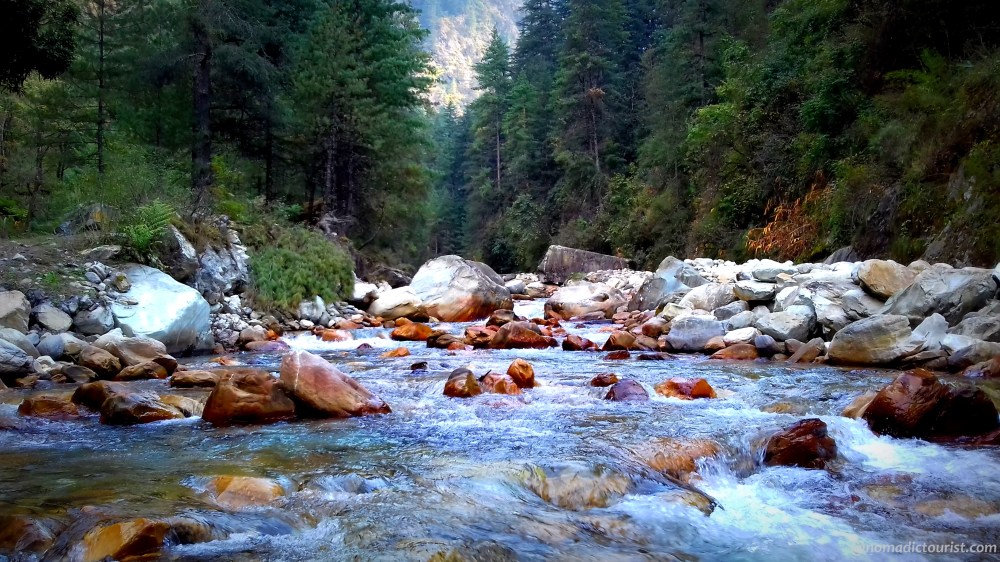
In the gentle winter sunlight, listening to the soft music of the winding Parvati river, a breakfast of salad, sandwiches and hot coffee amidst towering trees is like the illustration of my first trip to Kasol. This picturesque hill town in the Parvati river valley has gained popularity as a backpacking destination in last decade or so. The untamed natural beauty of the valley with mountains populated by dense forests and snow capped peaks, the cold river gliding over rocks and the premium quality marijuana growing in these hills bring travelers, adventurers, explorers and junkies from far and wide.
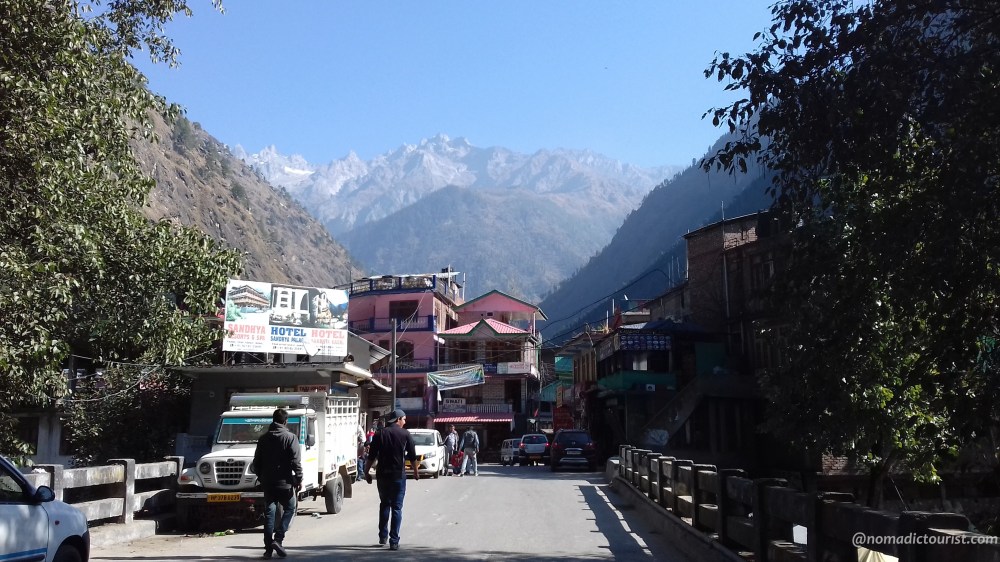
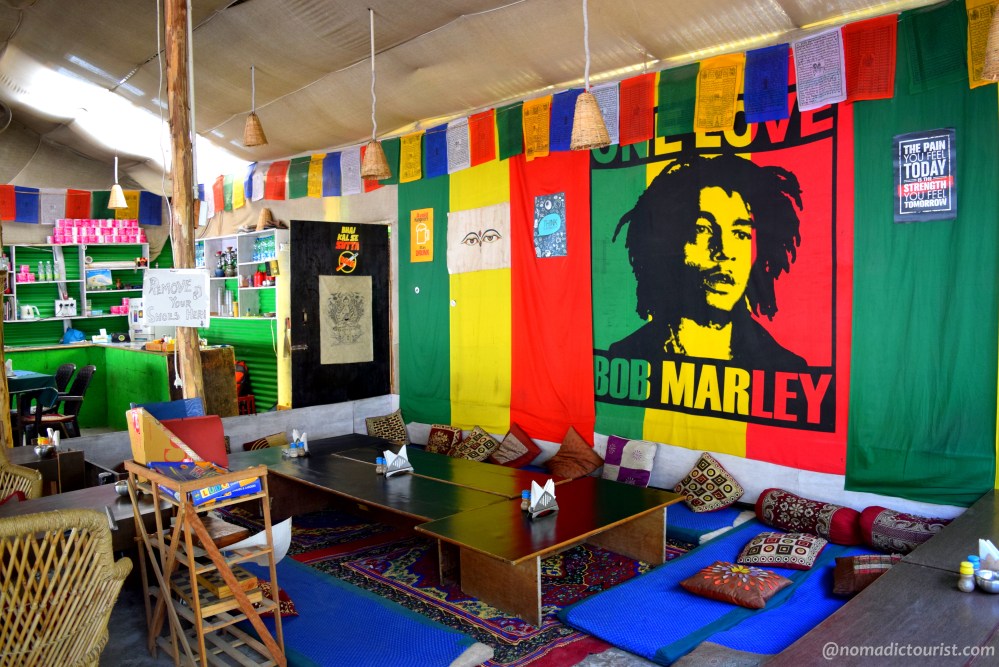
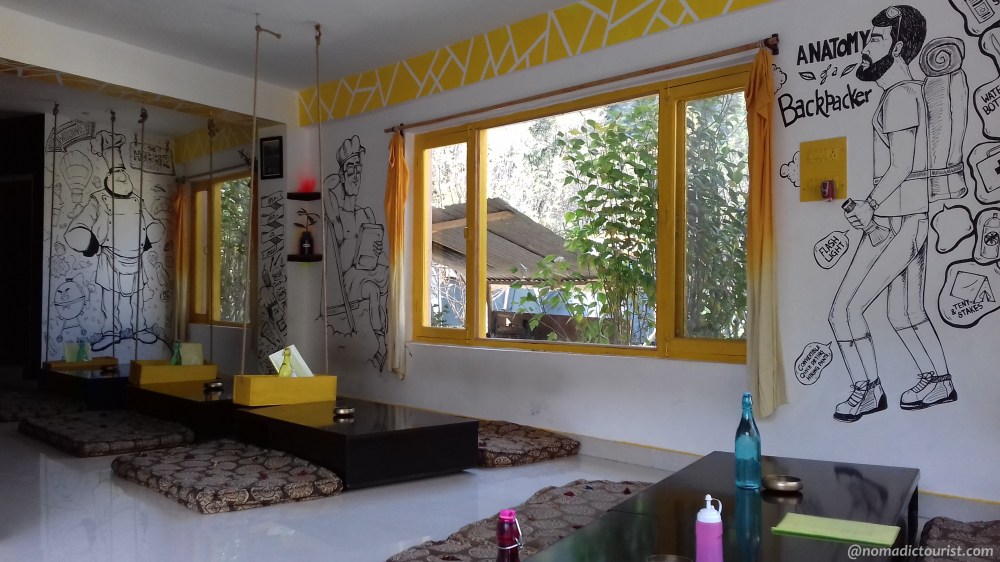
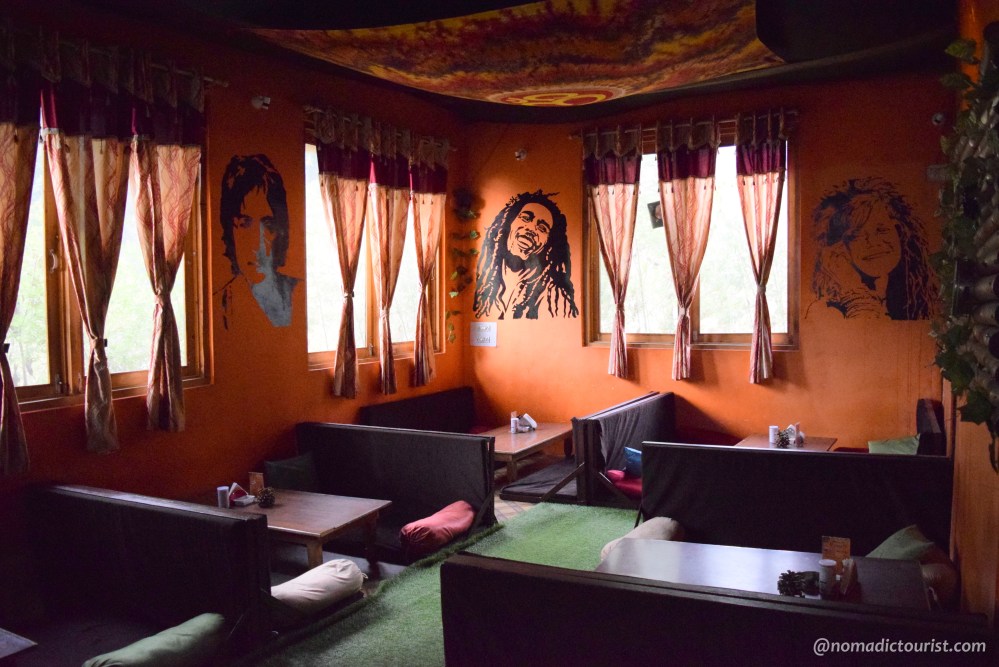
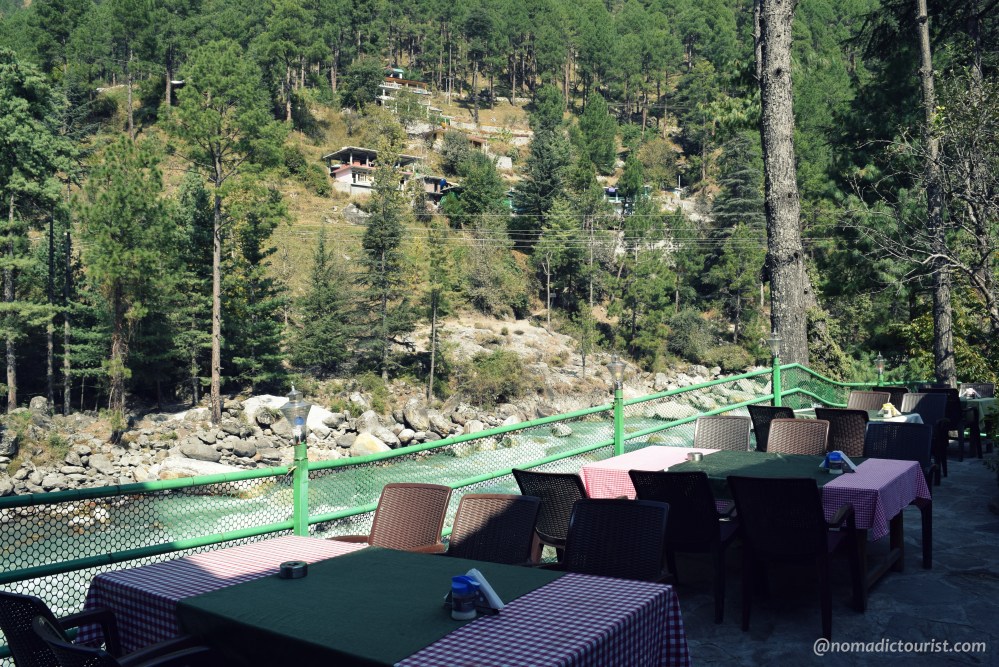 A friend had once described Kasol as ‘the place to just be’. It sums up Kasol quite well as there is nothing really to see or do here. It is a base camp to the famous Kheerganga trek and there is also the Gurudwara Manikaran Sahib with its hot water springs; but mostly it is a sleepy, picturesque hippie hangout to explore the rugged mountains and get stoned. The availability of weed in cafes, shops, restaurants, tea stalls, hotels and hostels and that you can smoke it freely, is an open secret. I had heard and read all about it but my first visit to Kasol still surprised me with its open smoking culture. Dimly lit cafes and restaurants, people lounging on cushions rolling joints, smoking from hookahs and chillums, inebriated conversations, boozy smiles, minds drifting with the music into another space and time, it was like visiting the coffee shops in Amsterdam. With the large number of foreign tourists and Israeli influence, the food scene in Kasol is great too. I don’t smoke but in the smoky atmosphere of cafes such as Sunshine, Evergreen, and River View, I indulged myself in shaksouka, thukpas, salads and grilled chicken with endless rounds of ginger lemon honey tea. With Bob Marley grinning over me, random conversations with random travelers were fun till they lasted. One evening over momos, hot chocoloate and honey chilly potato, I befriended two Israelis, Adam and Jake whom I had met earlier in the German Bakery shop. Jake loves India and visits once every year to experience Indian food and culture. He can speak Hindi a little bit, listens (and can sing as well) old Hindi film songs and has even performed Indian classical dance on stage in Israel. Along with Adam who is a fitness instructor, we chat about India and Israel, sing some songs and plan to visit Malana next day.


Malana – the mysterious hidden world, supposedly world’s oldest democracy and home to the world famous M-cream. The 20 km road to Malana from Kasol is not very good and takes about an hour by car. On the way you pass by the Malana hydropower project and some magnificently huge mountains. The cars go up to a point where there is a gate marking the entry to Malana. From there one has to trek around 45 minutes to reach the village located across the valley. The surroundings are a massive expanse of mountains with snaking paths penciled along them. Jake had some issues negotiating the rocky path but Adam with several hours of aerobics in his body had no problems and helped him along. On the way a toothless old man sitting on a rock asked me if I was interested to buy something from him, ‘lena hai? bolo? m-cream?’ dekh lo.. achcha hai’. Warning me not to touch him, he slowly brought out from his pocket, wrapped in a plastic pouch, a deep brown clay like substance – Aaha ! so that is how it looked, the magical M-cream. World’s best hash priced at Rs 3,000 for one tola (10 grams) which can take you onto intergalactic travels. Alas! I don’t smoke so I would never know its magical powers. Later we met a group of five guys from Hyderabad who were going to Malana to buy a good amount of this stuff. At one point, we all took a break when a joint was rolled. The cigarette paper, tobacco and lighter was provided by two of the Hyderabad guys while Adam provided the hash which he had been carrying in his pocket for last several days. Everyone except Jake and I took a drag. We later continued on the trek when that old man again caught up with me, ‘le lo, doston ke liye le lo…(take some for your friends back home). Entering Malana village indeed felt like visiting an ancient mythical settlement hidden from prying outsiders. Sign boards had been planted warning outsiders not to touch their temples of Jamdagni Rishi with a fine of Rs. 3,500 as a punishment for the heinous crime. Few villagers were lazing out in the sun; an old man among them told us a bit about life in the village, its caste divisions and how he had been taking M-cream almost like a health tonic for the last thirty years. Adam tried some of it in one of the huts where a man rolled a paper without any tobacco, dipped it in the resinous oil (purified form of the plant extract) and placed it on the floor for Adam to pick up without touching him. Two drags and Adam wanted to settle down for a while before the return trek.


I took a stroll through the village which largely consisted of storied wooden houses and some cemented houses which probably belonged to the upper caste people. Unlike other mountain villages where people go to lower altitudes during winters, the people of Malana never leave their abode even in the extremely harsh cold weather in spite of lack of any facilities in the village. There is no livelihood to speak of except growing some vegetables so their survival largely depends on the discrete business of growing and selling hash in which a lot of foreigners are also involved. The Hyderabadi group negotiated rates with one of the men to buy the stuff while some village women went about the activity of sorting through a large pile of cannabis leaves and children played around. An attempt on my part to get a quick picture failed as one of the women spotted me pointing the camera and the man shouted at me. Leaving them to their negotiation, I then walked back to the hut where Adam and Jake were waiting and we returned to Kasol.
Instead of hash, I find my kicks from wandering in the mountains and the wild. Kasol’s wilderness is what adds to the mystery and effect of hash on the senses. The dense uninhabited forests populated by tall verdant trees, the gurgling Parvati river flowing through them and the foggy, misty air is an atmosphere where sitting on a rock on the edge of the river, one can smoke their life away. It is the kind of place which Jack Kerouac’s Dean Moriarty would have ‘digged’. With his friend Sal Paradise, Dean would have digged the forests, the river, the cafes, the momo seller, the stoned receptionist of his hostel and that Irish guy who ordered schnitzel but was too stoned to eat it so gave it to someone else. The Jim Morrison cafe hidden in the woods (it took me a while to figure out its location) is the kind of place where far removed from the world, you can escape your troubles and immerse yourself in the quiet beauty of the hills, have amazing food, smoke, play the guitar, write rebel songs and poetry, laugh out loud and allow yourself to drift away.
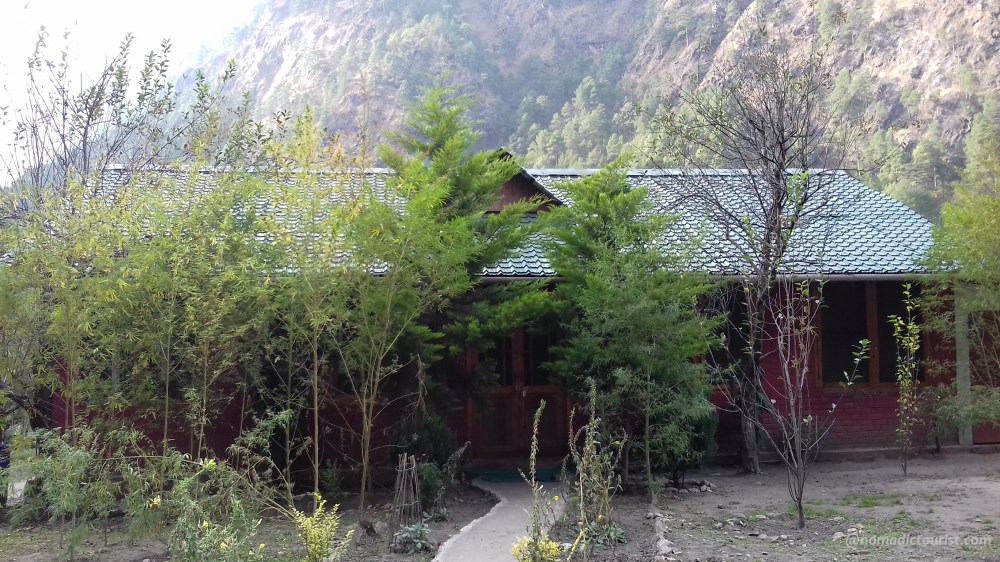
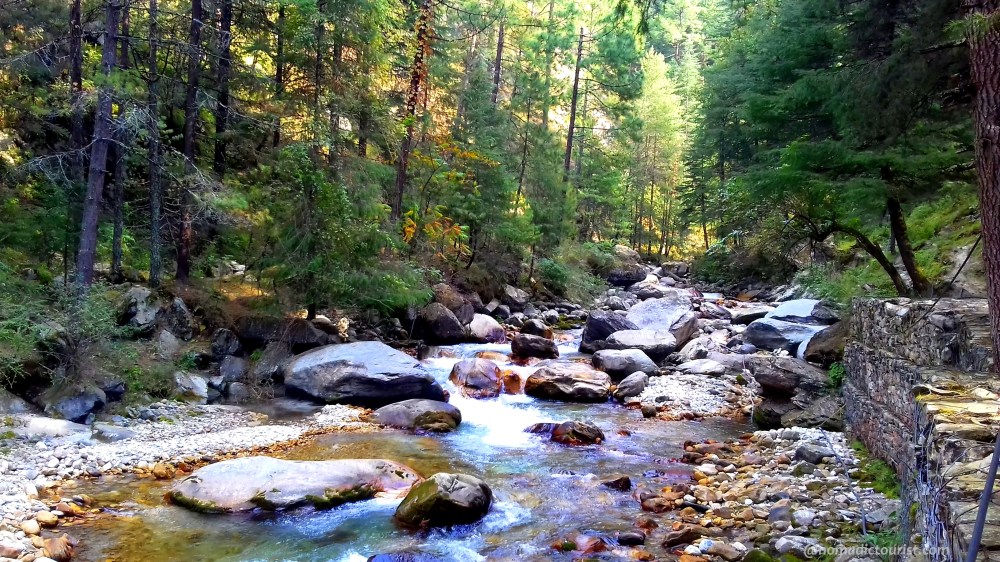
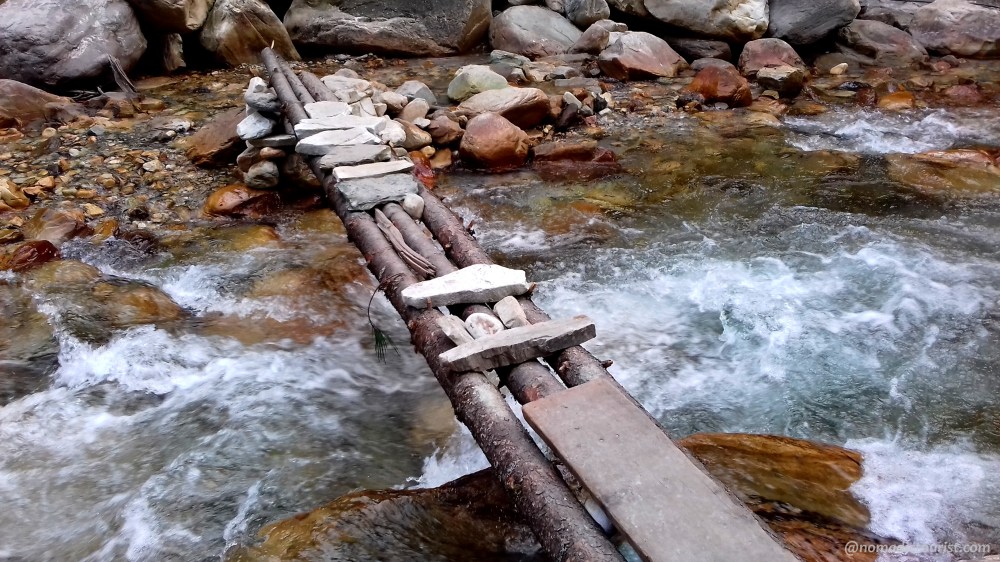
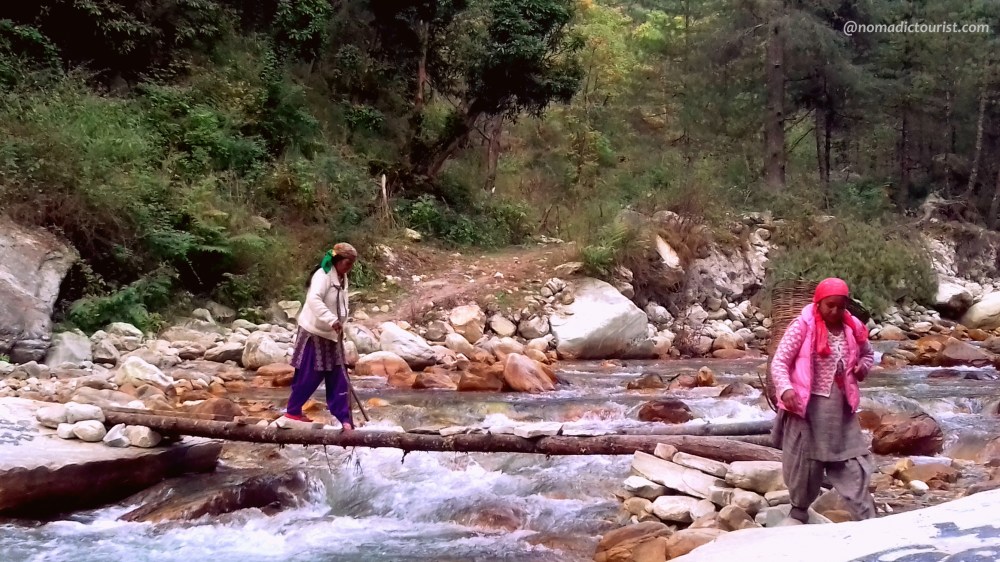
Hiking through the wilderness toward Grahan village, I came across a small river crossing with just three logs acting as a bridge. Two village women carrying large baskets filled with chopped wood struggled to cross the mini bridge as the load on their back unbalanced them. They had to do multiple rounds of crossing carrying a small amount of wood every time. This scene reminded me that beneath all its popularity as a junkies’ backpacking destination, the Parvati valley essentially comprises of simple, mountain villages with not enough basic infrastructure, no employment or education opportunities. The hash and rave party tourism inviting hordes of backpackers from across the world doesn’t add much value to the valley in terms of development. Once a set of travelers leave, life here goes on like the Parvati river – quiet, unruffled and detached from the world.
Then again new travelers arrive in the continued search of beauty, adventure, mystery and escapism. I too will return to dig the restaurants for fresh trout, thukpas, momos, italian pizzas and ginger lemon honey tea, dig the shops for bags made from cannabis fibres, dig the German bakery for lemon cheesecake, apple tart and chocolate ball, and dig the misty wilderness as if there is no home for me to return.
 nomadictourist.com