Sitting at my desk, I sip a cold latte while I read through some articles on water security in rural India. How in the face of climate change, water as a resource needs to be managed effectively for the socioeconomic growth of the rural population. I am amused at the farcical nature of my work as an environment professional while I sip my 350 mL latte which consumed an estimated 400 liters of water during its journey from coffee beans in the hills of Karnataka to a cold latte in my air-conditioned office in Delhi. 400 liters – a quantity equivalent to the daily piped water supply for 8 rural households as mandated under the government’s Jal Jeevan Mission – all for my indulgence in a cup of cold coffee. I am amused at my pretense of being an expert yet knowing nothing about the centuries of scientific knowledge underlying the everyday practices of rural India.
Barely two months ago, 2200 kilometers away in the tiny village of Gunjung nestled in the hills of Assam, I was walking around paddy fields with villagers who had no exposure to structured scientific education and global conversations on climate change, but who understood the importance of water security. They had the knowledge and skills to design systems to collect, manage and conserve this vital resource for their daily needs. Their homes with sloping roofs, installed with rainwater pipes feeding into tanks of up to 30,000 liters capacity, were designed according to their landscape which receives rainfall for eight months of the year, providing a sustainable source of freshwater throughout the year. They didn’t need to study sustainability from books and journals like me. During a rainy afternoon, while watching a natural dyeing process unique to the local Dimasa culture, I learnt that the fly ash generated from burning banana or bamboo stems is used as a mordant in the dyeing process for binding the color to the fabric. The locals knew it without having multiple degrees in Chemistry like me. Passed on through generations, they had intimate knowledge of how to build their lives using the resources in their surroundings.
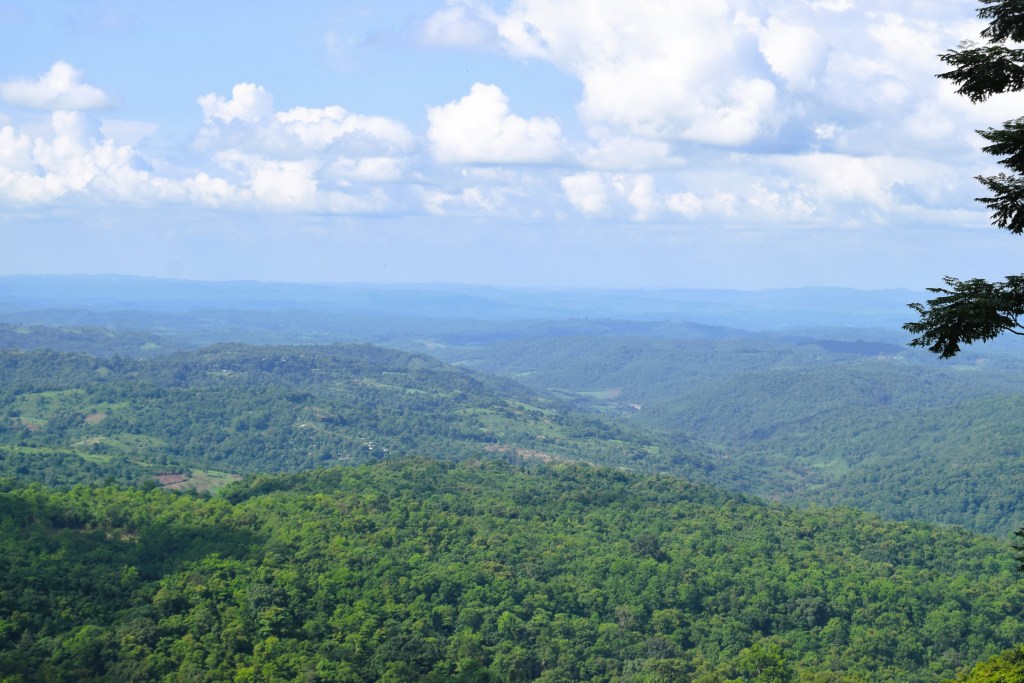
Located under the Haflong sub-division in the Dima Hasao district, around 330 kilometers from Guwahati in Assam, Gunjung is a village of only 300 households. Here time flows with the rhythm of a cool morning breeze mingling with rooster calls and goat bleats. Areca nut and banana plantations lined along vast blue skies are in the field of view as you ride or walk along its gentle slopes. It was to explore the unique sociocultural practices of the Dimasa tribe, the largest ethnic tribe in the Dima Hasao district, that I had joined a group of enthusiastic travelers in Gunjung on an experiential trip organized by an NGO based in Delhi. The intention was to experience what it means to live in harmony with nature. To learn to live with seemingly less in the eyes of the modern world, and yet feel abundance and joy. And to document stories on what it means to be a Dimasa, and share those stories with urban and rural India, as well as the local Dimasa community who themselves are forgetting their own ancestral practices rooted in science, sustainability and nature in the face of modern development.
Dimasa literally means ‘Sons of the great river’, the river being the Brahmaputra. With their early origins in Tibet, the Dimasa migrated from the Tibetan plateau and settled in northeast India around 1st century CE after crossing the Brahmaputra river. Today, they are one of the few remaining ethnic tribes in India who are still practicing their unique sociocultural traditions of jhum cultivation, bamboo cooking, handloom weaving, along with the festivals, music and dance woven into the fabric of their natural surroundings. Over nine days, I learnt hands-on sustainability lessons from them without making any effort at learning. It was a journey where our tribe of conscious travelers, away from the urban grind of Bengaluru, Delhi, and Mumbai, labored on the farms under the unforgiving sun, our skins burnt and bitten by insects of all kinds, our hands and legs marked by sharp iron blades, bodies contoured into different shapes while ducking on bumpy 4×4 rides over rocky terrains through thickets and bushes. Yet nobody complained. We were having the time of our lives.
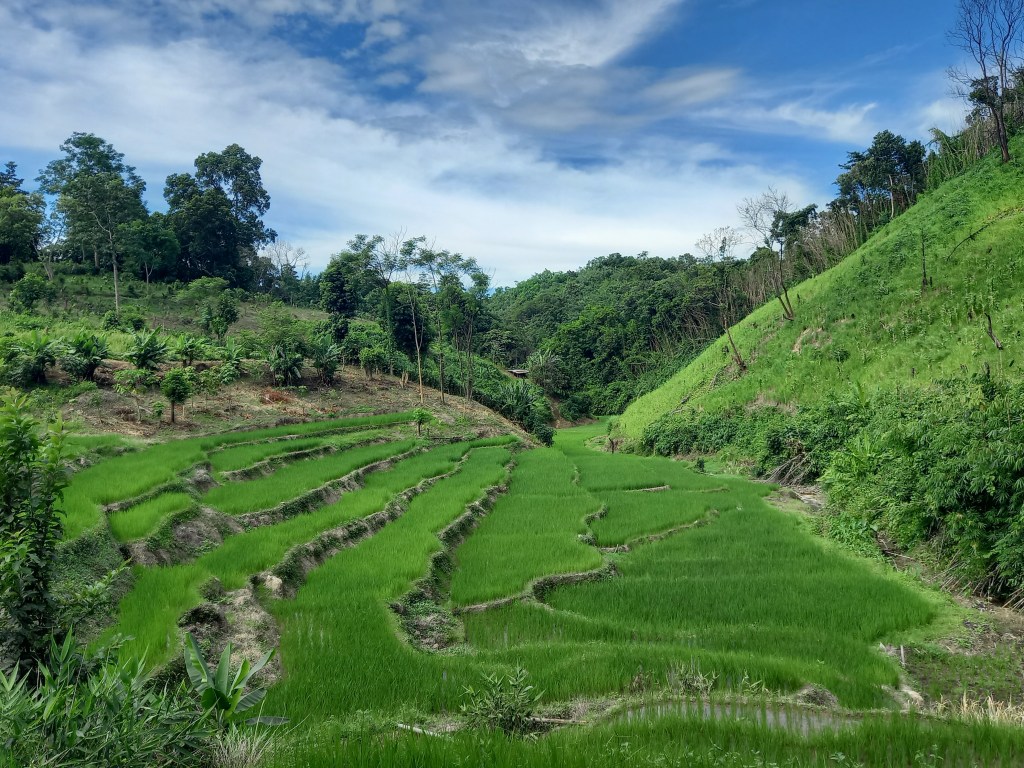
Unlike the stifling isolation of urban life, everyone in Gunjung seems to know everyone. Warm smiles and greetings of Juthai or Bede Jadu (Hello or How are you in Dimasa language) welcome you to their homes or greet you on the streets, at the local tea shop, on the way to the field. Apart from a weekly market held on Monday, a handful of tiny shops selling everyday items were the only signs of commerce in the village. Unlike the hot plains of Assam, the Dima Hasao district, flanked by the Borail mountain range on the east and the Shillong plateau on the west, has a hilly terrain that provides a year-round pleasant climate to the district and the village.
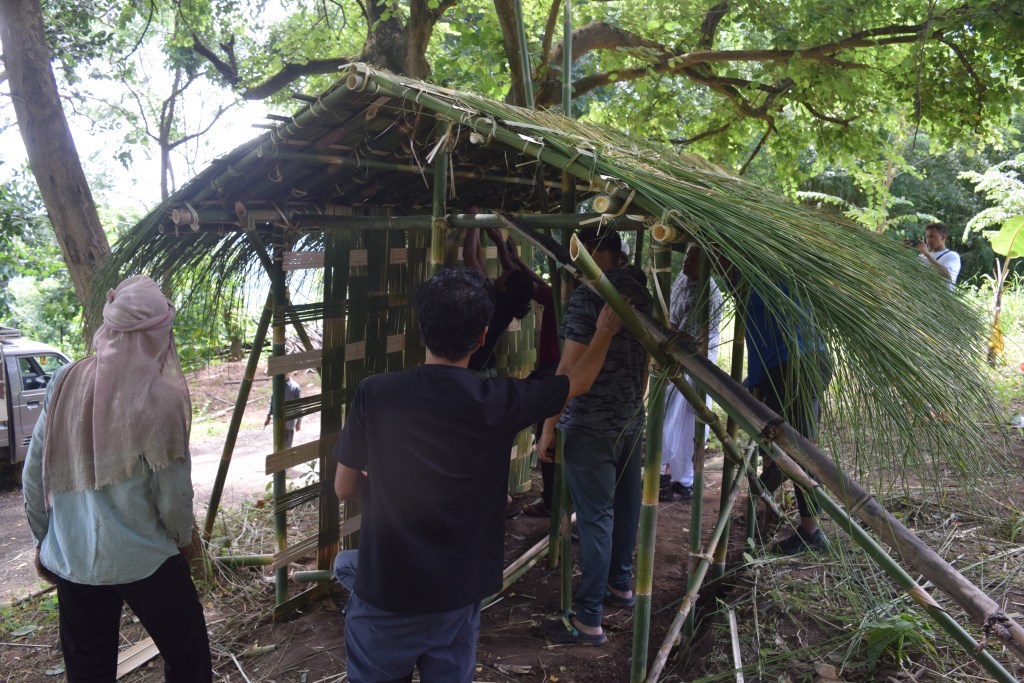
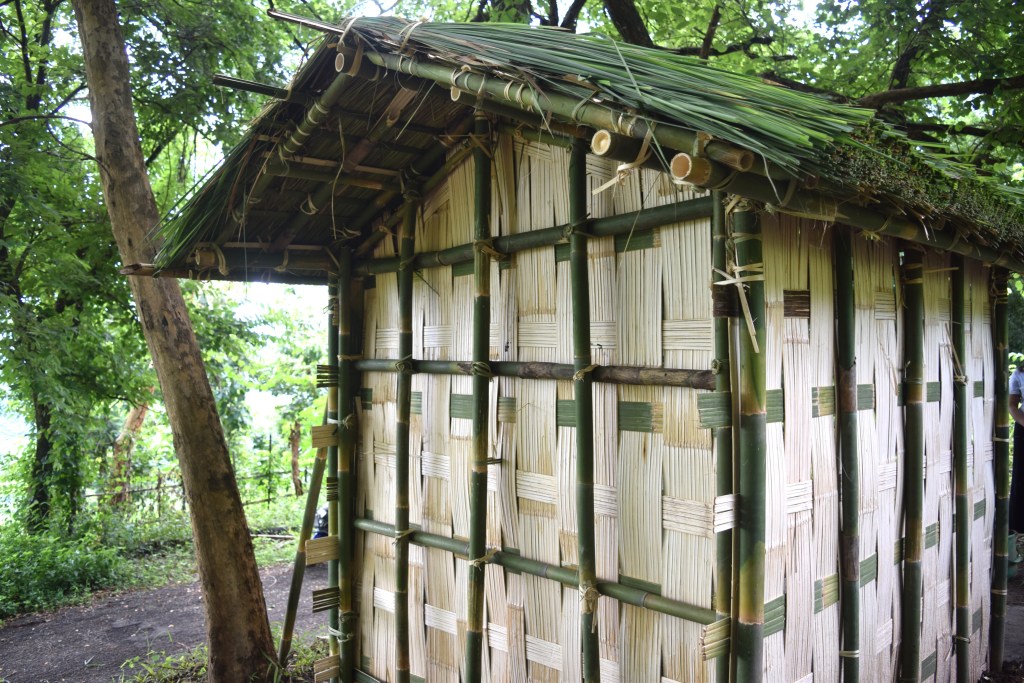
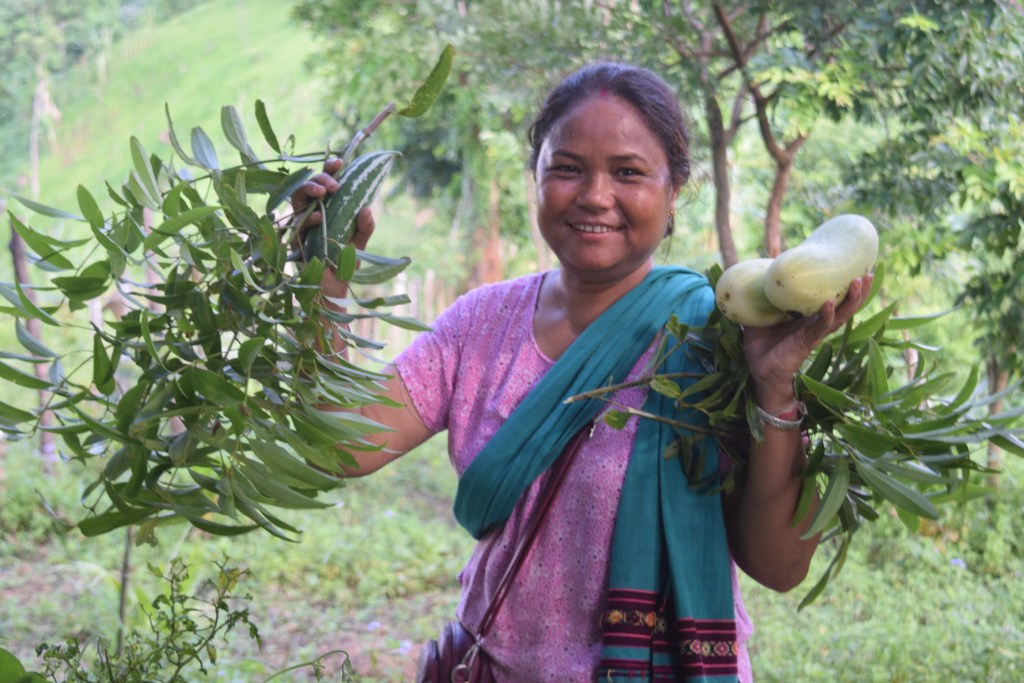
We spent our mornings in Gunjung building a mandu or a traditional bamboo hut in a rice field, which was meant to be used by the local farmers later while resting during their long days in the field. With the guidance of the locals, we cut 20 feet high bamboo trees in the forest, dragged them to the site, pruned and trimmed them to different lengths, and culled out different architectural elements of our hut. Local tea brewed in hollow bamboo stems on firewood kept us charged as we went about the physically demanding job of building our Airbnb homestay. Men and women went through the experience with equal zeal, even when for some of us including me, the long iron blades used for cutting the bamboo sliced through the skin of our fingers. A local would then just pick a medicinal herb from the forest and put it on our wounds with a reassuring smile that it would all be fine. Refreshment breaks meant plucking fresh, organic thaishum gibi (melon), thaishum tibra (watermelon) and thaibeng (cucumber) from the field, cutting them open and lay the slices on banana leaves spread on the ground. Our exhausted souls feasted on them under the shade while being caressed by the gentle wind rippling across the paddies.

It was my first experience of handling Wa or bamboo. An abundant natural resource which sequesters more carbon than many other tree species, and is ubiquitous in rural landscapes for making homes to live in, mats to sleep on, baskets to carry goods, containers to store harvests, or a medium to have drinks. Knowing only of city dwellings built of multiple carbon intensive resources such as bricks, cement, steel, concrete, wood and glass, it was fascinating to build a home out of a single resource. From the same bamboo tree, we cut, shaped and designed different elements of the hut – columns, purlins, rafters, beams, roofs, and walls. In place of cement, the same bamboo stem also yielded strings for binding together different sections of the hut. During the final stages of constructing our mandu, Phomendro, a village elder in his sixties, looked over as I laid bundles of straw on the roof and tied them with the pherai (rafter) below using a bamboo string, utilizing all my strength to compensate for my lack of skill at the task. When I finished, Phomendro grinned through his betel stained broken teeth and complemented me, ‘Bahut achcha kia.’ We both knew that he will redo it, once we leave for the day.
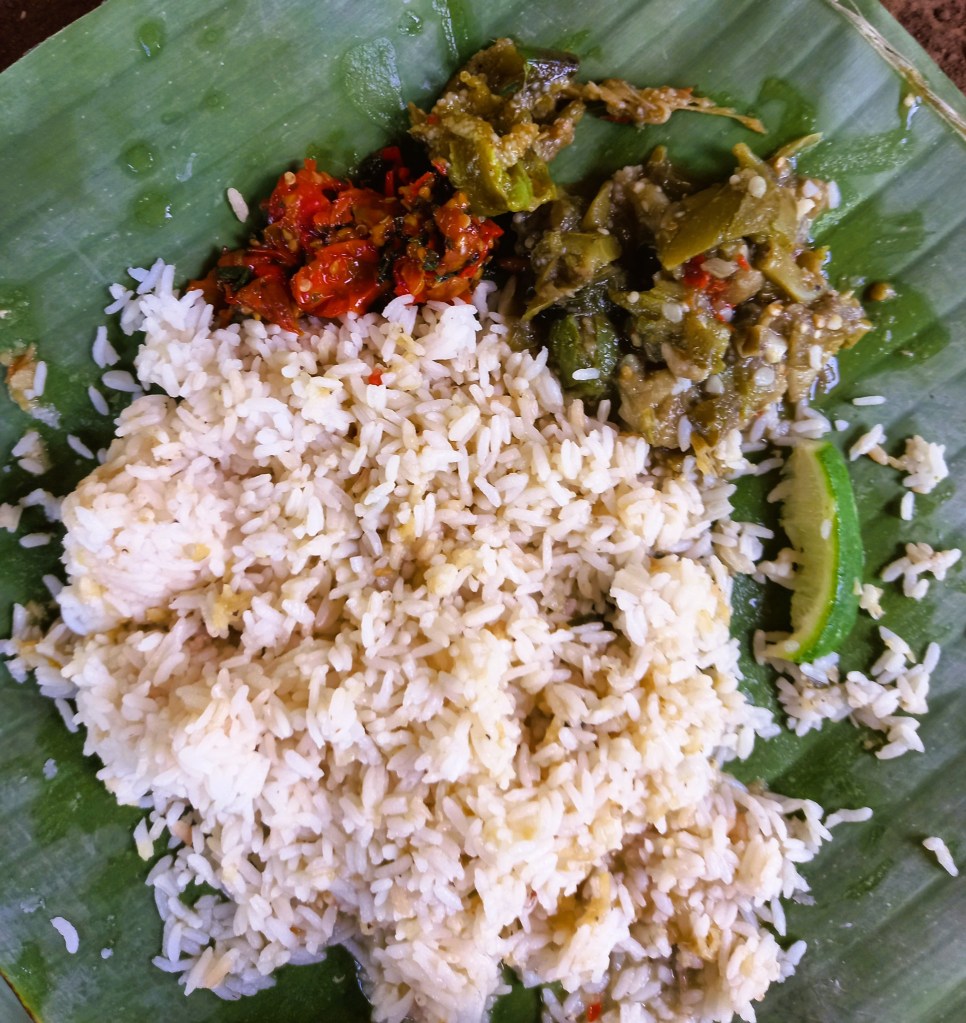
Our homecooked meals cooked with a lot of care by Anjali, Bipula, Henna, and Ritha, four local women, kept us going through our long days of work and learning during our entire stay. As it is in north-east India, the Dimasas have a predominantly Mai (rice) based diet. Rice, lentils and different combinations of vegetables including bottle gourd, ash gourd, bitter gourd, brinjal, pumpkin, corn, potato, banana stem etc., cooked on firewood with minimal spices constituted our meals. Bamboo found its way into our meals as well, either in the form of cooking vessels or as the delicious bamboo shoot curries of mixed vegetables. Every food item on our banana leaf plates barring the lentils were locally grown, reducing the environmental impact of our meals.
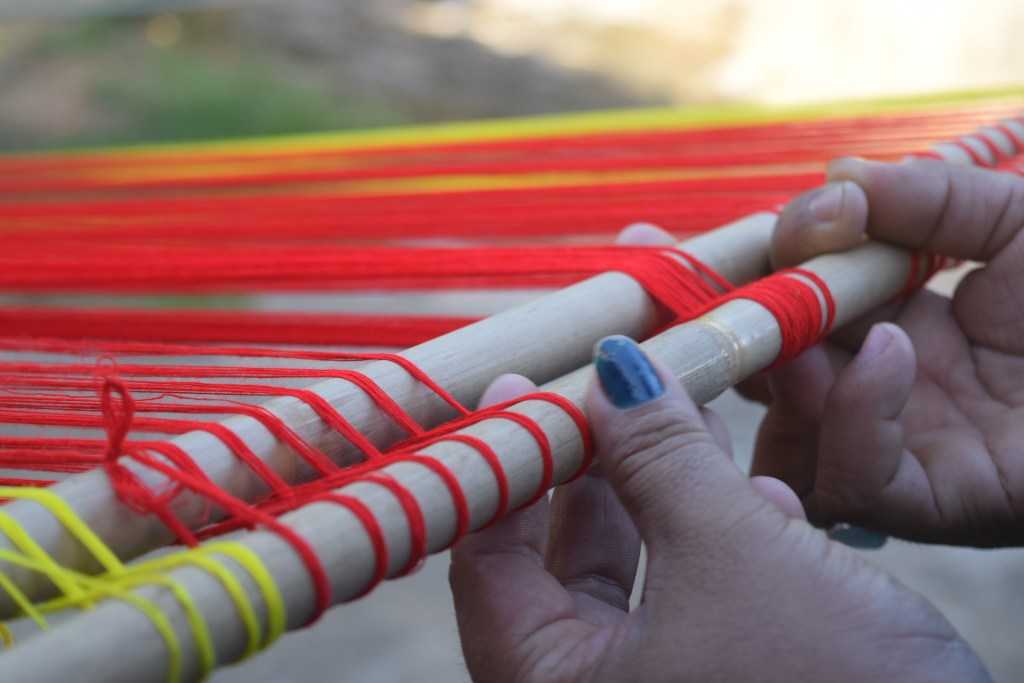
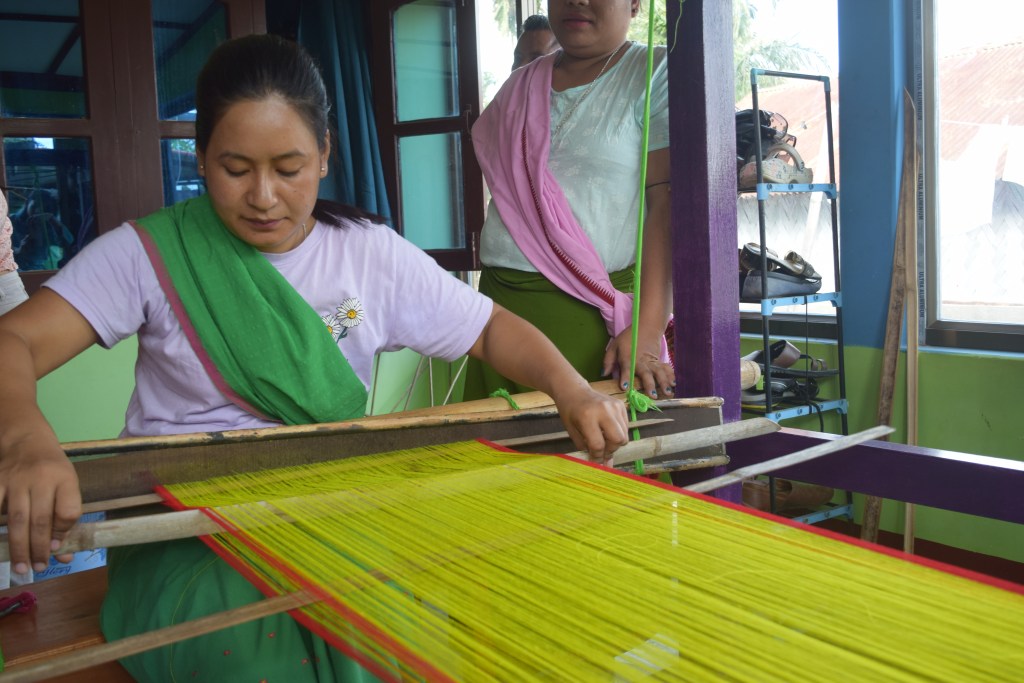
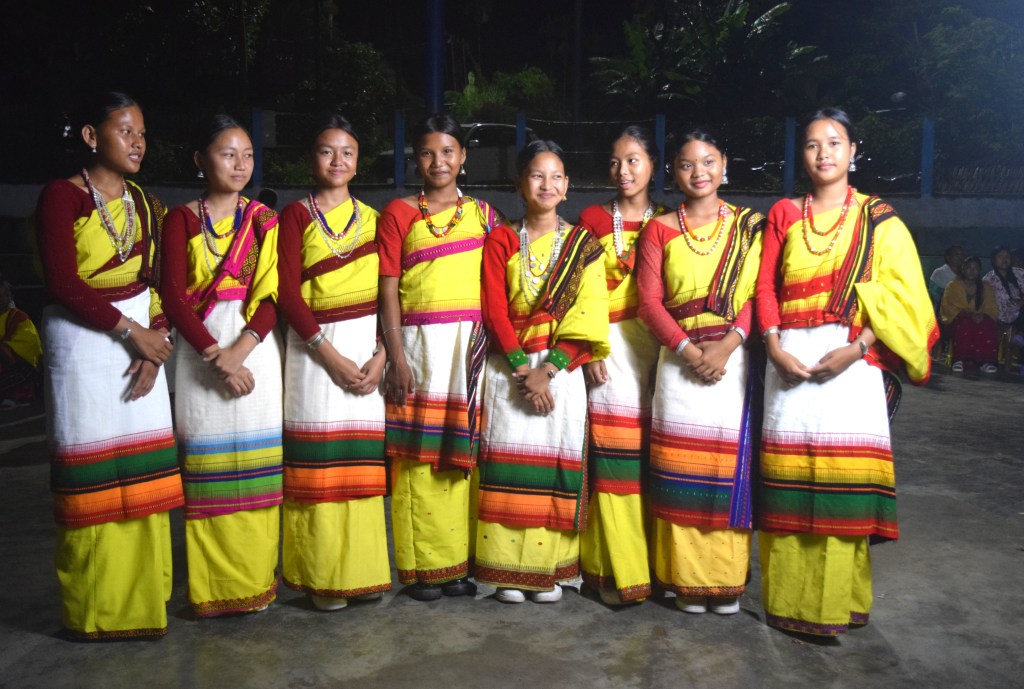
Afternoons were spent learning the complex art of handloom weaving to make traditional Dimasa attire. Spooling, warping, beaming, weaving – every manual step was like a performance requiring immense focus, precision, skill and time. Even though traditional clothes are now mostly worn on special occasions like weddings and the harvest festival Busu, weaving them on the Daophang (loom) setup in their house premises is still very much a part of the cultural fabric of the Dimasa community. Many local women still weave their own clothes and occasions like weddings calls for designing and weaving their own bridal wear as well. The attires for both men and women are simple yet graceful with minimalistic designs. Given that ethnic wear and sustainable fashion are gaining a lot of traction with urban Gen Z in recent years, promoting the traditional handloom craftsmanship of Dimasa women could be an immense opportunity for their further socio-economic development through women-led Self-Help Groups (SHGs) and social enterprises.
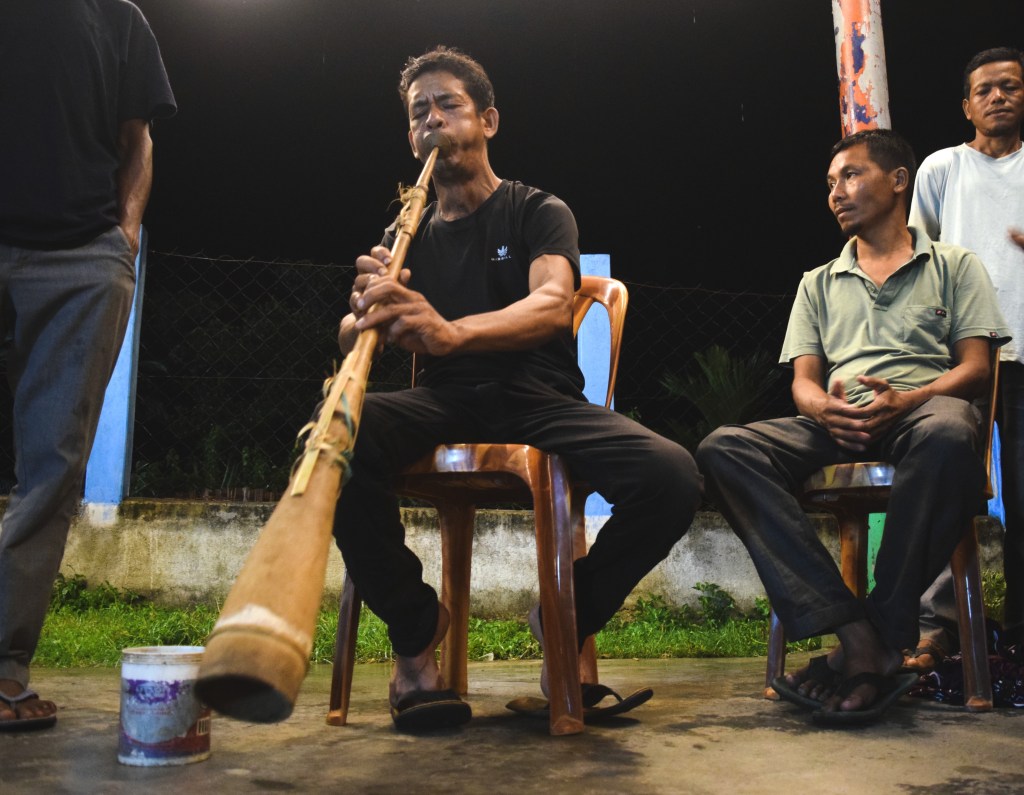
We would wind down our long days by spending time with the community during the evenings, listening to Dimasa songs, local fables, and learning their traditional dance, Baidima. The community would come together to share the simple joys of music and dance over glasses of Judima, the GI tagged rice wine which holds immense significance in the cultural identity of the Dimasa community. Instead of the iron dao, Phomendro would now have the Khram (drum) in his hands while someone else would play the Moori, the Dimasa equivalent of the didgeridoo played by the aboriginals of Australia. The skill of playing these instruments is now mostly limited to the older generation. The Baidima dance is not loud or complex, but has a minimal set of synchronous movements which takes a while to catch the rhythm of. We would slowly move around in circles with the locals oozing with affection and the drowsy warmth of Judima. Over laughter and giggles, our tired bodies and happy souls would try their best to learn the languid movements as we would gently blend into the night sky lit up by the Milky Way.
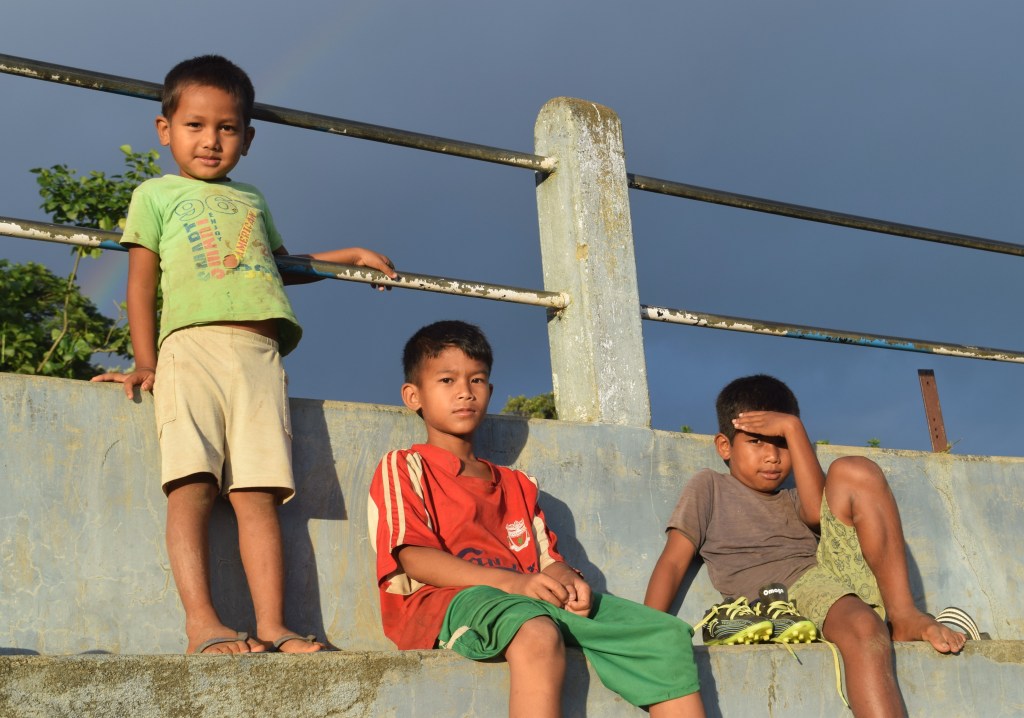
One evening after a slight drizzle, as the blue sky took on hues of orange and pink in the setting sun, I was watching a local football game along with three young boys. Like a dull, tiresome grownup, I asked the eldest one, aged 11, what would he like to be in future. ‘Ronaldo,’ came the obvious answer. The tiresome adult continued… ‘So will you be moving to the city to learn and play football? ‘I will go to the city, play football, and come back to Gunjung.’ I knew he truly believed that it was what he was going to do in future. But the weary adult in me feared that like most of us who have drifted away from our childhood beliefs and intentions in search of making a life, he too might drift away never to return either to his childhood dreams or his village.
And maybe that encapsulated my experience with the Dimasa community as I collected stories and memories over nine days spent in a remote village in India’s northeast far away from my urban life. While travelers like me would come and go, the Dimasa should appreciate that the peaceful mornings rustling with the wind drifting from the Borail, the rich loams, the taste of freshly plucked fruits, and the starlit night skies are not meant to be left behind in pursuit of white-collar jobs in overcrowded cities choking with traffic and pollution. That the sense of community and cultural kinship of rural India should not be traded for urban loneliness. That the valuable life skills of building their own homes, growing their own food, weaving and dyeing their clothes should not just be relegated to the Dimasa Heritage Museum in Maibeng for tourist displays. That the uniqueness of their colorful traditions of music, dance and attire may not be discarded to blend in with contemporary uniformity of modern society. Given the gifts of clean air, fresh water, and rich soils that the Dimasa have been bestowed upon, what they need is conscious planning and to tap into their own ancestral practices and resourcefulness to live a life of abundance, health and joy.
 nomadictourist.com