The herb marinated grilled fish was bland with no flavors. The chicken hot and sour soup served earlier was soya sauce in water with chicken fibers thrown in. The cocktail had no zing either. Booked on a long weekend in peak season, at 1500 rupees per night, I didn’t like my hostel room. After a three-hour early morning flight, four-hour bus ride in the heat, and a couple of hours of walking, here I am sitting tired, hungry and disappointed. It is my first evening of a solo trip in almost a year and I have this feeling that these trips don’t work for me anymore. Life sucked at home. It sucks here as well. The fish served to me at Le Château in White Town definitely did. Then I tried to remind myself that I have felt like this on almost every solo trip that I have taken in the last decade.
Located in the state of Tamil Nadu in southern India and occupied by the French from 1673 to 1954, the union territory of Putucceri (original Tamil name) or Pondichéry (as the French called it), or Pondicherry (anglicized name), or Puducherry (now the official name) or Pondy as referred to by the locals, is a unique amalgamation of cultures, traditions, cuisine, nature and spirituality unlike any other place in India. Once a small fishing town, the union territory is formed by combining four former French colonies of India: Pondicherry and Karaikal along India’s southeastern Coromandel Coast, Yanam in the Godavari River delta, surrounded by the state of Andhra Pradesh; and Mahe, on the western Malabar Coast, surrounded by the state of Kerala. The beautiful sandy beaches along the Bay of Bengal, well preserved colonial charm of French heritage villas, ancient temples, churches, and the spiritual atmosphere of Sri Aurobindo Ashram and Auroville lend a distinct multi-faceted character to the capital city of Pondicherry and it has much to offer to all kinds of travelers.
For years, it was on my travel bucket list along with several hundred destinations to visit before I die. Last year, out of an absolute determination to explore a new place in 2023, during a long weekend, I booked a flight to Chennai from Delhi. Nothing more could stop me from exploring the French Riviera of the east. I landed in Chennai at 10.30 am on the first day of my trip. I then took a metro from the airport metro station to Koyembedu from where I boarded a private bus to Pondicherry. The bus trip was uneventful as it passed through the countryside of Tamil Nadu. At some point though, the passengers realized that the air-conditioning in the bus was not working and we all would have to suffer in the stifling heat. A foreign woman seated three rows in my front tried unsuccessfully to lodge a complaint with the customer care of whichever online site she had booked her ticket from. She was also not pleased when the conductor forgot to inform her to get down when the bus crossed Auroville and she ultimately got down two or three kilometers ahead. It was quite a surly start for her spiritual trip.
The bus reached Pondicherry around 5 PM. I needed to go to JVS Nagar where I had booked a bed in a hostel through Hostelworld. Google Maps showed it at only a 1.2 km distance from the bus stop for which an auto driver wanted to charge me 120 rupees which of course I could not allow him. I walked to the hostel, passing by a roadside fish market and through the narrow lanes of JVS Nagar which was a very traditional middle class residential colony. The hostel, Nomad House, itself was converted from a residential building. A girl named Joyce who was volunteering there checked me in. They did not accept credit cards so I had to pay the balance booking amount all in cash which irritated me a lot and my irritation was further aggravated seeing only one bathroom for 8 inhabitants in the room. And the beds were not great either. After a sulky shower and change of clothes, I walked for ten minutes to the main road from where I took an auto to White Town, the French quarter. I was tired and hungry so roamed around to choose a restaurant. I finally had a disappointing meal at Le Château and seriously wondered if staying at home would have been better instead of taking this long trip. With no energy left to explore, I took an auto back to the hostel and retired for the night.
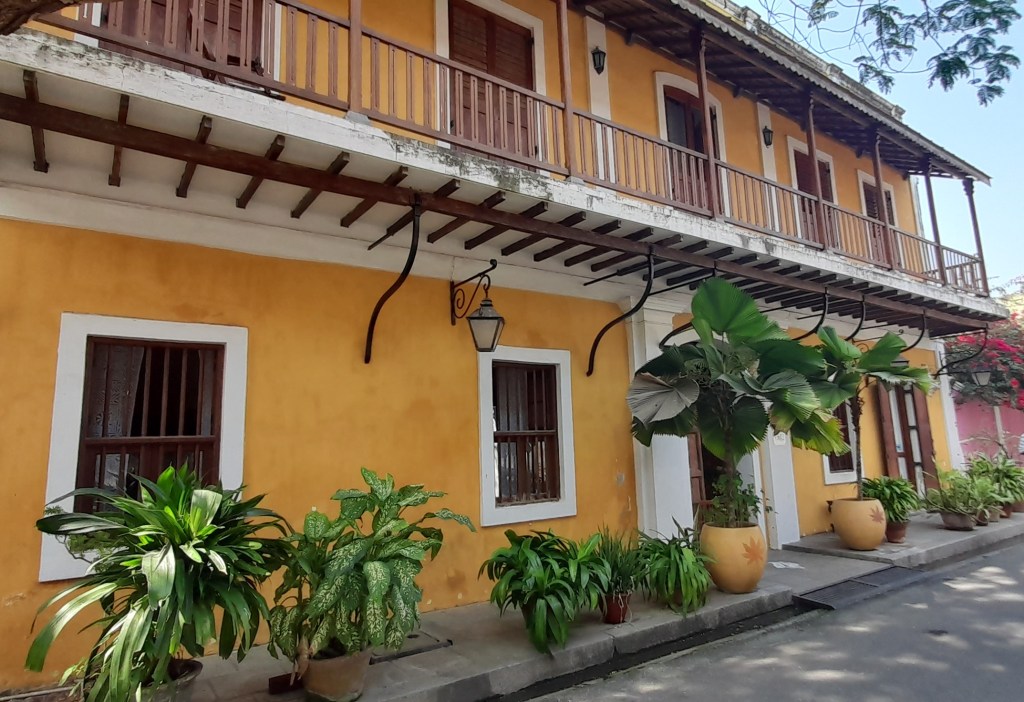
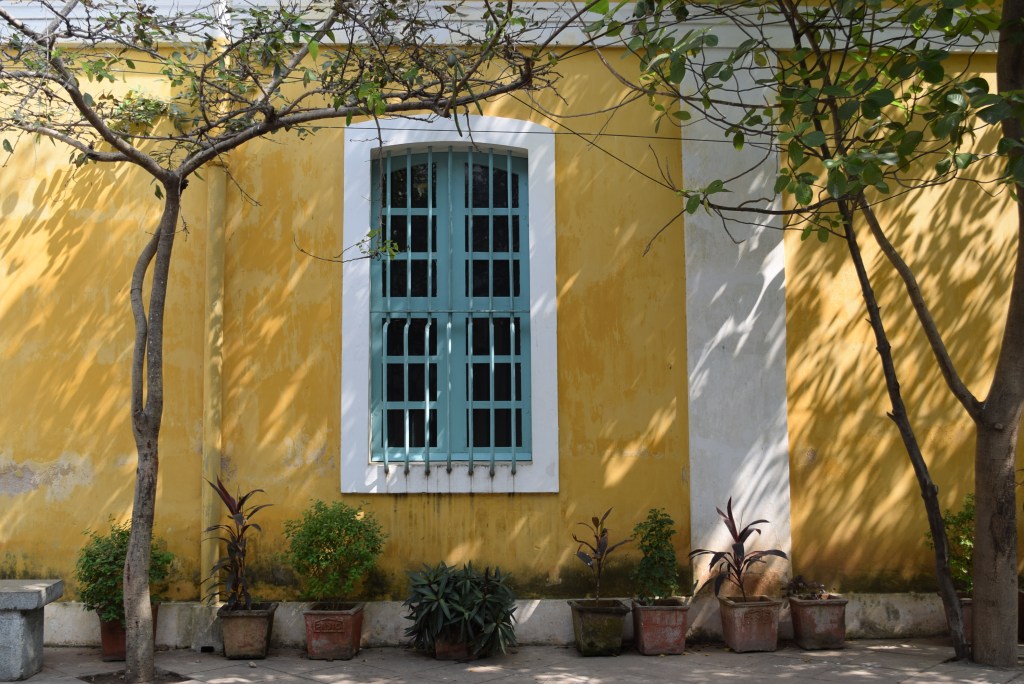
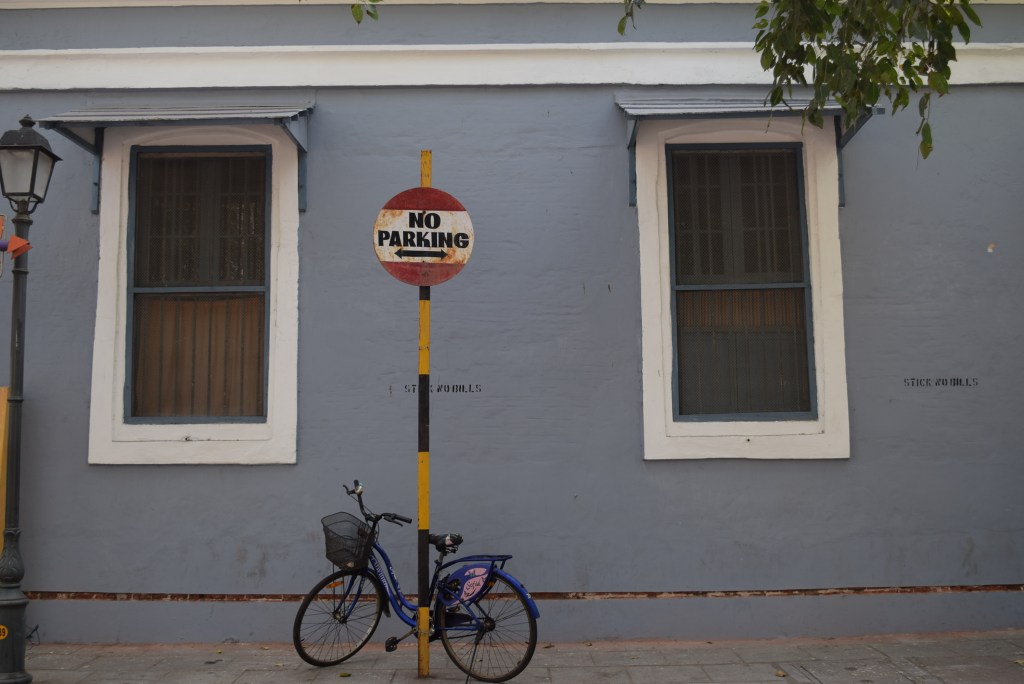
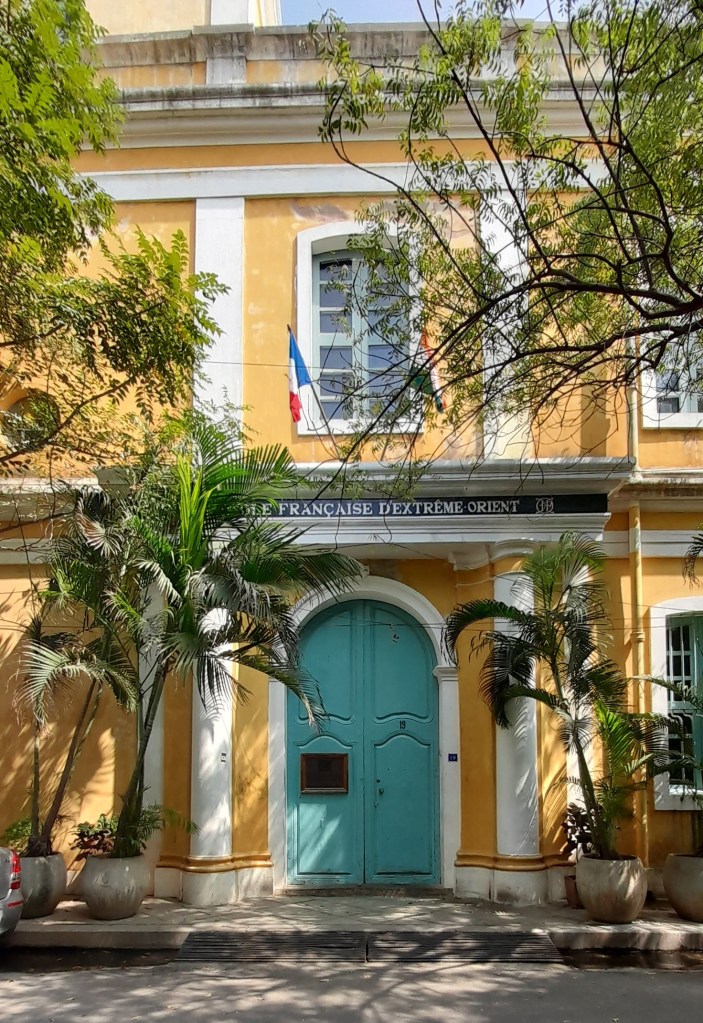
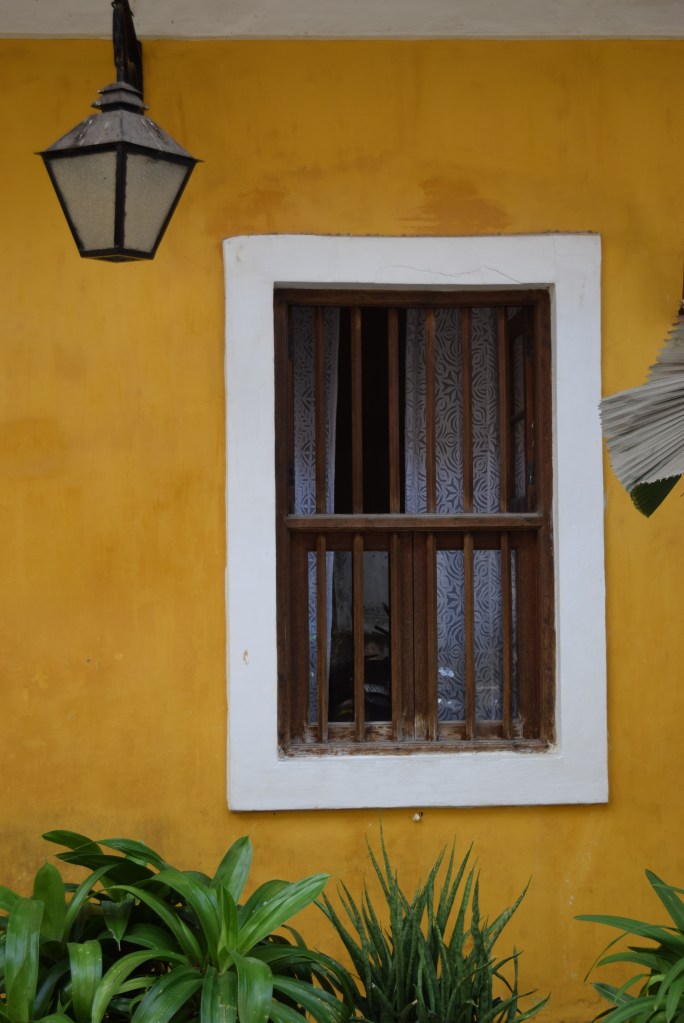
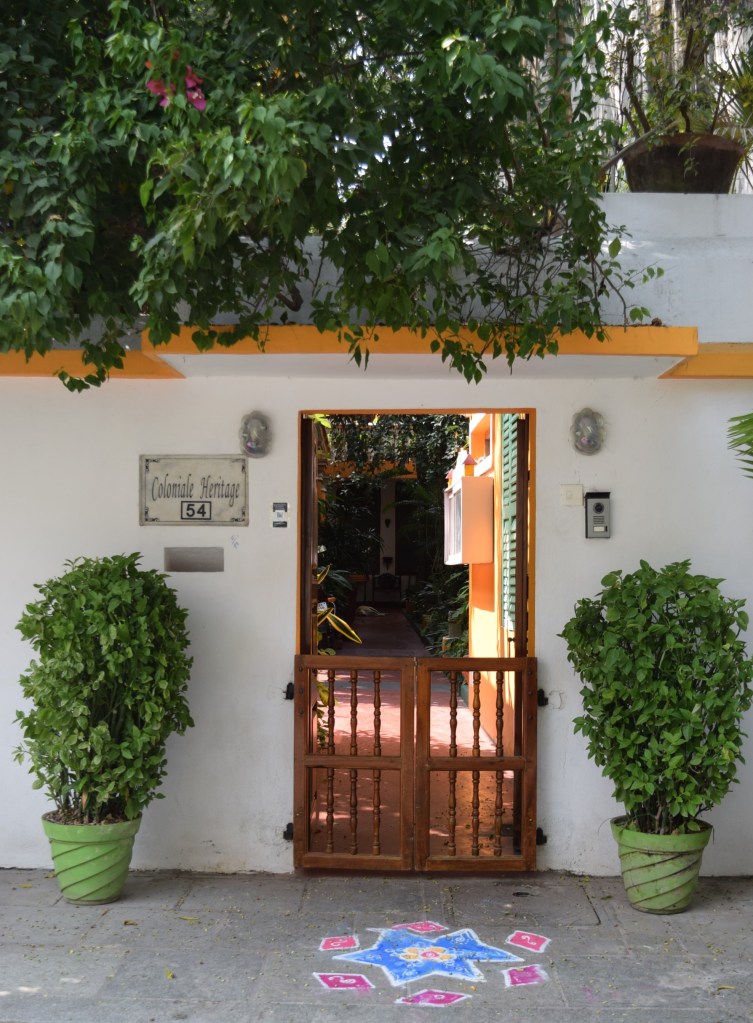
I don’t know if White Town still needs to be called by that name given that it is not a town on its own, no longer a colony only for Whites and the French heritage buildings are not only of white color. I know that is very lame! On the second day of my trip, as I walked through the colorful lanes of the French Quarter located next to the Rock Beach, I felt a vibe similar to that of Fontainhas in Goa or Fort Kochi in Kerala where the colonial powers have left behind a distinct and charming presence through their architecture, food and even future generations who still speak their language. While a lot of the pre-existing cultural expressions must have been brutally erased by the colonial powers after their arrival, today the remnant beauty of colonization co-exists peacefully with the local social and cultural expressions around them.
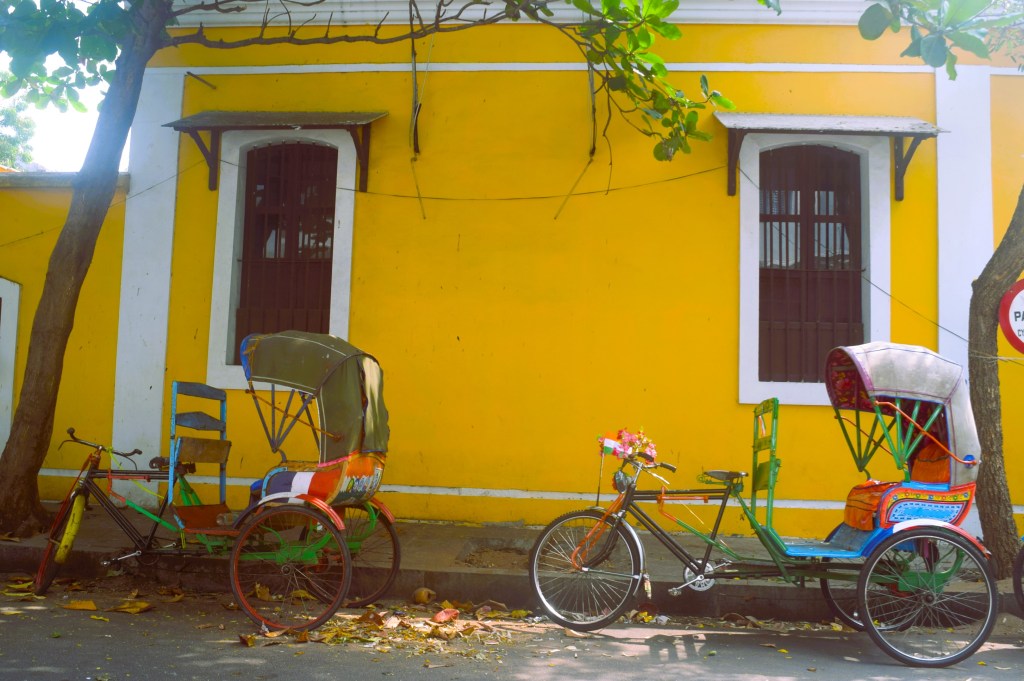
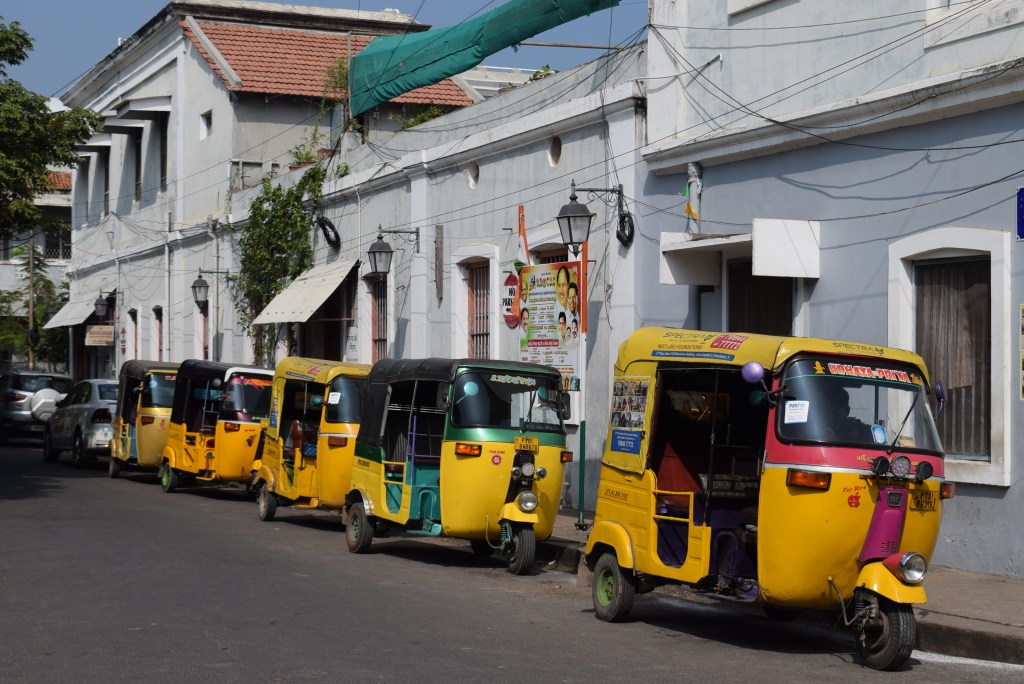
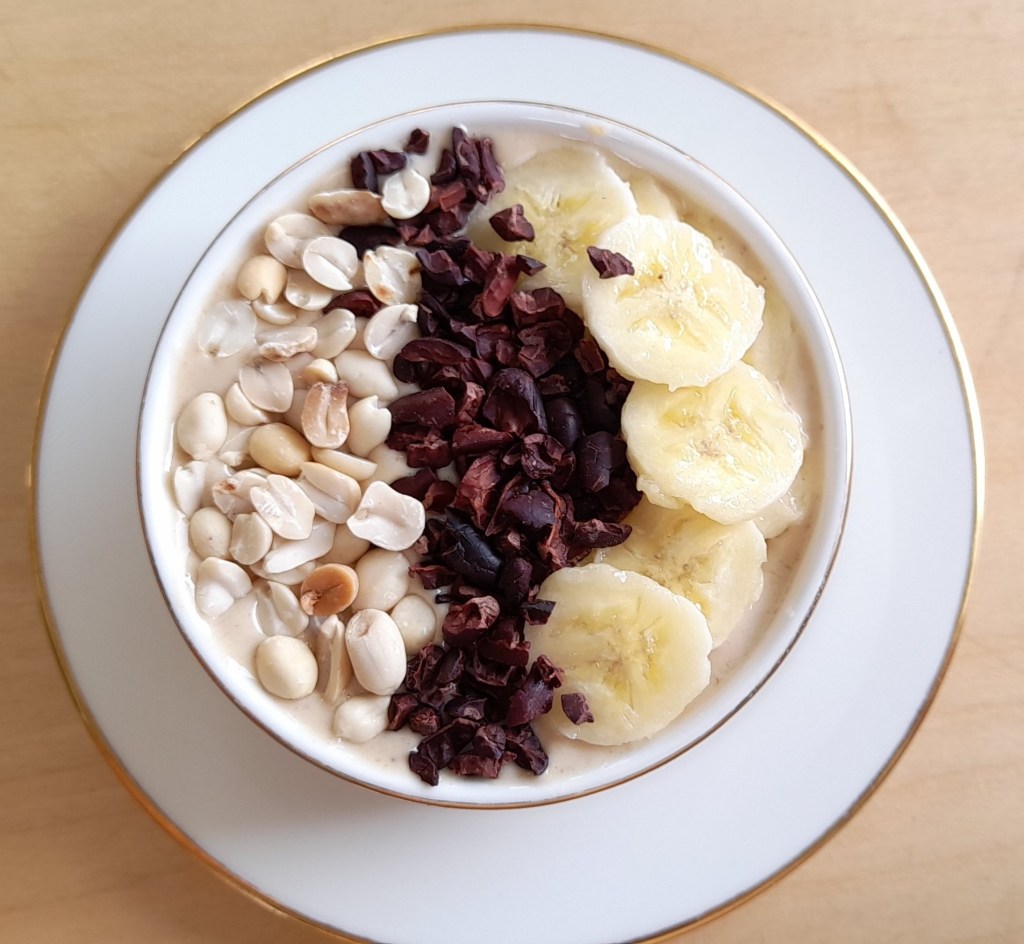
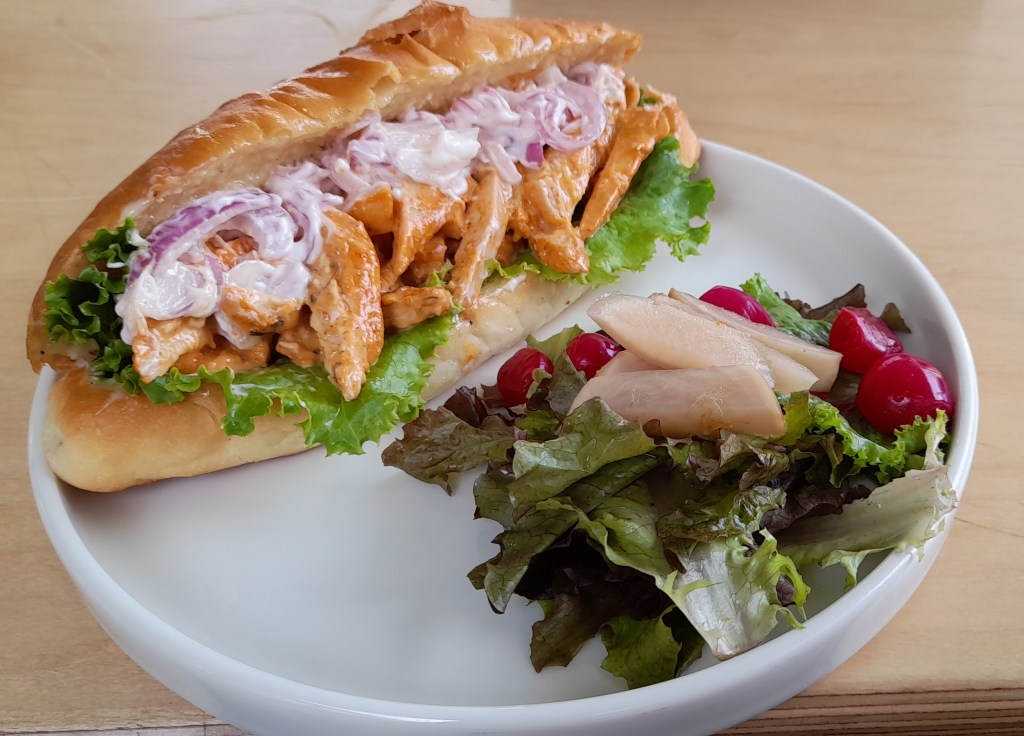
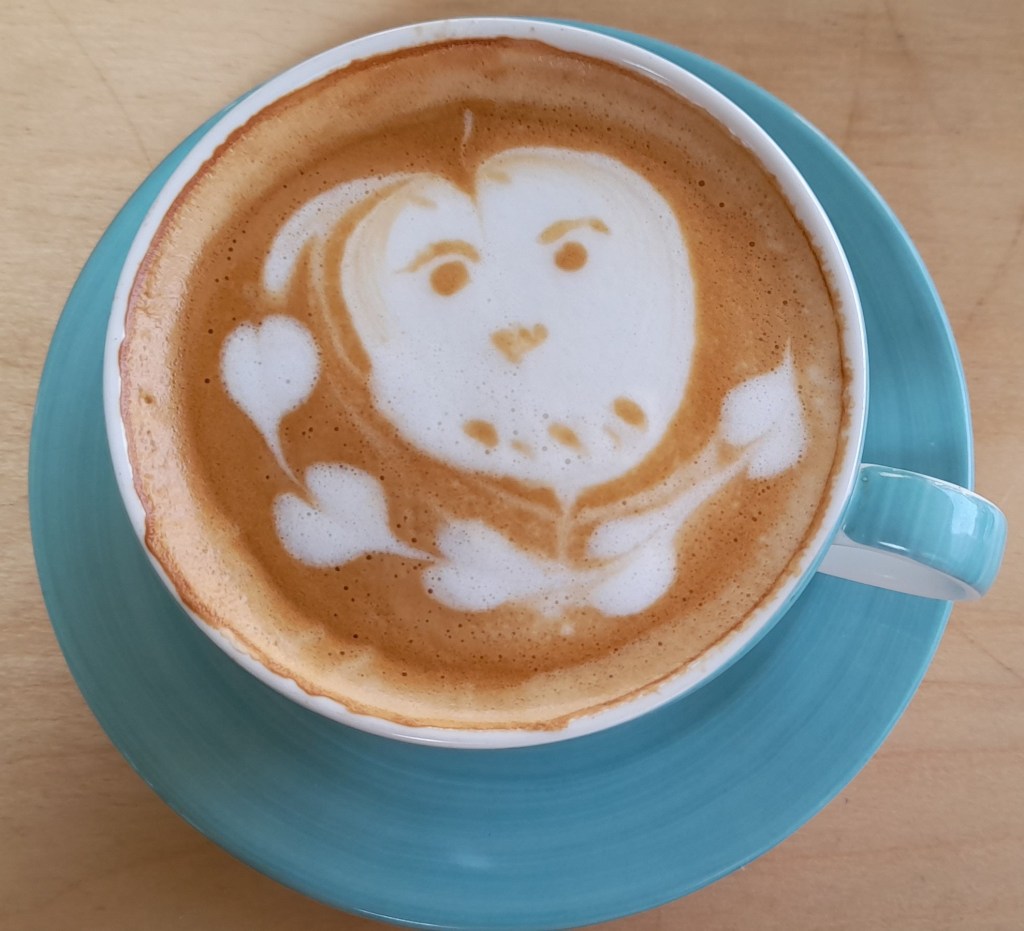
It was January but it was hot like it always is in this part of the country no matter the time of the year. I reached White Town around ten in the morning and walked around checking out restaurants, shops, clicking pictures and looking at other people clicking pictures. I vigorously gulped in the charm of the parallel streets of White Town cutting each other perpendicularly with their delicious French names viz. Rue Suffren, Rue Surcouf, Rue La Bourdonnais, Rue Romain Rolland, and others sounding like Pain au Chocolat or Bouillabaisse. The heritage buildings with their colorful facades, walls in white, yellow, blue and red shades, shuttered windows and elegant doors garlanded with bougainvillea and leafy branches are a visual delight for artists of all kinds. These relics of the past have now been converted into government offices, boutique hotels, cafes and restaurants. With the ocean crashing on the Rock Beach, often an owner of a café here may greet you in aromatic French as they serve you hot croissants with coffee. At Le Petit Four, a pretty café on Suffren Street, I settled for three hours for a brunch, pretentious reading, soaking in the charming atmosphere and basically doing nothing. The banana smoothie with roasted peanuts and chocolate flakes was passable, the chicken sandwich was okay, the latte was good. Life seemed better than it was last evening.
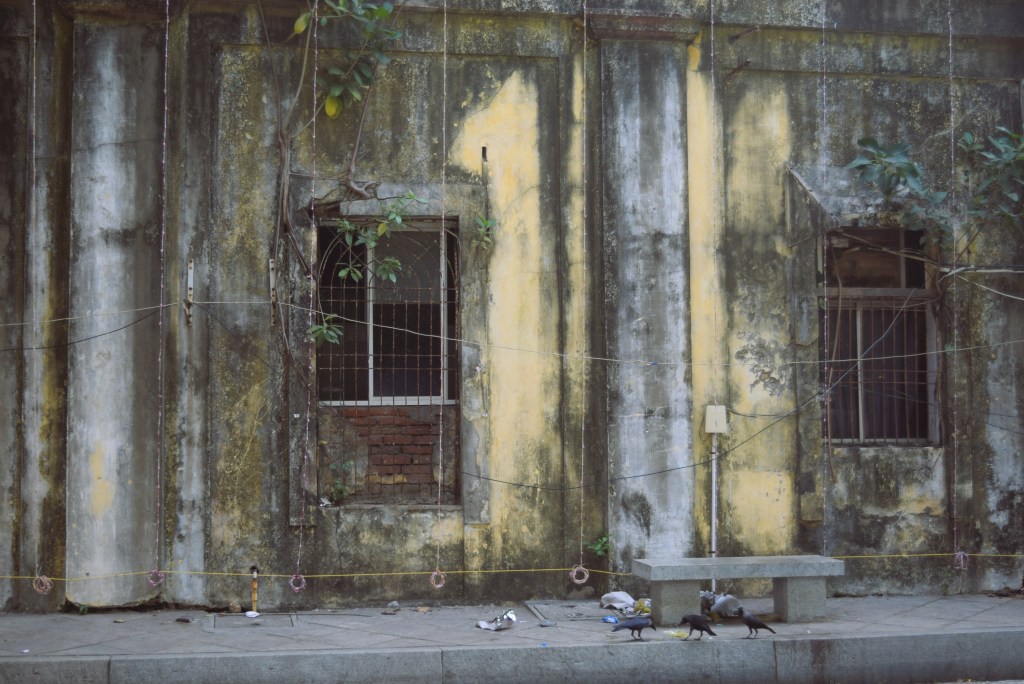
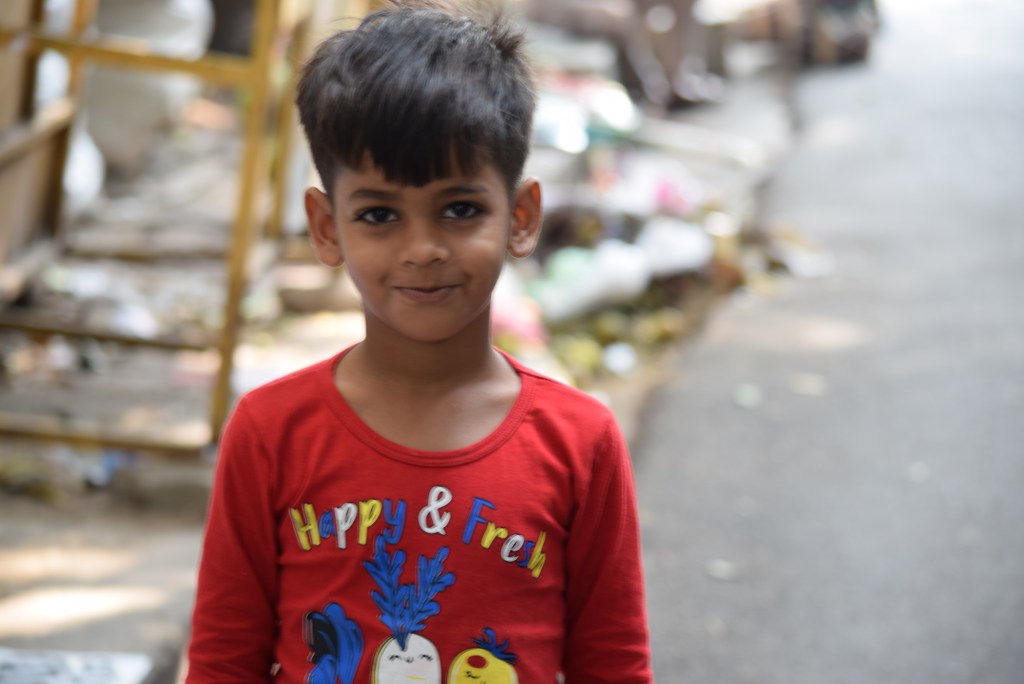
Later, I ventured out in the scorching afternoon for more exploration. More colorful walls and paint worthy windows. There were also paint worthy dilapidated walls and abandoned windows. There were food carts selling lemon soda, filter coffee, almond milk, and roadside shops selling jewelry, trinkets and souvenirs. A local kid recognized the award-winning photographer in me and asked me to take his photo. As I captured his smile, two stranger girls standing on the side saw me in action and one of them bellowed out a caption, “People of Pondicherry…Hahahahaha!” for my supposed Instagram post. I wished the ice cream she bought falls from her hand and later she trips, sprains her ankle and is unable to walk during the rest of her trip.
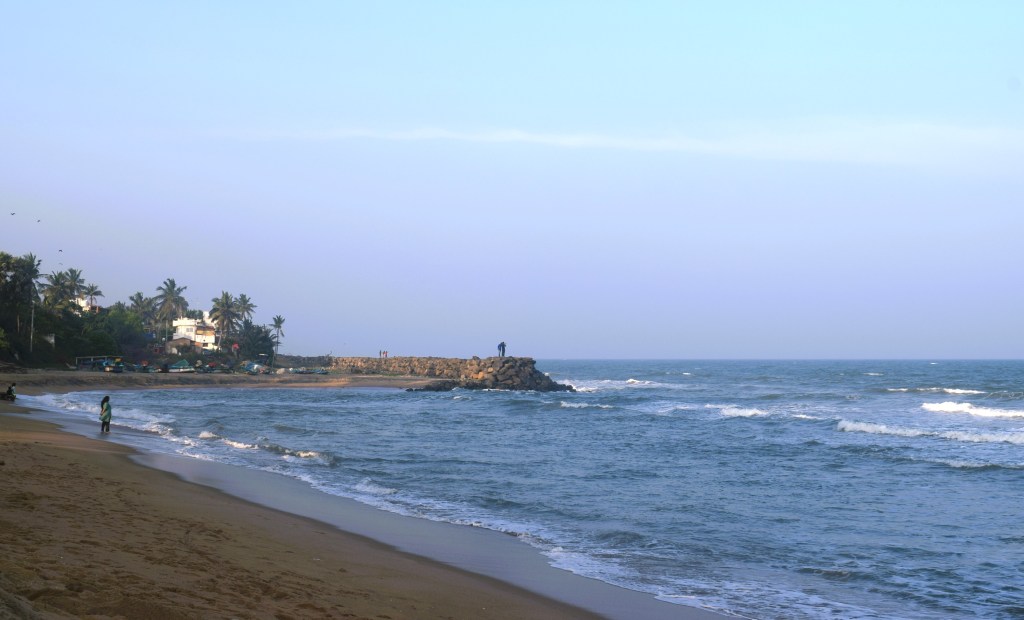
Slowly my walk took me to the Rock Beach or Promenade Beach, the main beach of Pondicherry. With the sunscreen already dripped from my face after several hours of walking, and with full awareness of the consequences of walking under the scorching sun on a beach, I walked the 1.2 km long promenade as it is one of the nicest things to do with your partner according to Pondicherry tourism website. They also mention it is better to do it early morning or late evening. I greeted the statue of Joseph Francois Dupleix, the last French governor in Pondicherry, checked out the stores selling gelato and waffles, and a boutique shop selling kurtas and t-shirts made of sustainable fabric at 2000 rupees. Going topless seemed more sustainable and budget-friendly. I walked beyond the promenade to find an isolated spot on the beach at which I failed miserably. The evening air was cool and I got down to taking some pictures. While I squatted on the sand taking pictures of some seashells from a low angle, a couple passed by with the guy proudly telling the girl that he is a veteran of taking low angle photos of waves. I wished him no sex for two years. Later, sitting on the sand, as I watched the evening dissolve into the night, a girl came up to me asking if I could take a picture of her with her friend standing in the waves. After a few shots, she asked me if I could also record a video in slow-motion mode as they walk from the shore into the waves. I obliged, wondering when they would both fall into the water in slow motion.
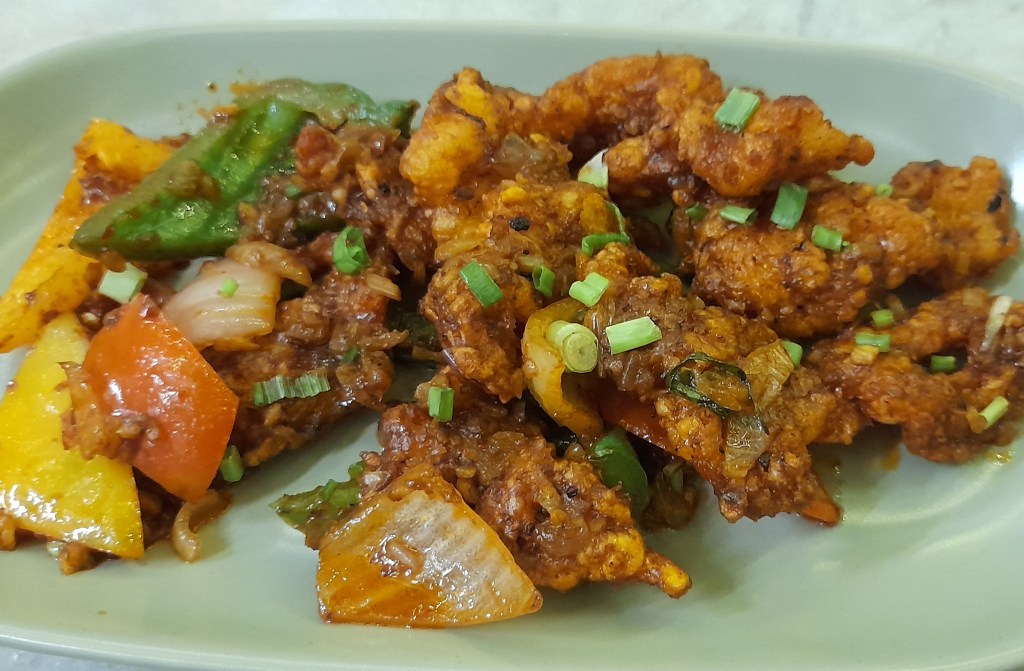
I took several blurry pictures of waves crashing on the rocks by which it was fully dark. I had spent close to two hours at the beach since I said hello to Monsieur Dupleix. The Indian flag and India’s G20 presidency were illuminating a giant screen on the promenade which was now teeming with people and I was tired and hungry. I walked to the famed Le café where I neither liked the packed crowd nor the menu. I strolled along the promenade through the crowd and ended up gorging on Fish 65, steamed rice and Fish Chettinad at La Terrase on a side street.
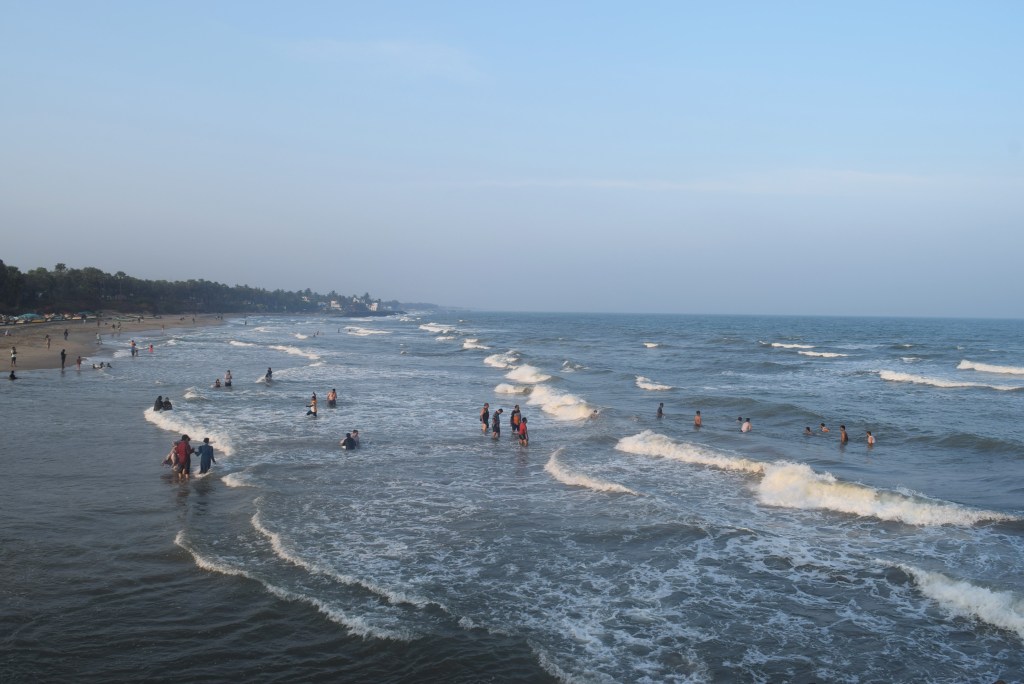
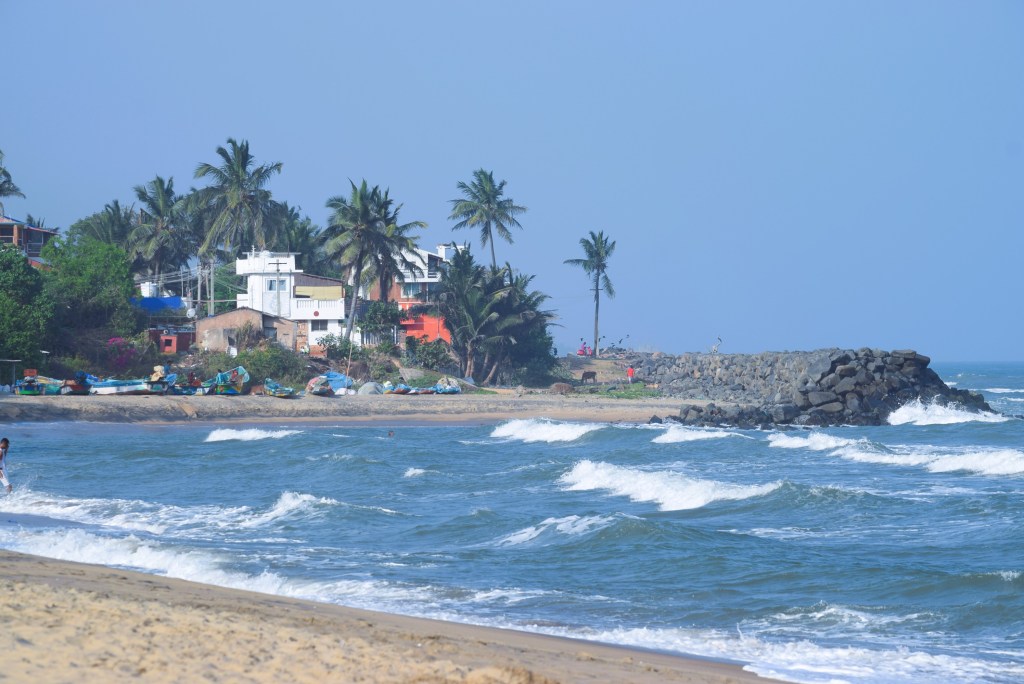
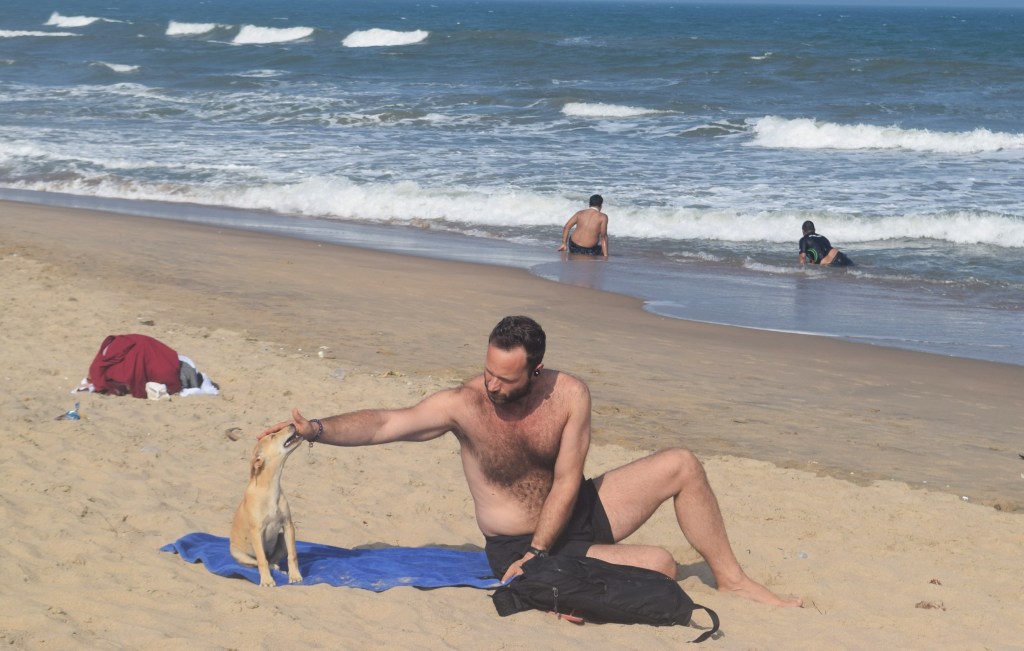
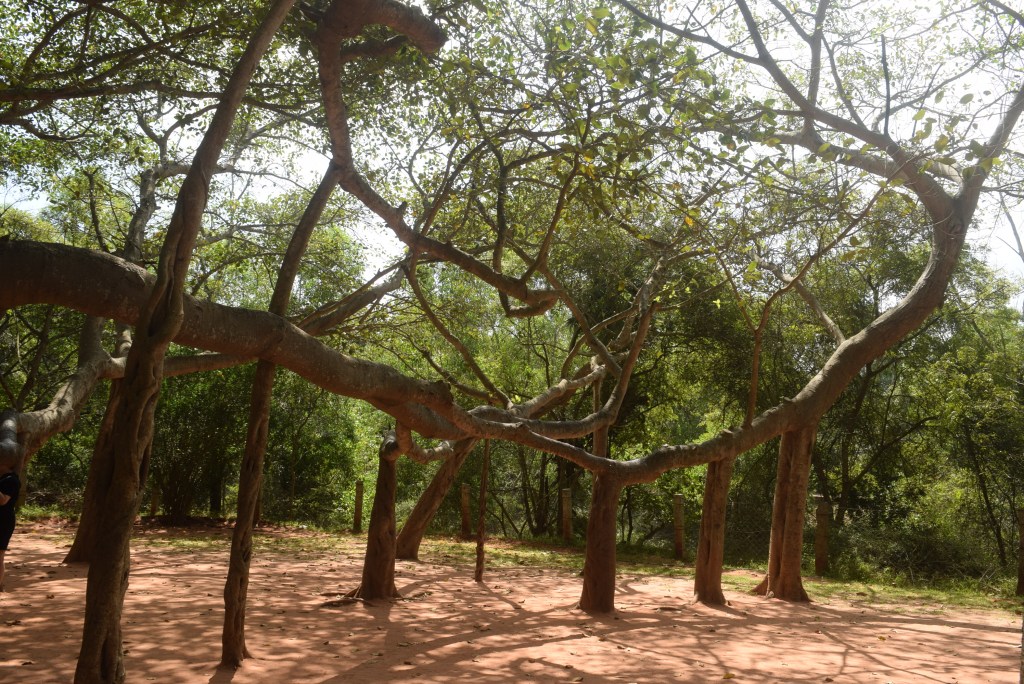
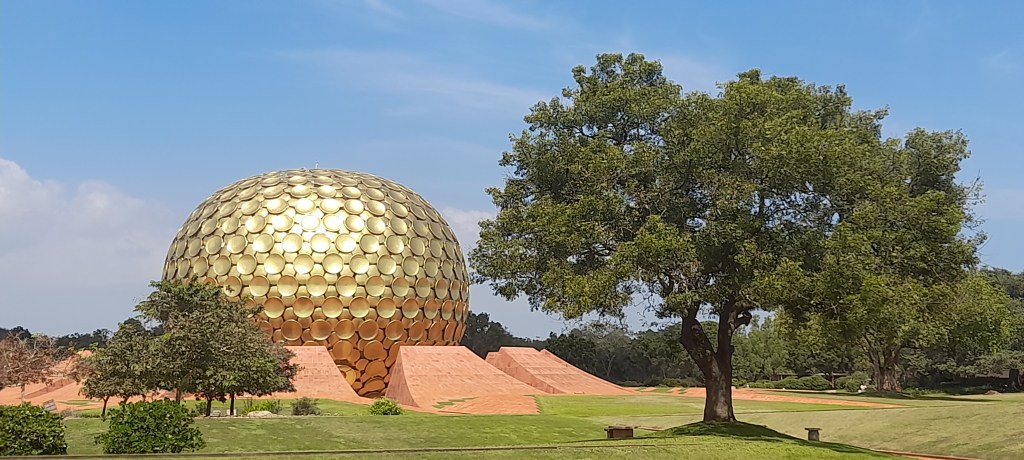
Next day I visited Auroville, an experimental universal township founded by The Mother as per the vision of Sri Aurobindo. Located at around 12 kms from Pondicherry, this township approved under a 1966 UNESCO resolution is conceived as a place where 50,000 inhabitants from all nations across the world irrespective of gender, caste, religion, nationality, shall live together harmoniously. One may read more about it here: https://auroville.org/. I did not have enough time to explore Auroville fully during this visit but found myself awestruck gazing at the Mother Tree which lies at the geographical center of Auroville. I also took the customary picture in front of the golden globe of Matrimandir, the spiritual center of the township, and told myself to come back and stay here in the future to experience the essence of the place more.
After returning from Auroville, I took an auto to Chunnambar jetty from where one needs to take the ferry to visit La Plage or Paradise beach, which is supposed to be the most beautiful beach in Pondicherry. However, I was late and the boathouse was closing with no more ferries going to the beach. Disappointed, I lingered around and then took an auto to Eden beach which is around 1 km north of Paradise beach. The sun had already set by the time I reached there but in the fading light, I found the beach which is also certified as a Blue Flag beach, quite pretty and organized as per human convenience. The beach was clean, it had changing rooms and shower facilities, kids’ play area, parking lot and some stalls selling snacks. The backwaters of Chunnambar river visible from this beach appeared mysterious in the sunset colors. The beach closes at 6 pm, after which the lifeguards keep whistling everyone to leave.
Returning from Eden beach, I walked around White town hopelessly to get entry into one of the Instafamous restaurants to have an overpriced dinner. Coromandel Cafe, Villa Shanti, Cafe Des Arts with their long queues had no place for me and the music in Flaming Dragons was too loud. In the end, for just 280 rupees, I feasted on some delectable fish and chicken kebabs from a food cart on Goubert Avenue.
Again, out of an absolute determination to try a new activity in 2023, I took my first surfing lesson on the last day of my trip. With its pretty beaches and mild waves, Pondicherry is considered to be a good location for surfing both for beginners and experts. Kallialay Surf School, Guru Surf School, Mother Ocean Surf School and Ecole De Surf School are major surfing schools in the town. Group lessons cost around Rs. 1500 – 1700 per person while a private lesson costs Rs. 2000 – 2500. I booked an 11 am appointment with Guru Surf School at Serenity Beach for a private lesson. Guru, the owner, was quite obviously tanned and muscularly chiseled by several years of surfing. After changing clothes in his premises, I walked to the beach where my trainer, Kevin, was waiting for me and handed me a beginner’s foam surfboard. He gave me a demonstration on how to lie flat on the board, and then on cue stand up in a warrior pose as a wave carries me to the shore. After the lesson, I dragged the board, strapped to my right foot, into the water. Guru stood on the shore with my phone to capture my first steps to become a world-class surfer. As my board bobbled in the water, I got on to it, lying flat as Kevin had shown. He stood in the water next to me and alerted me to the coming wave. I felt the wave coming from behind and carrying me to the shore. At Kevin’s cue, I attempted to stand up and promptly fell into the water. Guru encouraged me from the shore and shouted ‘good attempt’. We repeated the process several times. I did manage to stand up properly on my fourth attempt eliciting a loud cheer from my two trainers. Then I fell again a few more times and stood up successfully a few more times. An hour of my first attempt at riding the waves came to an end. Kevin encouraged me to surf every day for two hours for a month and I imagined myself starring in the next remake of Point Break.
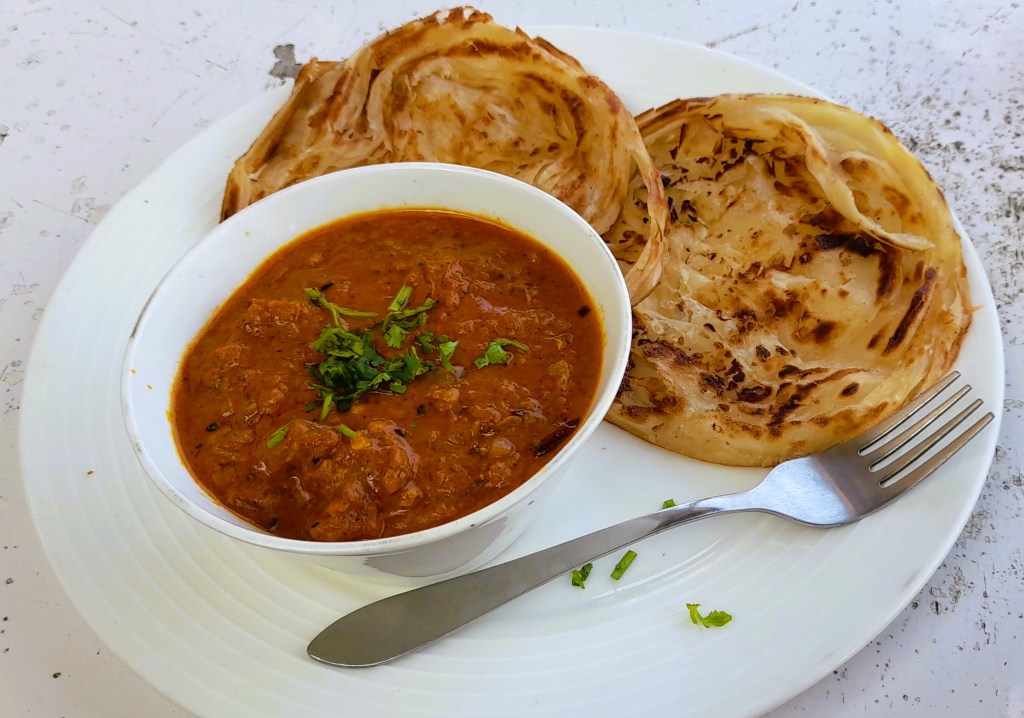
Post the surfing lesson, I spent the rest of the afternoon, first satiating my hunger with Chicken Malabar Curry and Parotta, and then just lazing on the beach with in between ventures into the water for short swims. The slope of the beach and mild undercurrents, however, made the swim feel a bit unsafe. Lying on the sand, looking at the palms swaying above my eyes, the short trip seemed worth it.

On the morning of the day of departure, I made a visit to the Sri Aurobindo Ashram, where after praying at the Samadhi of Sri Aurobindo and The Mother, I sat for a while in the quiet watching other visitors pay their respects. Leaving the Ashram, I walked to the Arulmigu Manakula Vinayagar Devasthanam, a temple dedicated to Lord Ganesha, and dating at least 500 years ago. In Tamil language, ‘Manal’ means sand and ‘Kulam’ means pond near the sea which earlier was full of sand. Hence, people called this form of Ganesha as Manal Kulathu Vinayagar or the God near the pond of sand. Later he was named as Manukula Vinayagar. The temple is constructed in a Dravidian architecture and decorated both inside and outside with several figurines of Lord Ganesha and ornate carvings. Inside the temple, the main idol of Lord Ganesha rests on a chariot made of teakwood and 7.5 kilograms of gold. There are several other smaller idols of Ganesha and other gods and goddesses inside the temple.
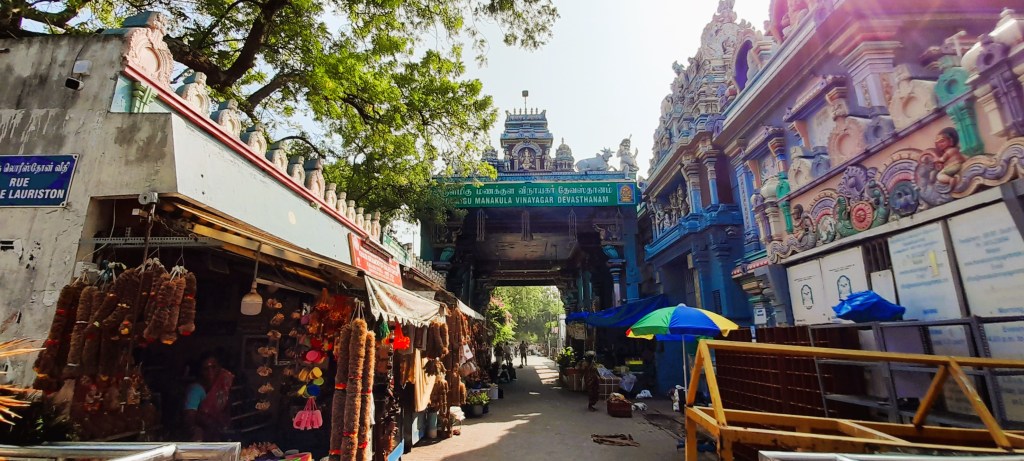

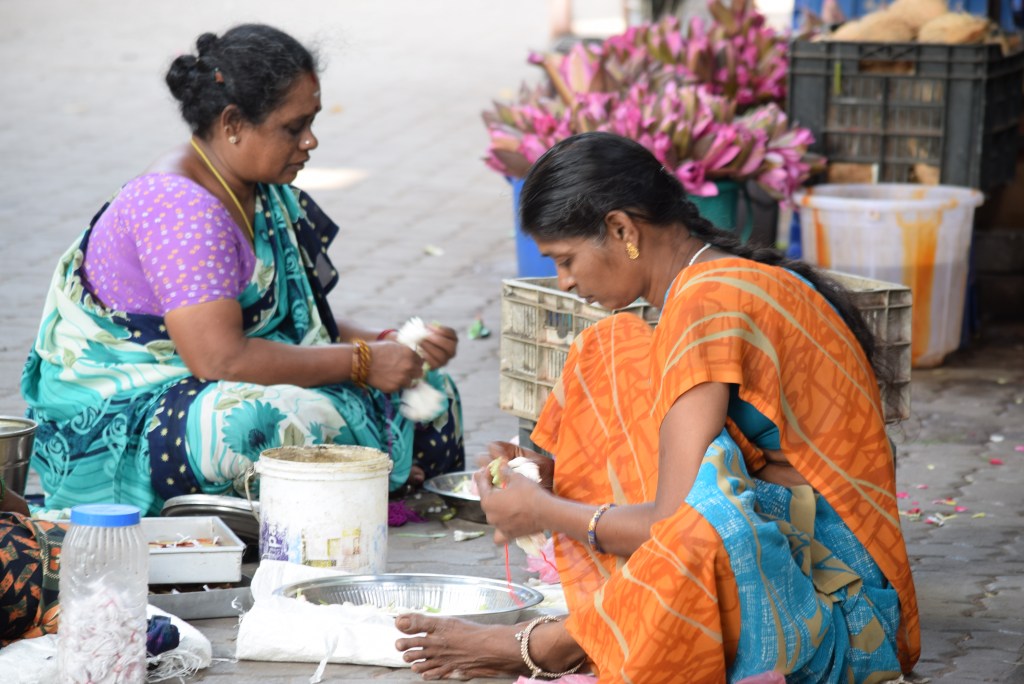
Outside the temple was a space where devotees smashed coconuts, and lit camphor and ghee earthen lamps. Women sat on the floor threading jasmine buds for garlands to be offered in the temple. In the spirit of oneness with the divine atmosphere, I too lit two ghee lamps. It was time to go home.
 nomadictourist.com
The witty descriptions and hilarious anecdotes (they had me cracking!) made me feel like I was right there with you. Can’t wait to read about your next adventure.
LikeLiked by 1 person
Thank you so much! Glad that you enjoyed reading it 🙂
LikeLike